• In the dense forests stretching across central and eastern India, a parallel narrative of the nation continues to unfold—one that rarely makes it to the everyday conversations of city life. The story of Naxalites is not merely about insurgency or violence; it is a complex tale of ideology, inequality, resistance, and the consequences of a system that, for many, failed long before the first bullet was fired.
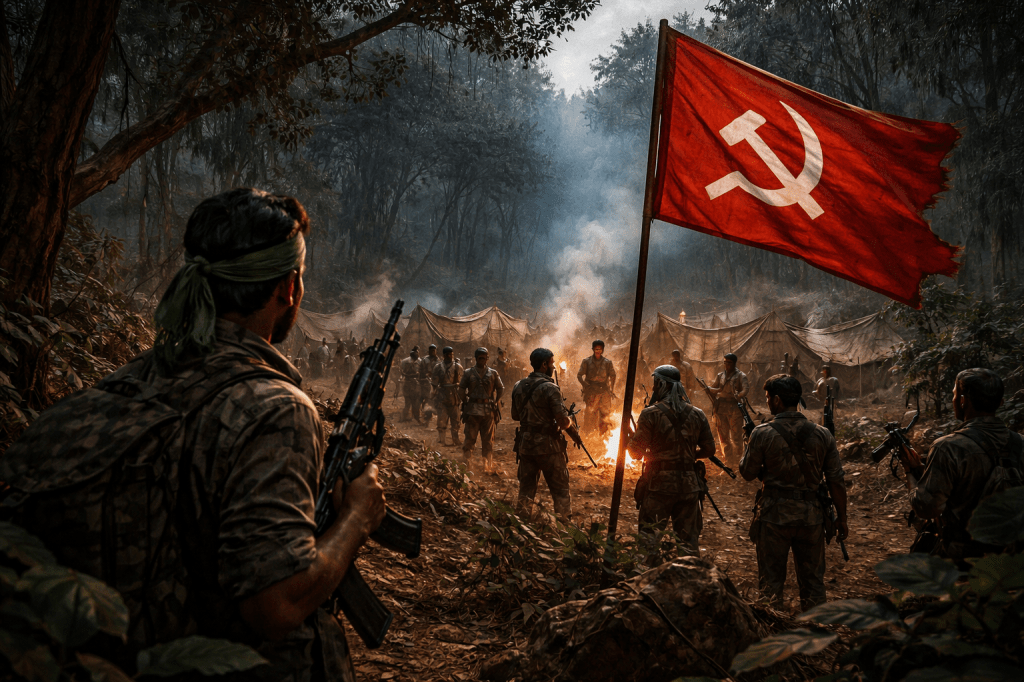
    The term “Naxalite” traces its roots back to the small village of Naxalbari, where in 1967 a peasant uprising marked the beginning of what would become one of India’s longest-running internal conflicts. Inspired by the revolutionary ideas of Mao Zedong, the movement was grounded in the belief that true change could only come through armed struggle, particularly in regions where marginalized communities were denied land rights, dignity, and access to basic resources.

    Over the decades, the movement evolved, spreading through what is often referred to as the “Red Corridor”—a vast stretch of land covering parts of states like Chhattisgarh, Jharkhand, Odisha, and Maharashtra. In these regions, the Naxalites positioned themselves as defenders of tribal rights, often stepping into governance vacuums left by state institutions. For many villagers, they were not just insurgents, but also enforcers of a parallel justice system, providers of a voice in an otherwise unheard landscape.

    Yet, this narrative is deeply conflicted. The same movement that began with the promise of equality has been marked by cycles of violence, ambushes, and loss—affecting civilians, security forces, and the very communities it claims to protect. Incidents like the Dantewada attack stand as grim reminders of the human cost embedded in this struggle. Each act of violence deepens mistrust, widens divides, and complicates the path to peace.

    At its core, the Naxalite issue forces a difficult question: is it merely a law-and-order problem, or is it a symptom of deeper structural failures? Land disputes, displacement due to mining and industrial projects, lack of education, and limited economic opportunities have all contributed to a fertile ground where discontent transforms into rebellion. While governments have responded with both military operations and development initiatives, the balance between force and empathy remains delicate and often contested.

    In recent years, there have been signs of decline in Naxalite influence, with increased security presence and infrastructural development reaching previously inaccessible regions. However, the underlying tensions have not entirely disappeared. The forests still whisper stories of neglect, and until those stories are heard and addressed, the embers of unrest may never fully fade.

    The story of the Naxalites is not black and white. It is a reflection of India’s ongoing struggle to bridge the gap between progress and inclusion, power and justice, silence and voice. It reminds us that beneath every conflict lies a deeper human story—one that demands not just solutions, but understanding.


  • In the unforgiving silence of the high Himalayas, where the wind cuts like a blade and the air itself feels like an adversary, a story of unyielding courage was written in blood and honor by Major Shaitan Singh—a name etched forever in the soul of India.

    Born into a family with a legacy of military service, Major Shaitan Singh carried not just a uniform, but a deep-rooted sense of duty. As an officer of the Indian Army, he was entrusted with leading his men in one of the most critical moments in modern Indian history—the Sino-Indian War. It was during this war, in the icy heights of Rezang La, that his leadership would become the stuff of legend.

    At over 16,000 feet above sea level, amidst freezing temperatures and impossible terrain, Major Shaitan Singh commanded C Company of the 13 Kumaon Regiment. Outnumbered, outgunned, and cut off from reinforcements, retreat was not an option—they stood their ground. Wave after wave of enemy forces advanced, but under his command, every soldier fought with unmatched resolve.

    Major Shaitan Singh moved from post to post, exposing himself to relentless enemy fire, motivating his men, directing defense strategies, and ensuring no position fell easily. Even as bullets tore through the silence and claimed the lives of his comrades, he refused to step back. Severely wounded during the battle, he was carried by his men to safety, but understanding the danger it posed to them, he ordered them to leave him behind so they could survive and continue the fight.

    That decision defined not just a soldier, but a leader who placed his men and mission above his own life.

    When the snow eventually settled, the battlefield at Rezang La told a haunting story—of extraordinary bravery. Out of 120 soldiers, 114 had laid down their lives, but not before inflicting devastating losses on the enemy. Their stand became one of the finest last stands in military history.

    For his unmatched valor and supreme sacrifice, Major Shaitan Singh was posthumously awarded the Param Vir Chakra. But beyond medals and honors, his legacy lives on in every soldier who chooses courage over fear, and duty over self.

    His story is not just about war—it is about character, leadership, and the ultimate price of freedom. In a world that often forgets the cost of peace, the echoes of Rezang La remind us that some heroes don’t just fight battles—they become immortal through them.

  • Mujtaba Aziz Naza is not just a voice—you hear him before you even know his name. There’s a rawness in his singing, a kind of emotional urgency that doesn’t try to impress, but instead insists on being felt. In a music industry often polished to perfection, his voice carries the texture of something older, deeper, and more human.

    Born into a family rooted in the traditions of qawwali, Mujtaba didn’t just learn music—he inherited it. The rhythms, the poetry, the spiritual intensity of Sufi expression became part of his identity long before he stepped into mainstream playback singing. Influenced by legends like Nusrat Fateh Ali Khan, his style reflects a seamless blend of devotion and drama, where every note feels like a conversation between the soul and the divine.

    His breakthrough moment came with the electrifying track “Afreen Afreen (Remix)” and later with songs like “Halka Halka Suroor”, which introduced his voice to a new generation. But it was “Kun Faya Kun”-style spiritual intensity—though not his original—that people often associate with the kind of emotional resonance he brings. Mujtaba Aziz Naza doesn’t just sing songs; he creates atmospheres where listeners lose track of time, pulled into a space where music becomes a form of surrender.

    What sets him apart in playback singing is his refusal to dilute authenticity. While many artists adapt to trends, Mujtaba leans into tradition. His voice cracks when it needs to, soars when it must, and lingers just long enough to leave an imprint. There’s no rush, no artificiality—just a deep, almost meditative command over his craft.

    In an era dominated by digital perfection, where voices are often edited to flawlessness, Mujtaba Aziz Naza reminds us of something vital: imperfection can be powerful. His music doesn’t aim to be background noise; it demands attention, invites reflection, and often, evokes a kind of quiet introspection.

    Today, as playback music continues to evolve, artists like him serve as a bridge—connecting the rich legacy of Sufi and qawwali traditions with the fast-moving pulse of contemporary cinema. His journey is not just about fame or recognition; it’s about preserving a sound that refuses to be forgotten.

    Because some voices don’t just entertain—they echo. And Mujtaba Aziz Naza’s voice? It lingers long after the music stops.

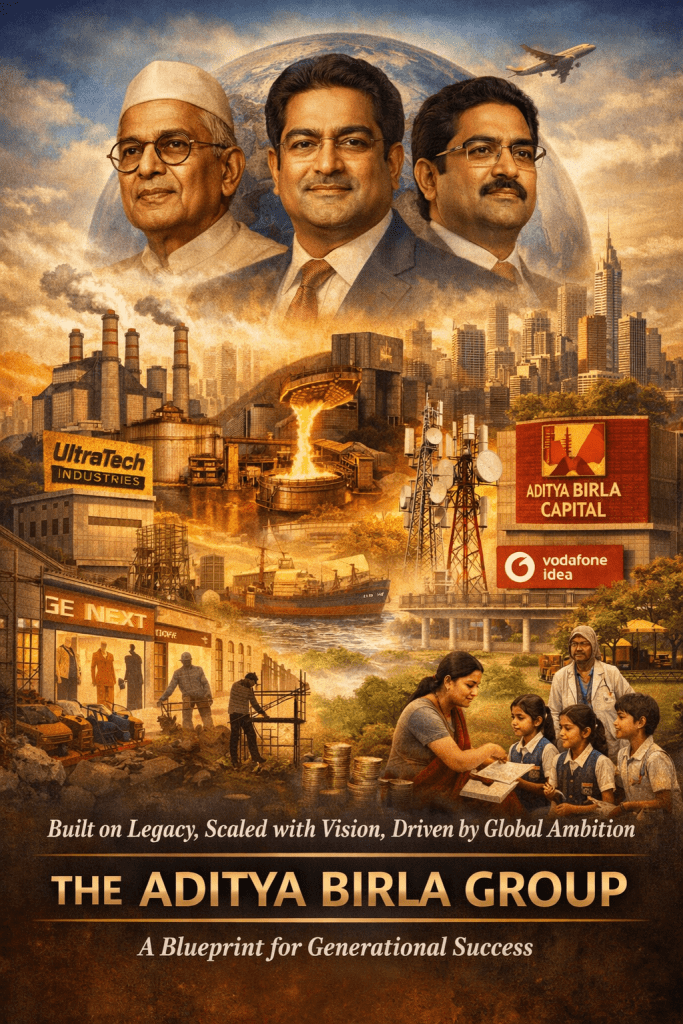
  • The story of Aditya Birla Group is not just about business expansion—it is a narrative of vision, resilience, and the relentless pursuit of scale. Born from the entrepreneurial roots of the Birla family, the foundation was laid by Ghanshyam Das Birla, a man who believed that Indian enterprise could stand shoulder to shoulder with global giants. What started as a modest trading operation evolved over decades into one of India’s most respected and diversified conglomerates.

    The transformation accelerated under Aditya Vikram Birla, whose global mindset reshaped the group’s identity. At a time when Indian businesses were largely inward-looking, he expanded aggressively into international markets, building a strong presence in Southeast Asia and beyond. His leadership marked a turning point—turning the group into a truly multinational enterprise, spanning industries like metals, textiles, and cement.

    Today, under the stewardship of Kumar Mangalam Birla, the group stands as a symbol of modern Indian capitalism. With operations in over 30 countries, the Aditya Birla Group has established dominance across sectors such as cement through UltraTech Cement, metals via Hindalco Industries, telecommunications with Vodafone Idea, and financial services under Aditya Birla Capital. Each business vertical reflects a balance between legacy and innovation, tradition and transformation.

    What makes this conglomerate remarkable is not just its scale, but its adaptability. From manufacturing staples to entering high-growth sectors like financial services, fashion retail, and digital platforms, the group continues to evolve with changing market dynamics. Its brands have become deeply embedded in everyday life—whether it’s the cement that builds homes, the metals that power industries, or the financial services that enable dreams.

    Beyond business, the Aditya Birla Group carries a strong legacy of social responsibility. Through education, healthcare, and rural development initiatives, it has consistently invested in nation-building. This commitment reinforces a deeper philosophy—that true success lies not just in profit, but in impact.

    In a world where businesses rise and fall with market cycles, the Aditya Birla Group stands as a testament to long-term thinking. It is not merely a corporate entity; it is an institution built on trust, vision, and the courage to expand beyond boundaries. For aspiring entrepreneurs and business leaders, its journey offers a powerful lesson: scale is not achieved overnight—it is built through decades of bold decisions, disciplined execution, and an unwavering belief in growth.

  • On a quiet day in 1997, the life of Gulshan Kumar, the man who transformed T-Series into a household name, came to a tragic end. What began as an ordinary morning turned into one of the most shocking incidents in India’s music industry, leaving behind questions, fear, and a story that still echoes through time.

    Gulshan Kumar was not just a businessman; he was a visionary who understood the pulse of the common man. His devotional songs and affordable music cassettes reached millions of homes, making music accessible to everyone. But success, especially rapid success, often attracts attention from the darkest corners of society. As his empire grew, so did the pressure from the underworld that once had its grip on industries like music and cinema.

    Despite threats and warnings, he chose faith over fear. It is said that even on that fateful day, he was on his way back from a temple, holding onto his routine, his beliefs, and his courage. Moments later, that faith was met with bullets, and India witnessed the brutal assassination that shook the nation.

    The incident exposed the deep-rooted influence of the underworld in the entertainment business during the 90s. Extortion, threats, and power games were not just stories—they were realities many silently endured. Gulshan Kumar’s refusal to bow down made him a target, but it also turned him into a symbol of resistance.

    Mumbai, often called the city of dreams, also carried the shadows of fear during that era. The so-called “Mumbai underworld” operated behind the scenes, dictating terms to those who dared to dream big. Gulshan Kumar’s death became a turning point, forcing the industry and authorities to confront a truth they could no longer ignore.

    Years have passed, the industry has evolved, and the shadows have thinned, but his story remains. It is a reminder that behind every success story, there are battles unseen, risks untold, and courage that often goes unnoticed until it’s too late. Gulshan Kumar may have been silenced, but his legacy continues to play on, in every note, every prayer, and every dream he helped shape.

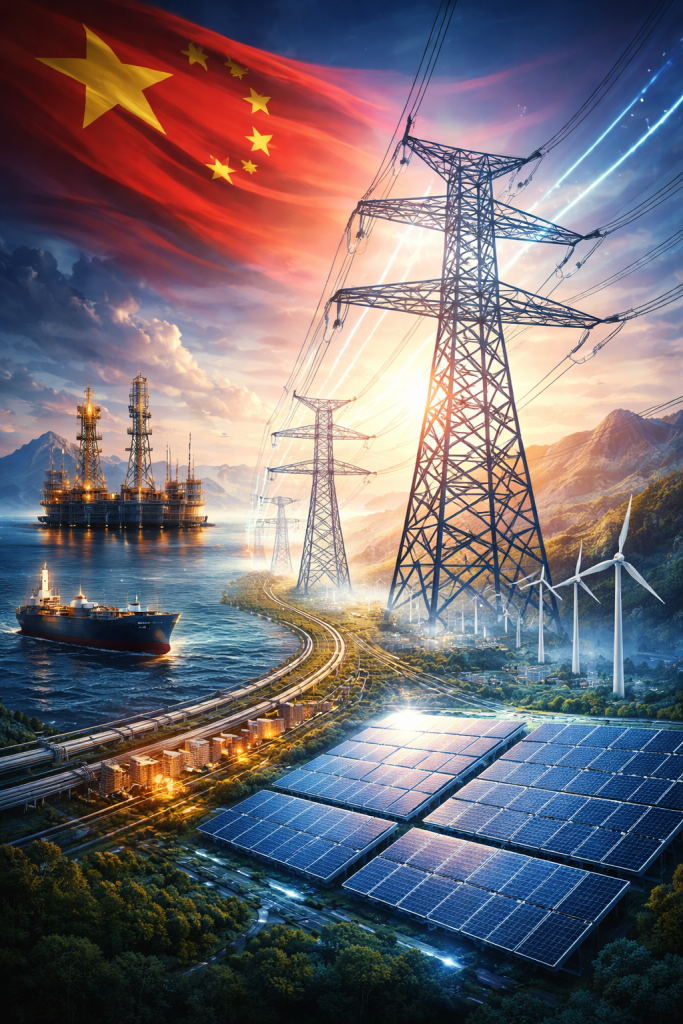
  • China is quietly rewiring its future—not through diplomacy or military alliances, but through electricity. At a time when the world watches the Middle East with growing anxiety, Beijing is building something far more powerful than oil reserves: a “supergrid” designed to insulate its economy from global energy shocks and redraw the balance of power in the energy world.

    For decades, China’s rise has been fueled by imported oil, much of it flowing through fragile geopolitical chokepoints. Nearly half of its crude imports depend on routes tied to the Middle East, making any conflict in the region a direct threat to its economic stability. (The Asia Group) The ongoing tensions and disruptions in global oil supply chains have only sharpened this vulnerability, reminding Beijing of a hard truth—energy dependence is strategic weakness.

    China’s answer is bold: reduce reliance on oil by transforming how energy is produced, transmitted, and consumed. At the heart of this transformation lies the supergrid—an ultra-high-voltage electricity network capable of transmitting power across thousands of kilometers with minimal loss. These grids connect remote renewable energy sources like deserts, mountains, and rivers to the country’s industrial heartlands, effectively turning geography into an advantage rather than a limitation.

    This isn’t just an infrastructure project; it’s a structural shift. China has spent years investing heavily in power grid expansion to absorb renewable energy and reduce dependence on imported fuels. (The Straits Times) Massive transmission lines now carry electricity generated from wind farms in Xinjiang, hydropower in Sichuan, and solar parks in Inner Mongolia to cities on the eastern coast. Projects like ultra-high-voltage direct current (UHVDC) lines are capable of moving gigawatts of electricity over thousands of kilometers, forming the backbone of this emerging supergrid.

    The implications are profound. By electrifying more of its economy—transport, industry, and even heating—China can gradually replace oil consumption with domestically generated power. Already, the shift toward electric vehicles and renewable energy has begun reducing oil demand, with some estimates suggesting a measurable decline in consumption.  At the same time, global crises like the current Middle East conflict are accelerating investments in clean energy, not just in China but worldwide.

    What makes the supergrid strategy particularly powerful is its dual benefit. On one hand, it strengthens energy security by reducing exposure to volatile oil markets and geopolitical risks. On the other, it positions China as a global leader in renewable technology and infrastructure—exporting not just goods, but systems and standards.

    Historically, China’s biggest energy fear has been the so-called “Malacca dilemma”—the risk that critical oil shipments could be blocked at narrow maritime chokepoints. Today, the supergrid represents a way out of that trap. Instead of securing oil routes, China is reducing the need for them altogether.

    In a world still shaped by oil politics, China is betting on electricity as the new currency of power. The supergrid is more than cables and towers—it is a strategic shield, an economic engine, and a signal to the world that the future of energy may not flow through pipelines, but through wires.


    While the world fights over oil routes, China is quietly building a future where energy flows through power lines—not geopolitics.

  • There was a time when Korea was one—one land, one culture, one people, living with a shared identity that had evolved over centuries. That unity was shattered in 1910 when Japan annexed Korea, beginning decades of colonial rule that suppressed Korean language, culture, and independence. For 35 years, Korea existed under foreign control, waiting for the moment when it could reclaim its freedom. That moment finally came in 1945 with the end of World War II, when Japan surrendered and withdrew from the peninsula. But instead of a fully independent and unified Korea, a new and unexpected reality emerged—one shaped not by Koreans, but by global superpowers.

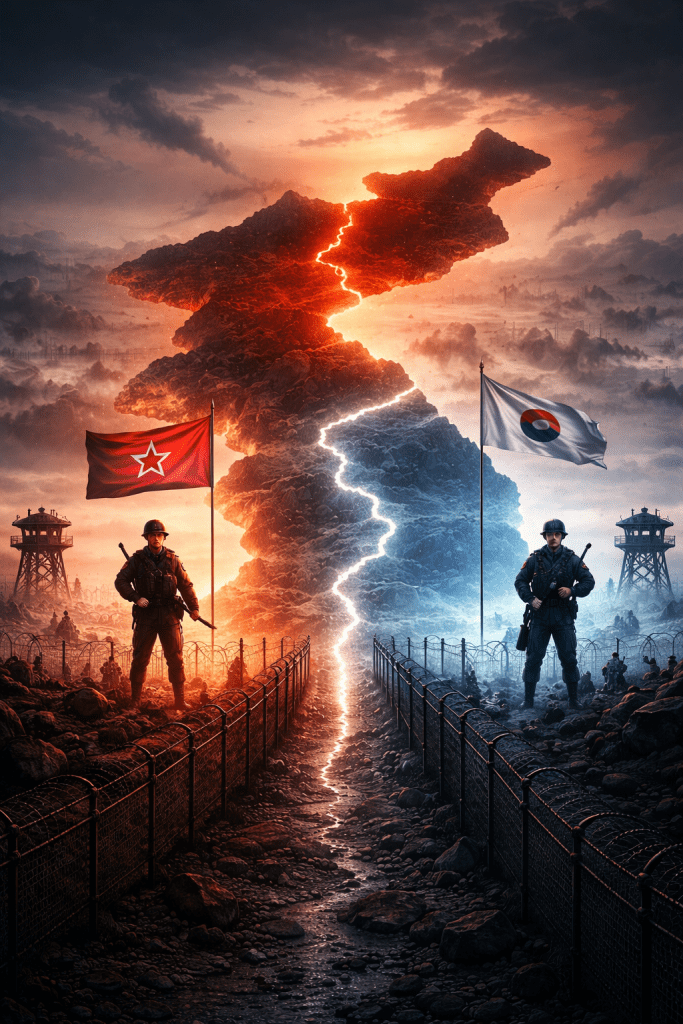
    In the immediate aftermath of the war, the United States and the Soviet Union stepped in to manage the transition. With urgency and little consultation, they decided to divide Korea along the 38th parallel, a line that had no cultural or historical significance to the Korean people. The northern half came under Soviet influence, while the southern half was administered by the United States. What was intended to be a temporary arrangement soon began to solidify into something far more permanent. Political systems were established, ideologies took root, and by 1948, two separate governments had emerged—each claiming legitimacy over the entire peninsula.

    In the north, Kim Il-sung established a communist regime, forming the Democratic People’s Republic of Korea. In the south, Syngman Rhee led the creation of the Republic of Korea, built on democratic and capitalist principles. The division was no longer just geographical—it had become ideological. Two systems, two visions, and two futures began to develop side by side, each incompatible with the other. Tensions grew rapidly, and by 1950, those tensions exploded into open conflict with the outbreak of the Korean War, when North Korean forces crossed the 38th parallel in an attempt to unify the peninsula under their rule.

    The war quickly escalated beyond a civil conflict, becoming a proxy battle in the larger Cold War struggle. The United Nations, led by the United States, intervened in support of the South, while the North received backing from the Soviet Union and China. The fighting was brutal and devastating, claiming millions of lives and leaving cities in ruins. Families were torn apart in the chaos, many separated with no way of ever reconnecting. After three years of destruction, an armistice was signed in 1953, effectively ending active combat but not the war itself. No formal peace treaty was ever concluded, leaving the two Koreas technically still at war to this day.

    The line that once seemed temporary became one of the most fortified borders in the world—the Demilitarized Zone, or DMZ. On one side stands North Korea, a state defined by strict control and isolation. On the other stands South Korea, a nation that has grown into a global economic and cultural force. Despite their shared history, language, and heritage, the differences between them have become stark and profound. Yet beyond the politics and military tensions lies a quieter, more human tragedy—families separated for decades, parents who never saw their children again, and generations who grew up without knowing their own blood.

    The division of Korea is not just a story of war or ideology; it is a reminder of how decisions made in distant rooms can reshape the lives of millions. A single line, drawn in haste, turned one nation into two, creating a legacy that continues to define the Korean Peninsula even today. And in that reality lies a powerful truth—sometimes, history does not simply pass; it stays, living on in borders, in memories, and in the silence between those who were once one.

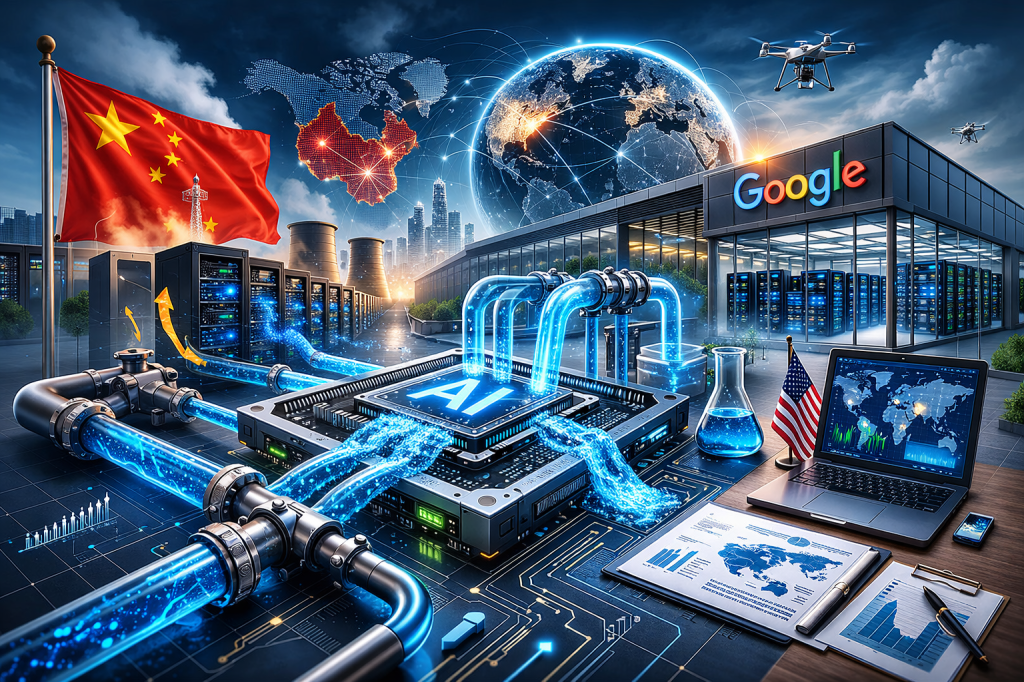
  • In the rapidly evolving race for artificial intelligence dominance, infrastructure is becoming just as critical as algorithms. While most conversations revolve around models, chips, and data, a quieter revolution is unfolding behind the scenes—how to keep these powerful systems cool. And now, in a move that has caught global attention, Google appears to be turning toward China once again, not for search or services, but for something far more foundational: advanced liquid cooling technology.

    AI data centers are no longer ordinary facilities. They are energy-hungry ecosystems running high-performance processors that generate immense heat. Traditional air cooling methods are increasingly insufficient for managing the thermal demands of modern AI workloads. This is where liquid cooling steps in—not just as an alternative, but as a necessity. It offers higher efficiency, reduced energy consumption, and the ability to sustain denser computing environments.

    China, over the past few years, has quietly emerged as a leader in this niche yet critical domain. With its aggressive push in hardware innovation and large-scale manufacturing capabilities, Chinese firms have developed advanced liquid cooling systems that are both scalable and cost-effective. These systems are already being deployed in some of the most demanding computing environments, giving them a practical edge over many global competitors.

    Google’s interest in sourcing or collaborating around this technology suggests a strategic shift. Despite ongoing geopolitical tensions and regulatory complexities, the urgency to scale AI infrastructure seems to be outweighing traditional barriers. This isn’t about re-entering the Chinese market in the conventional sense—it’s about tapping into specialized expertise that can accelerate the next phase of AI expansion.

    The implications are significant. As AI models grow larger and more complex, the bottleneck is no longer just computational power but the physical limitations of infrastructure. Efficient cooling directly impacts performance, operational cost, and environmental sustainability. In fact, the future of AI may depend as much on thermal engineering as it does on machine learning breakthroughs.

    There’s also a deeper narrative at play. Technology ecosystems are becoming increasingly interdependent, even among global rivals. While countries may compete in AI development, the supply chains and innovations that support this progress remain globally intertwined. Google’s move reflects a pragmatic approach—leveraging the best available technology, regardless of origin, to stay competitive in an unforgiving landscape.

    For businesses and entrepreneurs, especially those watching from emerging markets like India, this development carries an important lesson. The next wave of opportunity in AI won’t be limited to software alone. Infrastructure, energy efficiency, cooling systems, and hardware optimization are all becoming high-value sectors. Those who recognize this early can position themselves ahead of the curve.

    In the end, Google’s quiet step toward China for liquid cooling technology is more than a technical decision—it’s a signal. A signal that the AI race is entering a new phase, where unseen innovations will define visible success. And in this phase, the winners won’t just be those who build smarter machines, but those who build the systems that sustain them.

  • Ballari, a historic city in northern Karnataka, stands as a powerful reminder that land itself can carry the memory of centuries. Known for its striking red soil, rugged granite hills, and rich mineral resources, Ballari is a place where nature, history, and industry intersect in remarkable ways. The city breathes a quiet strength, shaped by ancient dynasties, colonial footprints, and the relentless rhythm of mining and trade.

    The landscape of Ballari is dramatic and raw. Massive rocky hills rise abruptly from the plains, giving the region a distinctive character unlike the lush greenery that much of Karnataka is known for. These hills have witnessed the rise and fall of kingdoms, the march of armies, and the transformation of a small settlement into one of India’s most significant mining hubs. The red dust that often hangs in the air is not merely soil; it is iron-rich earth that has powered industries and economies for decades.

    History echoes through Ballari’s stones. The region once flourished under the rule of the Vijayanagara Empire, whose capital Hampi lies not far away. Merchants, soldiers, and scholars once moved across these lands, building temples, forts, and trading routes that connected South India with distant parts of the world. Even today, remnants of old fortifications and historic structures stand silently on hilltops, watching over the expanding city below.

    Beyond its historical identity, Ballari is deeply tied to India’s iron ore story. For many years, the district has been one of the country’s most important mining regions. The earth beneath its surface holds vast deposits of iron ore, turning the area into a major center for extraction, trade, and transport. Trucks loaded with ore travel across highways, linking mines to ports and steel plants. This industrial pulse has shaped the local economy, attracting workers, entrepreneurs, and traders from different parts of the country.

    Yet Ballari is not only about minerals and machines. Life here moves with the resilience of its people. Markets buzz with traders selling grains, textiles, and traditional foods. Small tea stalls become places where conversations about politics, agriculture, and daily struggles blend together. The Kannada language dominates daily life, but you can also hear Telugu, Urdu, and Hindi, reflecting the region’s diverse cultural fabric.

    The climate of Ballari is harsh compared to the coastal parts of Karnataka. Summers can be intensely hot, and the land often appears dry and sunburnt. But the people of the region have long adapted to these conditions, cultivating crops like groundnuts, cotton, and millets. Their lives reflect a deep understanding of the land’s strengths and limitations.

    What makes Ballari truly fascinating is its contrast. Ancient history stands beside modern industry. Quiet villages exist alongside bustling mining zones. Harsh landscapes hold hidden beauty during sunrise and sunset, when the rocky hills glow with shades of gold and crimson. The city may not always appear on typical tourist maps, but for those who take the time to understand it, Ballari reveals a story of endurance, transformation, and identity.

    In many ways, Ballari represents the spirit of interior India—unpolished yet powerful, challenging yet rewarding. It is a land where the earth is rich with minerals, the past is carved into stone, and the future continues to be shaped by the hands of people who call this rugged terrain their home.

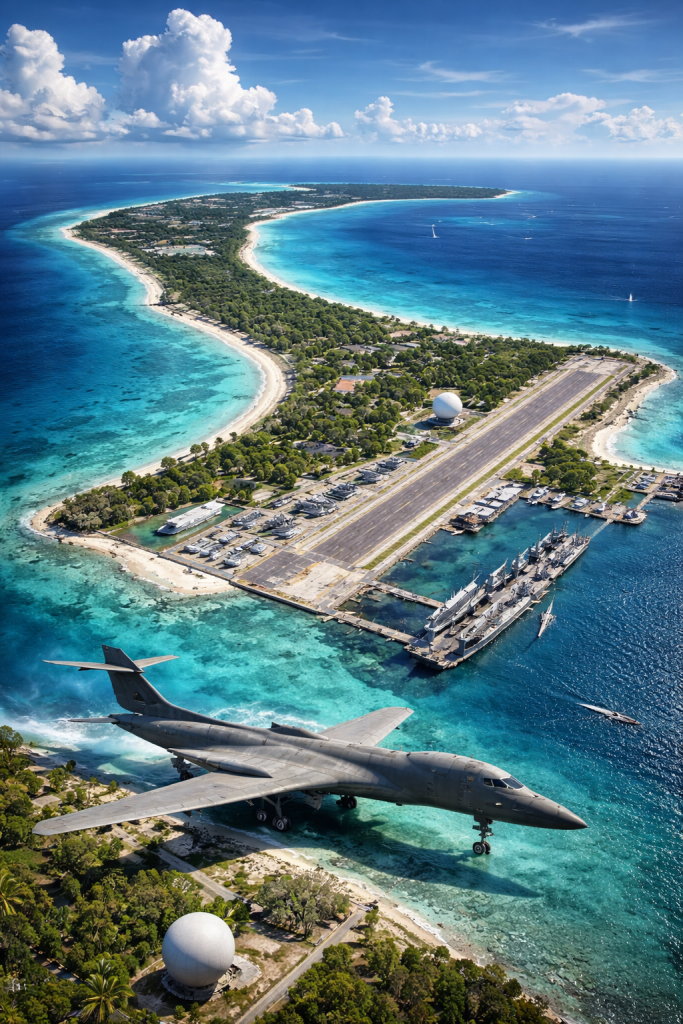
  • In the vast blue stretch of the Indian Ocean lies a small, remote island called Diego Garcia. From above, it looks like a peaceful coral atoll shaped like a horseshoe, surrounded by turquoise waters and white sand. But beneath its calm appearance, this island holds one of the most strategic military positions in the world.

    Diego Garcia sits almost exactly in the middle of the Indian Ocean. Because of this location, it has become a critical point for global military operations. The island hosts a major military facility used primarily by the United States, with the territory administered by the United Kingdom. Its long airstrip, deep-water harbor, and secure isolation make it ideal for long-range bombers, naval ships, and surveillance operations.

    For decades, the island has quietly supported major international missions. During conflicts in the Middle East and Asia, aircraft and naval forces operating from Diego Garcia played important logistical and operational roles. From this remote base, military forces can reach regions across Africa, the Middle East, and Asia without needing bases in crowded or politically sensitive areas.

    Yet the story of Diego Garcia is not only about strategy and power. It is also about people. Before the military base was established in the late 1960s and early 1970s, the island was home to a small community known as the Chagossians. They lived simple lives built around fishing, coconut plantations, and island traditions. When the base was developed, the residents were relocated, mainly to Mauritius and the Seychelles. Their displacement later became one of the most debated human rights and sovereignty issues connected to the island.

    Over the years, international courts, governments, and activists have continued to debate the future of the Chagos Archipelago and the rights of the displaced islanders. The island’s political status remains a subject of diplomatic discussion between nations, showing how even the most remote places can become central to global conversations.

    Despite its geopolitical importance, Diego Garcia remains one of the least visited and most restricted islands on Earth. Civilians rarely see it. There are no tourist resorts, no bustling markets, and no crowded beaches. Instead, it is a place defined by runways, radar systems, naval docks, and the quiet hum of strategic operations.

    Nature, however, continues to surround the island in remarkable beauty. Coral reefs, clear lagoons, and tropical wildlife thrive in the waters around the atoll. In many ways, Diego Garcia represents a strange contrast: untouched natural beauty existing alongside one of the most significant military outposts in modern history.

    Sometimes the most powerful places in the world are not the loudest or the most visible. They are the quiet islands in the middle of the ocean—places like Diego Garcia—where geography silently shapes global strategy and history. 🌊✈️