• The island didn’t shout.
    It didn’t declare war.
    It didn’t make headlines every day.

    And yet, the world slowly turned its eyes toward it.

    Greenland.

    A place most of us once imagined as nothing more than ice, silence, and polar bears.

    But today, Greenland is no longer just an island at the edge of maps.
    It has become a quiet center of global attention.

    A Land of Ice… and Silence

    Greenland is the largest island on Earth, but one of the least populated.
    Around 56,000 people live there — mostly Inuit communities who have survived harsh conditions for centuries.

    Politically, Greenland belongs to the Kingdom of Denmark, but it governs most of its internal matters on its own. Denmark handles defence and foreign affairs.

    For decades, this arrangement worked peacefully.

    Then the ice started melting.When Ice Melts, Power Moves

    When Ice Melts, Power Moves

    Climate change didn’t just change Greenland’s weather.
    It changed its value.

    As the ice receded:

    • New shipping routes became possible
    • Hidden rare earth minerals came closer to the surface
    • Oil, gas, and strategic resources entered global calculations

    Suddenly, Greenland was no longer “remote”.

    It was strategic.Why Big Powers Are Watching Closely

    Why Big Powers Are Watching Closely

    There is no war in Greenland.
    No tanks. No bombs.

    But there is tension — the silent kind.

    🇺🇸 The United States

    Greenland sits between North America and Europe.
    The US already operates a military base there, crucial for space and missile monitoring.

    For the US, Greenland is about security and control of the Arctic.

    🇨🇳 China

    China sees Greenland as a future gateway:

    • For mining
    • For Arctic shipping
    • For long-term influence

    China doesn’t send soldiers.
    It sends investments.

    🇩🇰 Denmark

    Denmark wants to maintain sovereignty while respecting Greenland’s autonomy — a delicate balance.

    🌍 Greenland Itself

    And Greenland?
    It dreams of full independence — but economic dependence on Denmark makes that dream complicated.

    So the island stands quietly, knowing the world wants a piece of its future.A Conflict Without Gunfire

    A Conflict Without Gunfire

    This is not a traditional conflict.

    It is:

    • About resources
    • About routes
    • About who controls the future of the Arctic

    Greenland is becoming what many places become in history:

    A small land caught between big ambitions.

    Why This Matters to You

    You may never visit Greenland.
    But decisions made there will affect:

    • Global trade
    • Climate policy
    • International power balance

    The future is being shaped not only in loud capitals — but also in silent, icy places.

    Greenland reminds us of a simple truth:

    In the modern world, geography still matters.A Quiet Ending

    A Quiet Ending

    Greenland doesn’t demand attention.
    It waits.

    While the ice melts.
    While the world debates.
    While power slowly rearranges itself.

    And maybe that is why its story matters so much.

  • On a quiet morning in Kerala, when the air still carries the smell of old books and wet earth, one can imagine a young boy sitting by himself, watching people pass by. He listens more than he speaks. He observes more than he reacts. That boy would one day grow up to become N. S. Madhavan, a writer who turned silence into powerful stories.

    Unlike many writers who shout their ideas through loud words, Madhavan chose a different path. He wrote softly, but his words stayed long after the last sentence ended.

    N. S. Madhavan was not just a writer; he was also a civil servant. Working in the Indian Administrative Service (IAS), he traveled across the country, met people from different backgrounds, and witnessed lives shaped by power, poverty, hope, and compromise. These experiences quietly entered his stories, not as facts, but as emotions.

    His writing did not come from imagination alone—it came from lived reality.

    Madhavan’s stories are not easy. They don’t offer simple heroes or clear villains. Instead, they ask uncomfortable questions.

    What happens to a person’s beliefs when the world changes too fast?
    Can love survive ideology?
    Is silence a form of resistance?

    His famous collection Higuita shocked and fascinated readers. It explored political extremism, human loneliness, and the inner conflicts of individuals caught between belief and doubt. The characters felt real—flawed, confused, and deeply human.

    One of the most striking things about N. S. Madhavan’s writing is his trust in the reader. He does not explain everything. He leaves gaps. He allows silence to speak.

    In a world that prefers quick answers, Madhavan believed in slow understanding.

    His language is simple, but his ideas are complex. His stories often end quietly, yet they continue to echo in the reader’s mind.

    N. S. Madhavan passed away in 2021, but his stories remain alive. They are read, discussed, and debated—especially by those who believe literature should challenge, not comfort.

    He showed us that writing does not need to be loud to be powerful. Sometimes, the strongest stories are the ones that whisper.

    N. S. Madhavan was a writer who listened deeply—to people, to politics, and to silence itself. Through his stories, he reminded us that literature is not just about telling tales, but about understanding the human condition.

    And long after the page is turned, his quiet voice still speaks.

  • Every cricket fan remembers Ajith Agarkar in a different way.
    Some remember his fiery fast bowling.
    Some remember his fearless batting at the lower order.
    And some remember the criticism he faced throughout his career.

    But Ajith Agarkar’s story is not just about numbers.
    It is about courage, resilience, and standing tall when the world doubts you.

    Ajith Agarkar was born in Mumbai, a city where cricket is more than a sport—it is a religion. Like thousands of other boys, he dreamed of wearing the Indian jersey one day. He trained hard, bowled fast, and believed in his ability, even when resources were limited.

    His dream came true in 1998 when he made his international debut for India.

    Agarkar announced his arrival in style. In only his second Test match, he scored a century against England at Lord’s—one of the most iconic cricket grounds in the world. For a fast bowler to score a century at Lord’s was something special.

    The cricket world noticed him instantly.

    But cricket is never a smooth journey.

    Ajith Agarkar went through many difficult phases. He was often criticized for his economy rate. Crowds sometimes booed him at his home ground, Wankhede Stadium. Every mistake was highlighted, and every failure was magnified.

    Many players would have broken under that pressure.

    Agarkar didn’t.

    Instead of complaining, he kept working harder. He focused on his strengths—taking wickets when the team needed them most. He became one of India’s most reliable wicket-takers in One Day Internationals.

    He picked up crucial wickets in big matches, often breaking partnerships when the team was under pressure. He may not have been perfect, but he was brave.

    Ajith Agarkar was never just a bowler. He could bat when required, score quick runs, and change the momentum of a match. He was a true team player—ready to do whatever the team needed.

    After retirement, Agarkar stayed connected to the game. He moved into commentary, analysis, and later administration. With time, he earned respect not just as a former cricketer, but as a sharp cricketing mind.

    Today, he is seen as calm, confident, and clear in his thinking—qualities shaped by years of pressure on the field.

    Ajith Agarkar’s story teaches us an important lesson:

    Success is not about being perfect.
    It is about not giving up when things go wrong.

    He stood firm when criticism was loud.
    He trusted himself when others doubted him.
    And he proved that resilience is as important as talent.

    Ajith Agarkar may not be remembered as the greatest cricketer of all time—but he will always be remembered as one of the strongest fighters Indian cricket has ever seen.

  • On a winter morning in Delhi, when the city is still shaking off its fog, there is a place where conversations have already begun. Not hurried, not loud—just thoughtful. This place is Jawaharlal Nehru University, fondly known as JNU.

    JNU does not announce itself with tall gates or flashy buildings. Instead, it reveals itself slowly—through tree-lined roads, red-brick hostels, and students walking with books in one hand and questions in their minds.

    Founded in 1969, JNU was created with a powerful idea: education should not just prepare people for jobs, but for thinking. Over the decades, this idea has shaped the soul of the university.

    As you walk through the campus, you don’t just see classrooms—you feel history. Walls have heard debates that lasted till midnight. Benches have carried tired students who refused to give up on an argument. Every corner seems to whisper stories of movements, protests, poetry, and passion.

    JNU is not just an institution; it is a living conversation.

    In most universities, silence fills libraries and corridors. In JNU, discussions spill everywhere—hostel rooms, tea stalls, lawns, and long walks under old trees. Students talk about politics, philosophy, economics, literature, science, and sometimes, life itself.

    It is common to see a student listening more than speaking, learning not just from books but from people from different states, cultures, and ideologies. JNU teaches you something rare: how to disagree without stopping the dialogue.

    Ask any JNU student about their classroom, and they may smile and point you toward a tea stall.

    Places like Ganga Dhaba or Parthas are not just food spots—they are open universities. Over a cup of tea, friendships are built, arguments are sharpened, and ideas are tested. Nights stretch long, fueled by caffeine, curiosity, and conviction.

    These late-night discussions are not planned, but they often become the most memorable lessons of campus life.

    JNU has always been known for its strong opinions. It questions power, tradition, and even itself. This has made it both admired and criticized.

    But that is the essence of JNU—it is uncomfortable by design. It pushes students to ask “why” instead of simply accepting “what is.” Many who pass through its halls leave transformed, carrying a habit of critical thinking wherever they go.

    Walk into any classroom at JNU, and you’ll find India in one room—different languages, regions, backgrounds, and stories. For many students, JNU is the first place where they live with people very different from themselves.

    This diversity is not just celebrated; it is lived every day. It teaches empathy, patience, and understanding—lessons no textbook can fully provide.

    From academics and diplomats to journalists, policymakers, and activists, JNU alumni are spread across the world. What connects them is not a job title, but a mindset—the courage to think independently.

    Even years after leaving campus, many say JNU taught them how to read deeply, speak honestly, and stand firmly for their beliefs.

    Like any institution, JNU continues to evolve. It faces challenges, debates, and changes. Yet, its core remains strong—the belief that education must encourage freedom of thought.

    For some, JNU is controversial. For others, it is inspirational. But for those who have lived there, it is unforgettable.

    JNU is not a place everyone will agree with. But it is a place everyone should try to understand.

    Because in a world that often prefers silence over questions, JNU reminds us that ideas matter, dialogue matters, and thinking—deep, honest thinking—still has a home.

    And perhaps that is JNU’s greatest lesson.

  • From the windswept shores of Reading, England, to the dazzling lights of Hollywood, Kate Winslet’s story is one of grit, talent, and unrelenting passion. Born to a family of actors, Kate’s destiny seemed sealed—she just had to follow her heart.

    At 16, she landed her first TV role in Dark Season, and the rest, as they say, is history. Her breakout came with Titanic, where she captivated audiences as Rose DeWitt Bukater. But Kate’s talent wasn’t confined to just one blockbuster. From Eternal Sunshine of the Spotless Mind to The Reader, she took on roles that challenged her and left an impact.

    Off-screen, Kate’s known for her fiery spirit and authenticity. A vocal advocate for women’s rights and body positivity, she’s redefined beauty standards in Hollywood 💪.

    Today, with an Oscar, an Emmy, and a Grammy in her kitty, Kate Winslet isn’t just an actress—she’s a force to be reckoned with 🌈.

  • Once the wealthiest country in South America, Venezuela is now a nation grappling with challenges. From the majestic Andes to the stunning Angel Falls, this country is blessed with natural beauty.

    In the early 20th century, Venezuela’s oil boom brought prosperity, but mismanagement and corruption led to economic collapse. Today, Venezuelans face shortages of food and medicine, yet their resilience shines through.

    Despite struggles, Venezuela’s culture thrives—its music (think salsa and joropo), festivals, and warm people remain a testament to its spirit. Cities like Caracas buzz with life, and the Orinoco River delta teems with wildlife 🌍.

    Venezuela’s story is one of contrasts: hardship and beauty, struggle and hope. As the world watches, one thing’s clear—the Venezuelan people are survivors.

  • LinkedIn is the world’s largest professional networking platform. It helps people find jobs, hire talent, build careers, and grow business connections. The person behind LinkedIn is Reid Hoffman.

    Reid Hoffman was born in 1967 in the United States. He studied at Stanford University, where he learned about technology and human behavior. Later, he studied philosophy at Oxford University. This education helped him understand how people think, connect, and work together.

    Before starting LinkedIn, Reid Hoffman worked in several technology companies. He was an early team member at PayPal, one of the first online payment companies. At PayPal, he learned that strong networks create powerful opportunities. This idea later became the base for LinkedIn.

    Reid Hoffman co-founded LinkedIn in 2002, and the platform was launched in 2003. His goal was to create a professional network where people could connect, show their skills, and find new opportunities. LinkedIn focused only on professional growth, not entertainment.

    In the beginning, LinkedIn grew slowly. But as more professionals joined, the platform became more valuable. It started helping job seekers, recruiters, business owners, and entrepreneurs. In 2016, Microsoft acquired LinkedIn for 26.2 billion dollars, showing its global importance.

    Reid Hoffman believes that careers grow through connections and trust. He supports long-term thinking in business and personal growth. He has also written books like The Start-Up of You and Blitzscaling, where he shares lessons on career building and company growth.

    Reid Hoffman did not just create a website. He created a platform that connects millions of professionals across the world. LinkedIn has changed how people find jobs, build careers, and grow businesses.

    His journey shows one clear idea: strong networks create strong futures.

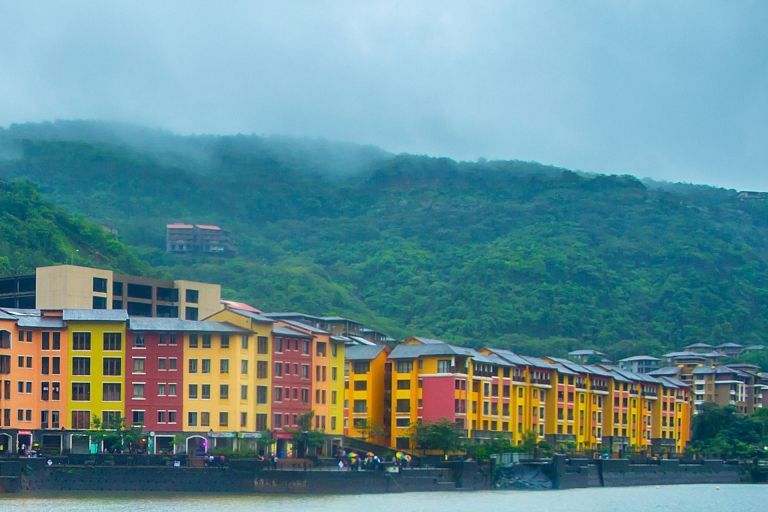
  • Nestled in the Western Ghats, Lavasa is a slice of Italy in India. This hill station, built by the Jadhav Group, is a testament to India’s architectural prowess. With its picturesque lakes, lush greenery, and European-inspired architecture, Lavasa is a perfect getaway from the chaos of city life.

    The brainchild of former IT czar Rajendra Pawar, Lavasa was envisioned as a self-sustaining city, blending modern living with nature. The city’s masterplan was inspired by the Italian town of Bellagio, with its scenic waterfront and cobblestone streets.

    Lavasa’s charm lies in its serene surroundings, adventure activities, and luxurious resorts. Whether you’re looking for a romantic retreat or a family vacation, Lavasa has something for everyone 🌟.

    As you wander through its streets, you’ll discover a unique blend of Indian and Italian cultures. From wine-tasting to hiking, Lavasa is a destination that will leave you spellbound 😊.

  • Shravan Kumar’s journey is the stuff of dreams. Just a decade ago, he was steering a tempo through Mumbai’s chaotic streets. Today, he’s the proud owner of Shankh Airline, India’s newest carrier. How did he do it?

    Growing up in a small Bihar village, Shravan’s love for travel was sparked by watching planes crise-cross the sky. With limited means, he moved to Mumbai, working odd jobs before landing a gig as a tempo driver. But his eyes remained fixed on the skies.

    A chance encounter with a passenger—a retired pilot—ignited a spark. Shravan poured his savings into pilot training, eventually earning his wings. When India opened up its skies to new airlines, he took a leap, launching Shankh Airline with a fleet of modern jets.

    “Flying isn’t just about reaching a destination,” Shravan says, “it’s about lifting people to new heights.” From ferrying dreams to connecting India’s corners, Shankh Airline is rewriting the rules 🌍.

    Shravan’s story proves: the sky’s not the limit—it’s the starting point 🚀.

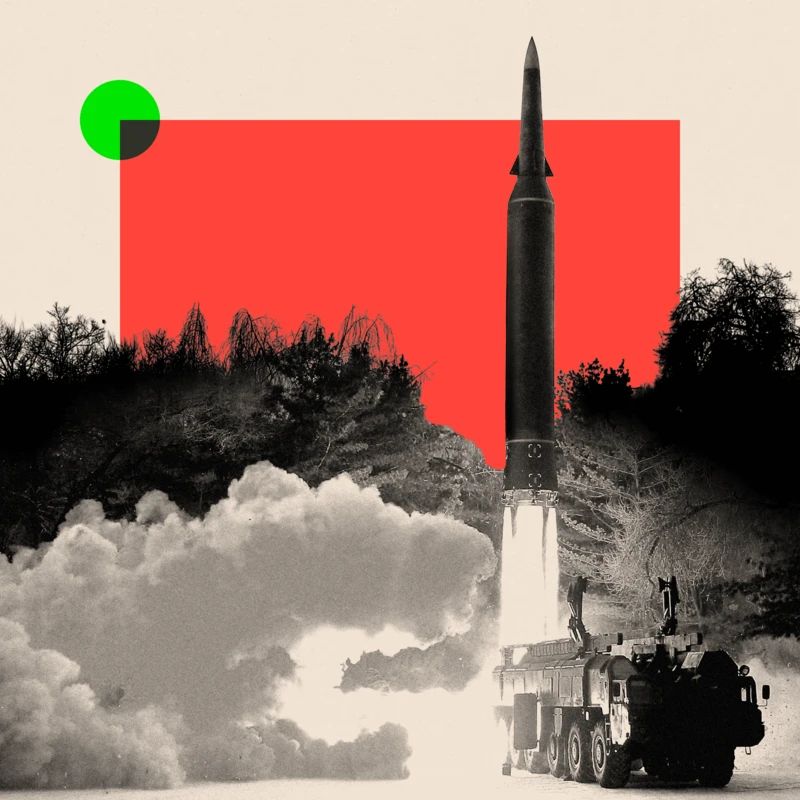
  • In the high-stakes world of military tech, Russia’s Oreshnik missile is making waves. This cutting-edge weapon is designed to evade even the most advanced defense systems, delivering precision strikes at hypersonic speeds (over 6 times the speed of sound).

    Developed as part of Russia’s strategic arsenal, the Oreshnik is part of a broader push for weapons that can outmaneuver global defenses. With its ability to carry nuclear or conventional warheads, it adds a new layer to Russia’s military strategy.

    While details are closely guarded, experts see the Oreshnik as a response to global arms dynamics. As nations race to upgrade their defenses, this missile underscores the evolving nature of warfare ⚔️.