• In 1972, the world witnessed one of the most dramatic economic and humanitarian decisions in modern history. Under the rule of Idi Amin, nearly 80,000 Indians living in Uganda were ordered to leave the country within just 90 days. What was presented as a political move rooted in nationalism soon revealed itself as a decision that would deeply scar a nation’s economy.
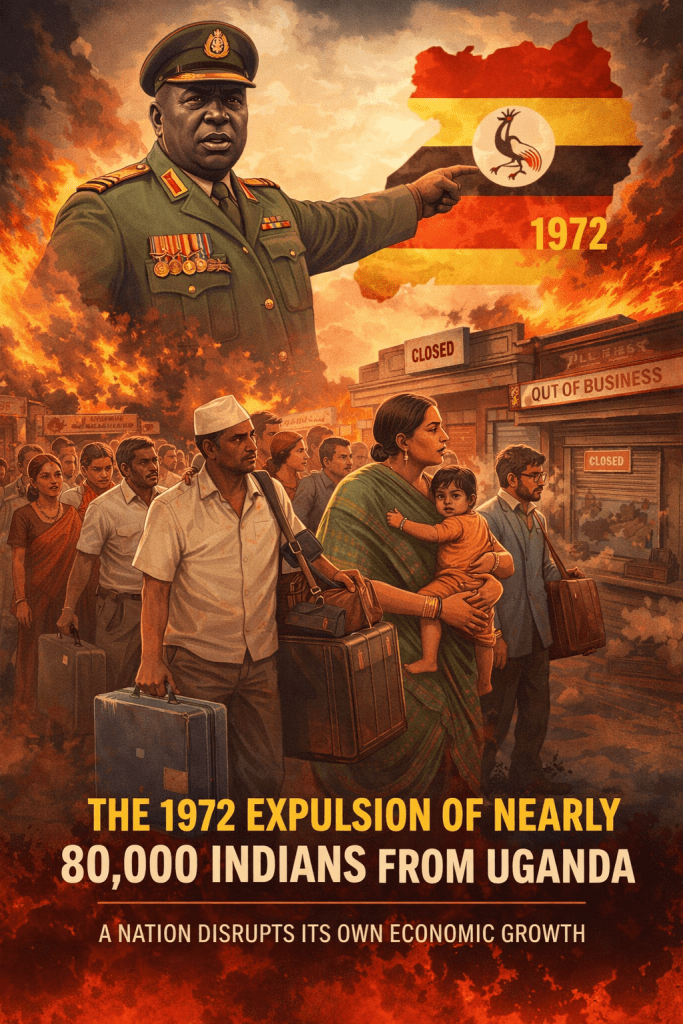
    For decades, the Indian community had been a backbone of Uganda’s commercial ecosystem. They were traders, industrialists, manufacturers, and small business owners who built strong supply chains, managed distribution networks, and kept markets functioning smoothly. From retail shops to large-scale enterprises, their contribution was not just visible — it was foundational.

    When the expulsion order came, businesses were seized, bank accounts frozen, and properties taken over. In a matter of weeks, Uganda lost a significant portion of its entrepreneurial class. Supply chains collapsed. Production slowed. Essential goods became scarce. The intricate web that connected farmers, transporters, wholesalers, and retailers began to unravel.

    Economic decisions are never isolated events. They ripple across generations. The removal of experienced business communities created a vacuum that was not easily filled. Industries struggled without leadership and expertise. Confidence in the market weakened. International relationships were strained. What was intended to empower the nation instead disrupted its economic rhythm.

    History teaches us that economies thrive on inclusion, stability, and trust. When policy targets enterprise instead of empowering it, the cost is often far greater than anticipated. Nations grow when they protect their entrepreneurs, encourage diversity in commerce, and strengthen supply chains — not when they dismantle them.

    The story of 1972 stands as a powerful reminder: economic strength is built over decades but can be destabilized in months. Leadership carries responsibility, and decisions taken in moments of political intensity can echo for generations.

    Growth is not about exclusion. It is about building systems where every contributor has a place — and where progress is measured not by control, but by collective prosperity.


  • In the story of India’s consumer revolution, few names carry the emotional weight and recognition of BPL Limited. At a time when global brands were beginning to enter Indian households, BPL stood tall as a symbol of homegrown excellence, proving that Indian companies could build products that were modern, reliable, and aspirational.

    For many families, BPL was more than an electronics manufacturer. It was part of milestones — the first color television in the living room, the appliance that simplified everyday routines, the trusted equipment that quietly supported healthcare needs. The brand built its reputation not only on functionality, but on trust. In a rapidly changing economy, BPL became a familiar constant.

    What set BPL apart was its commitment to understanding the Indian consumer. It focused on delivering quality without making it unreachable. Innovation was not treated as a luxury but as a responsibility. By investing in technology and adapting to shifting market trends, BPL carved out a powerful identity in a competitive landscape.

    Like every enduring brand, BPL faced challenges. Markets evolved, competition intensified, and consumer expectations grew sharper. Yet the name continues to evoke nostalgia and respect — a reminder of a time when Indian manufacturing began to believe in its global potential.

    BPL’s journey is not just a corporate story. It is a reflection of ambition, resilience, and the spirit of building something meaningful for a nation on the rise. It reminds entrepreneurs and business leaders that brands are built not only through sales, but through trust earned over generations.

  • When speed becomes strategy and reliability becomes reputation, businesses turn to one name — FedEx.

    What started in 1971 as a bold idea by Frederick W. Smith has today evolved into one of the most powerful logistics networks in the world. FedEx Cargo is not just about moving parcels. It is about moving economies, enabling entrepreneurs, and connecting continents in hours, not weeks.

    At the heart of FedEx’s cargo operations lies its global air network, anchored by the legendary SuperHub in Memphis. Every night, aircraft from across the globe converge, sort millions of packages with military precision, and dispatch them before dawn. It is a synchronized ballet of technology, timing, and trust.

    FedEx Cargo changed the psychology of trade. Before express air freight, distance meant delay. Today, a manufacturer in Asia can ship critical components to Europe overnight. A life-saving medical device can cross oceans within hours. An e-commerce entrepreneur can promise delivery timelines that once seemed impossible.

    Speed, however, is only one side of the story. Infrastructure is the backbone. With a fleet of dedicated cargo aircraft, advanced tracking systems, cold-chain logistics, and customs expertise, FedEx operates as a silent partner to industries ranging from pharmaceuticals to high-tech manufacturing.

    The rise of global e-commerce has further amplified the relevance of cargo logistics. Businesses no longer compete locally; they compete globally. FedEx Cargo empowers startups and multinational corporations alike to reach new markets without building physical presence everywhere.

    In a world driven by immediacy, logistics is no longer a back-end operation — it is a competitive advantage. The ability to deliver faster, safer, and more predictably defines brand credibility.

    FedEx Cargo is not just transporting goods. It is transporting ambition. It is carrying the dreams of exporters, the urgency of hospitals, the precision of engineers, and the expectations of customers who demand more.

    Because in modern trade, distance is no longer measured in miles. It is measured in hours.

    And FedEx turned time into opportunity.

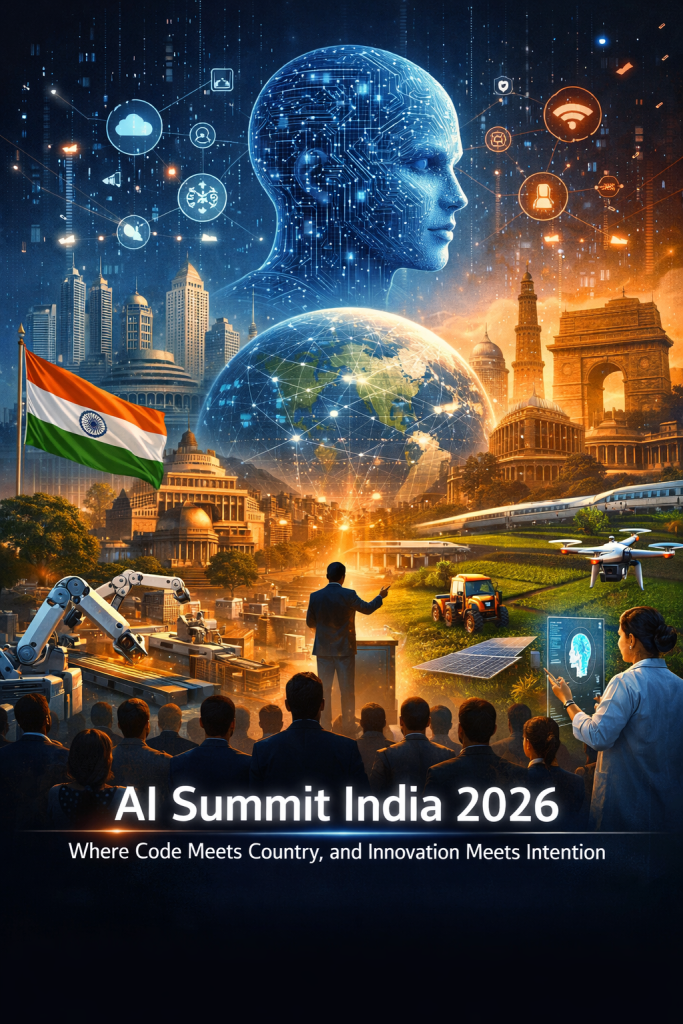
  • India is no longer asking whether Artificial Intelligence will shape the future. It is asking how fast it can lead that future. The AI Summit in India 2026 stands as a defining moment in that journey — not just as a technology event, but as a national declaration of intent.

    From the tech corridors of Bengaluru to the policy rooms of New Delhi, India’s AI ecosystem has been growing at a remarkable pace. Startups, enterprises, researchers, and policymakers are no longer operating in silos. They are building an integrated innovation engine powered by data, talent, and ambition. The summit brings these forces together under one roof.

    India’s demographic advantage — a young, tech-savvy population — combined with its deep IT legacy, positions the country uniquely in the global AI race. Institutions like Indian Institutes of Technology and Indian Institute of Science are pushing boundaries in machine learning, robotics, and computational research. Meanwhile, thousands of startups are translating theory into scalable solutions for healthcare, agriculture, logistics, fintech, and governance.

    What makes the AI Summit 2026 different is its shift from conversation to commercialization. This is not just about panel discussions on ethics and algorithms. It is about AI-driven manufacturing units, smart supply chains, precision farming, predictive healthcare, and intelligent financial systems. It is about transforming GDP impact into grassroots impact.

    For entrepreneurs and founders, this summit represents opportunity. For investors, it signals momentum. For policymakers, it presents responsibility. And for young innovators, it offers validation that India is not merely consuming global technology — it is building it.

    The world is watching how India will balance innovation with regulation, scale with sustainability, and speed with security. As AI becomes foundational infrastructure — much like electricity or the internet — the countries that shape its governance and application will shape the global economy.

    AI Summit in India 2026 is more than a gathering. It is a strategic milestone in India’s ambition to become a technology superpower. The conversations held, the partnerships formed, and the investments committed here will echo far beyond conference halls. They will define how intelligence — artificial yet transformative — powers the next chapter of India’s growth story.

  • For decades, the friendship between India and Israel has grown quietly, steadily, and strategically — built not just on diplomacy, but on trust.

    The formal diplomatic relationship between India and Israel began in 1992, but the emotional and historical connection goes much deeper. India recognized Israel in 1950, even when global politics made such decisions complicated. It was a move that reflected balance — India standing firm on its principles while keeping its strategic options open.

    Over the years, this relationship has evolved into one of the most important partnerships in Asia. Defense cooperation became the backbone of bilateral ties. Israel has emerged as one of India’s top defense suppliers, offering advanced technology, intelligence sharing, and joint military development. During critical times, including the Kargil conflict, Israel extended support when it mattered most. Partnerships like these are not built overnight — they are forged in moments of urgency and strengthened through reliability.

    But the India–Israel relationship is not only about defense.

    Agriculture has become a shining example of practical collaboration. Through Centers of Excellence across various Indian states, Israeli drip irrigation technology and water management expertise have transformed farming practices. In a country where agriculture feeds millions and water scarcity is a growing concern, such cooperation directly impacts livelihoods. Innovation meets necessity — and farmers benefit.

    Technology and innovation form another powerful bridge. Israel, often called the “Start-Up Nation,” brings cutting-edge expertise in cybersecurity, artificial intelligence, and water technology. India, with its vast market and growing digital economy, offers scale and opportunity. Together, they create a synergy of innovation and execution — ideas from Tel Aviv meeting implementation across Indian cities.

    High-level visits further strengthened the bond. In 2017, Indian Prime Minister Narendra Modi made a historic visit to Israel — the first ever by an Indian Prime Minister. In return, Israeli Prime Minister Benjamin Netanyahu visited India, reinforcing the message: this is not a transactional relationship; it is a strategic partnership.

    Trade between the two nations has grown from modest beginnings to billions of dollars annually, spanning diamonds, pharmaceuticals, chemicals, agriculture, and high-tech sectors. Beyond numbers, what stands out is mutual respect. Both nations value resilience. Both nations have faced security challenges. Both have built strong democracies in complex neighborhoods.

    At its core, the India–Israel friendship represents modern diplomacy — pragmatic, future-focused, and innovation-driven.

    In a rapidly changing world, alliances are tested not by words but by actions. And over the years, India and Israel have shown that true partnership is built on shared interests, shared challenges, and shared ambition.

    Two nations.
    One evolving partnership.
    A friendship shaped by trust and strengthened by time.

  • There are rivers that simply flow, and then there are rivers that carry stories, civilizations, emotions, and power within their currents. The Chenab River is one such river — wild, majestic, and deeply woven into the cultural and geographical fabric of the Indian subcontinent.

    Born in the upper Himalayas in Himachal Pradesh, where the Chandra and Bhaga rivers meet at Tandi, the Chenab begins its journey with a force that mirrors the raw energy of the mountains themselves. From there, it carves its way through the dramatic valleys of Jammu and Kashmir, cutting through rocks that have stood for centuries, shaping landscapes that leave travelers speechless.

    The Chenab is not just a river of water; it is a river of legends. Its ancient name, Asikni, finds mention in the sacred hymns of the Rigveda. Over centuries, it has witnessed empires rise and fall, borders shift, and cultures blend. Flowing onward into Pakistan, it eventually merges with the mighty Indus system, contributing to one of the world’s oldest and most significant river networks.

    Strategically and economically, the Chenab plays a crucial role. Hydroelectric projects along its course harness its powerful currents, lighting homes and fueling development. Agriculture thrives along its banks, where fertile soil nurtures crops that sustain millions. Yet, beyond economics and infrastructure, the Chenab remains a symbol of endurance and continuity.

    Stand beside the Chenab during monsoon, and you will witness its fierce personality — roaring, unapologetic, unstoppable. Visit in winter, and you may find a calmer presence, reflective and steady, as if the river itself is meditating under the Himalayan sky. In every season, it commands respect.

    But like many great rivers, the Chenab faces modern challenges. Climate change, environmental pressures, and geopolitical tensions test its resilience. Still, it flows — adapting, enduring, reminding us that nature’s rhythm cannot be easily controlled.

    The Chenab River teaches a powerful lesson: strength does not always shout; sometimes, it simply keeps moving forward. Through valleys and borders, through storms and sunshine, it continues its journey — ancient, relentless, and alive.

    In its flow, we see more than water. We see history in motion.

  • Look up at the sky and you’ll notice something interesting — almost every airplane is painted white. It has become the global standard in aviation. Yet, there is one airline that broke this tradition and chose a bold, powerful black. That airline is Air New Zealand.

    While most carriers prefer white for practical reasons, Air New Zealand introduced black aircraft as a tribute to national pride and identity. The colour reflects the spirit of New Zealand and its deep connection to the legendary All Blacks rugby team. The black livery quickly became iconic — not just a design choice, but a statement in the sky.

    But why are airplanes usually white in the first place?

    The answer is rooted in science and economics. White paint reflects sunlight. Aircraft spend long hours under direct sun — whether cruising above the clouds or parked on airport runways. A white surface helps reduce heat absorption, keeping the aircraft cooler and protecting internal systems from temperature stress. Over time, this improves efficiency and reduces maintenance strain.

    White also makes inspections easier. Small cracks, oil leaks, dents, or corrosion marks are more visible on a light surface. In aviation, where safety is everything, easier inspection means faster detection and quicker maintenance decisions.

    There’s also a cost factor. Paint adds weight to an aircraft, and in aviation, even a small increase in weight can affect fuel consumption. Lighter shades generally require less complex layering and may add slightly less weight compared to darker coatings. Over thousands of flights, these small differences translate into significant operational savings.

    Another subtle advantage is durability. White paint fades less noticeably under constant exposure to sunlight. It also simplifies repainting when aircraft are sold or rebranded, which helps preserve resale value.

    So what is the real difference between white and black airplanes?

    Functionally, there is little difference in how they fly. The aircraft’s performance remains largely the same. The true distinction lies in purpose. White represents efficiency, safety, cost-effectiveness, and practicality. Black represents branding, bold identity, and emotional connection.

    Air New Zealand chose identity over convention — and in doing so, turned an aircraft into a flying symbol. Most airlines choose white because it makes business sense. One chose black because it makes a statement.

    The next time you see a white aircraft crossing the sky, remember — it’s not just a colour. It’s a decision shaped by science, safety, and strategy. And if you ever spot a black one, know that you’re witnessing a story painted across the clouds.

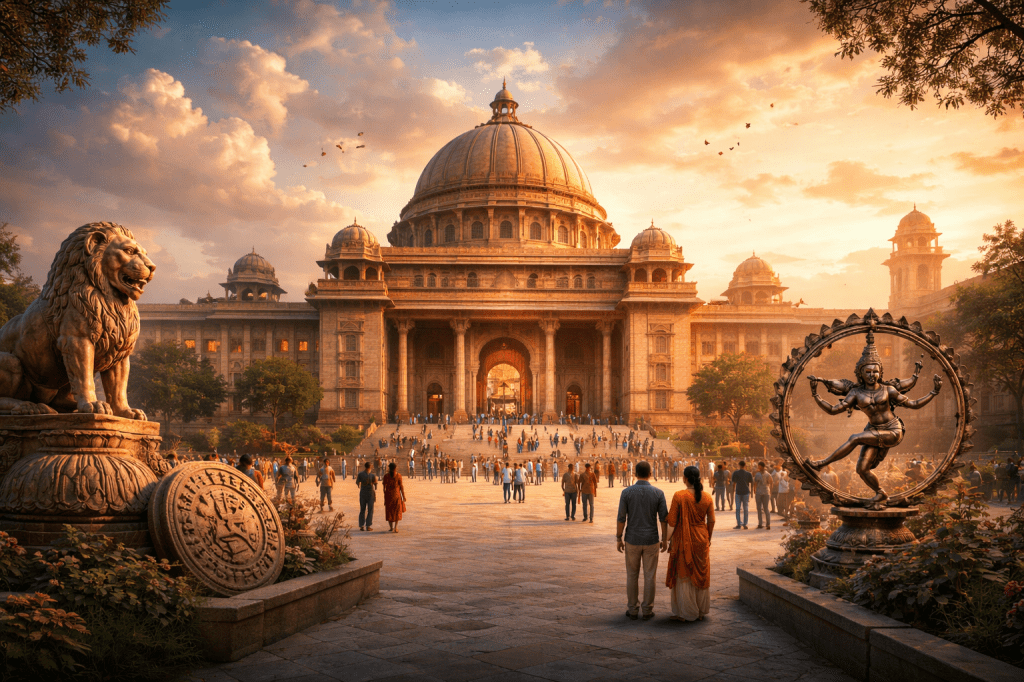
  • India is not just a country. It is a continuous civilization — layered, living, breathing through time. And now, that timeless journey finds a monumental home in the world’s largest museum, built to narrate 5,000 years of Indian civilization under a single roof.

    In the heart of New Delhi stands the iconic Yuge Yugeen Bharat National Museum, a visionary cultural landmark rising within the historic North Block and South Block buildings along Kartavya Path. What once symbolized colonial administration is now being transformed into a sanctuary of civilizational pride — a poetic reclamation of history.

    This is not merely a museum. It is a narrative architecture. A civilizational archive. A time machine.

    From the mysteries of the Indus Valley to the philosophical depth of the Vedic age, from the intellectual brilliance of ancient universities to the artistic magnificence of temple architecture, from the resilience of medieval India to the fire of the freedom movement, and into the aspirations of modern India — every era will breathe here.

    The scale itself is staggering. Spanning over 1.5 million square feet, this museum is designed to surpass global institutions in size and storytelling depth. It is expected to house thousands of artifacts, immersive galleries, digital experiences, and thematic exhibitions that bring together archaeology, art, science, culture, governance, spirituality, and innovation.

    But beyond numbers, what truly matters is meaning.

    For decades, India’s story was fragmented across textbooks, museums, and narratives written through borrowed lenses. This museum seeks to tell the story from within — through Indian eyes, Indian memory, Indian consciousness.

    It is an attempt to present Bharat not as a timeline of invasions and rulers, but as an unbroken flow of ideas, knowledge systems, traditions, and resilience.

    Imagine walking through galleries where ancient scripts whisper forgotten wisdom. Where sculptures speak of devotion and mathematics meets astronomy in stone inscriptions. Where freedom fighters’ voices echo not as distant history, but as living inspiration. Where children don’t just see artifacts — they experience identity.

    This is more than preservation. It is assertion.

    In a world racing toward the future, India pauses — not to look back in nostalgia — but to draw strength from continuity. Because civilizations that remember, endure.

    The world’s largest museum is not just a cultural project. It is a statement: that India’s story is vast, layered, and worthy of being told at the scale of its spirit.

    Five thousand years. One civilization. One roof.

    And the journey is just beginning.

  • In the shadow world of intelligence, truth is rarely loud. It moves quietly, wrapped in secrecy, politics, and national interest. One such name that echoed across borders is Kulbhushan Jadhav.

    Arrested in 2016 by Pakistan, Jadhav was accused of espionage and sabotage. Pakistan claimed he was an operative of Research and Analysis Wing, India’s external intelligence agency. On the other side, India maintained that he was a retired naval officer and a businessman who had been abducted from Iran. Between these two narratives stood one man — silent, confined, and at the center of a geopolitical storm.

    Espionage is not just about secrets; it is about perception. In the world of intelligence, confirmation is rare and denial is expected. Governments do not easily admit their shadows. Nations protect their interests with calculated statements. And in such a landscape, individuals become symbols — sometimes heroes, sometimes villains — depending on which side of the border you stand.

    The case did not remain confined to diplomatic corridors. It reached the halls of the International Court of Justice. In 2019, the court ruled that Pakistan must provide consular access and review the conviction, emphasizing international law and the Vienna Convention. It was a reminder that even in matters of national security, global legal frameworks attempt to uphold certain principles.

    But beyond the legal arguments and political statements lies a deeper reflection. Intelligence agencies operate in a realm where recognition is rare and risk is constant. If successful, they remain unknown. If exposed, they become headlines. The life of an alleged spy is a paradox — trained to stay invisible, yet remembered only when captured.

    The story surrounding Jadhav is not just about one individual. It represents the fragile tension between two nuclear-armed neighbors, the complexity of covert operations, and the power of narrative in shaping public opinion. It forces us to ask difficult questions: What is patriotism in the intelligence world? Where does truth end and strategy begin? And who carries the cost when geopolitics turns personal?

    History will judge the politics. Courts will interpret the law. Governments will defend their positions. But the human dimension — the years spent behind walls, the families waiting across borders, the silence maintained in the name of national duty — remains the most profound part of this story.

    In the end, intelligence is a game of shadows. And sometimes, a single name becomes the face of that shadow.

  • When Japan unveils an innovation, it rarely does so for attention. It does it to redefine what’s possible. A bullet train without seats or windows may sound unusual at first — almost incomplete. But in Japan’s world of precision engineering, nothing is accidental. Every design choice carries purpose.

    This concept is not built for passengers. It is a high-speed experimental model created to test the limits of performance, aerodynamics, and engineering efficiency. By removing seats, windows, and other interior components, engineers reduce weight significantly. Less weight means greater speed. Fewer structural interruptions mean smoother airflow. And smoother airflow means enhanced stability at extreme velocities.

    Japan has always treated time as a discipline. The country’s rail network is famous not just for speed, but for punctuality measured in seconds. For them, innovation is not about comfort first — it is about mastery. Mastery over motion. Mastery over time.

    A train without seats challenges our traditional idea of travel. We associate trains with journeys, views through windows, and comfort during transit. But this model is not about the journey we see — it is about the boundaries we break. It is a laboratory on rails, designed to push technology forward so that future passenger trains become faster, safer, and more efficient.

    This is how Japan builds the future — quietly, precisely, and intentionally. They test boldly so that the final product feels effortless. They remove what is unnecessary to strengthen what truly matters.

    Innovation is not always glamorous. Sometimes it looks empty. Sometimes it removes comfort before it improves it. But behind that emptiness is vision.

    And that is the real story of a bullet train without seats or windows — not a train meant to carry people today, but a platform designed to carry possibilities tomorrow.