• Sudan sits on one of Africa’s richest gold belts. Beneath its vast deserts lies wealth capable of transforming a nation. Yet, above the ground, the story of Sudan’s gold mines is not one of prosperity—it is one of power, conflict, and unanswered questions.
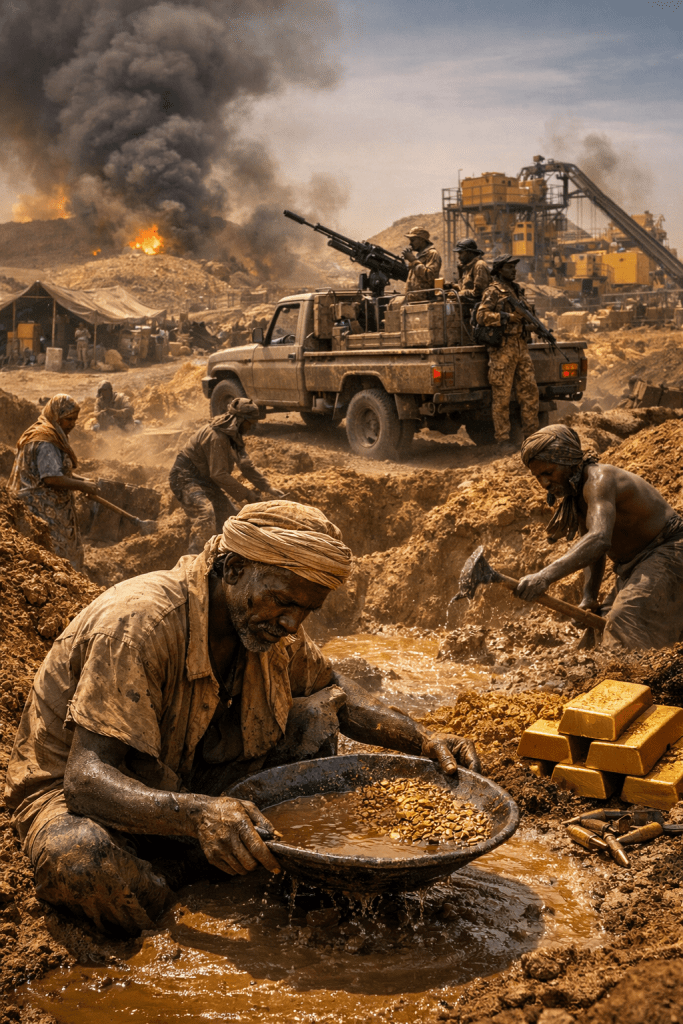
    Gold mining in Sudan has grown rapidly over the last decade, turning the country into one of Africa’s top gold producers. But this boom did not translate into stability or shared wealth. Instead, gold became a currency of control. Armed groups, private militias, and shadow networks took hold of mining regions, using gold not as a national asset, but as fuel for prolonged conflict.

    In remote areas, traditional miners dig by hand under extreme conditions, often risking their lives for a few grams of gold. Around them operate powerful actors with modern machinery, guarded routes, and international connections. The contrast is stark: survival at the bottom, influence at the top.

    Gold revenues that could have funded schools, hospitals, and infrastructure instead slip through informal channels, crossing borders quietly. The metal moves faster than accountability. In a land where institutions are fragile, gold has become stronger than law.

    Sudan’s gold is not just a mineral—it is a mirror. It reflects how natural resources, when captured by conflict and greed, can deepen instability instead of healing it. True wealth is not what lies underground, but what a nation chooses to build above it.

    Until transparency replaces exploitation, Sudan’s gold will continue to shine for a few—while the country remains in the shadows.

  • In global aviation, dominance is often measured by size. Embraer rewrote that rule by proving that precision, purpose, and focus can be just as powerful.

    Founded in 1969 in Brazil, Embraer—short for Empresa Brasileira de Aeronáutica—began with a national ambition and evolved into a global aerospace leader. Today, it stands proudly among the world’s top aircraft manufacturers, shaping how regional and short-to-medium haul aviation truly works.

    What defines Embraer is its deep understanding of real-world flying. Instead of building aircraft for the sake of scale, the company designs jets that solve practical problems for airlines—fuel efficiency, operational flexibility, passenger comfort, and economic viability. This mindset gave birth to the iconic E-Jet family, especially the E2 series, widely praised for its quieter cabins, lower emissions, and reduced operating costs.

    Beyond commercial aviation, Embraer’s influence stretches across business jets, defense aviation, and advanced aerospace systems. Its Phenom and Praetor business jets are respected for combining performance with comfort, while its defense aircraft play critical roles in surveillance, transport, and security across multiple nations.

    In an industry facing growing environmental responsibility, Embraer is not waiting for the future—it is building it. Investments in sustainable aviation, fuel-efficient technologies, and research into hybrid and electric aircraft reflect a company preparing aviation for the decades ahead.

    Embraer may not always seek the spotlight, but its aircraft connect smaller cities to global hubs, strengthen regional economies, and make air travel more accessible and efficient. Its jets fly across over 100 countries, quietly supporting the backbone of modern air connectivity.

    Embraer’s legacy is simple yet profound:
    Not the biggest aircraft.
    Not the loudest brand.
    But one of the smartest forces shaping the future of flight.

    Sometimes, the most meaningful progress happens between major destinations—and that is exactly where Embraer excels.

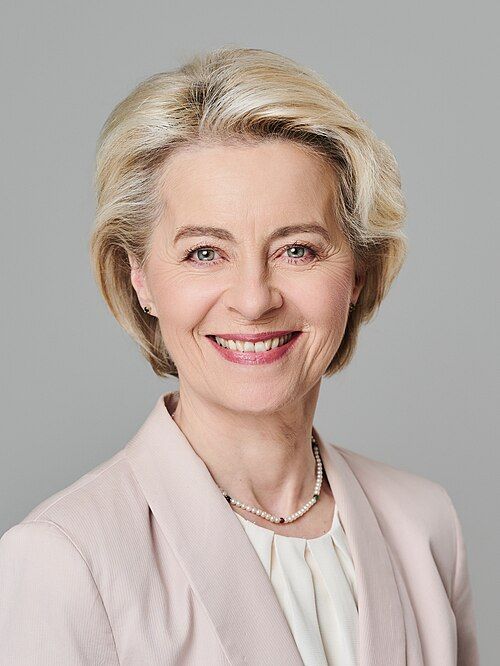
  • The European Union is often described as one of the most complex political unions in the world—27 nations, multiple languages, diverse economies, and sharply different political priorities. Steering such a union demands not just authority, but balance. At the center of this balancing act stands Ursula von der Leyen, President of the European Commission.

    When Ursula von der Leyen assumed office, Europe was already facing deep structural challenges. Soon after, crises arrived in waves—pandemics, geopolitical conflicts, energy insecurity, climate urgency, and economic uncertainty. Her leadership has been defined less by loud rhetoric and more by calculated resilience.

    As the first woman to lead the European Commission, her role carries symbolic weight. But her impact goes far beyond symbolism. She positioned the Commission as an active force rather than a bureaucratic observer—pushing bold initiatives on climate action, digital transformation, and strategic autonomy. Policies such as the European Green Deal and efforts toward reducing dependency on external powers reflect a long-term vision for Europe’s sovereignty and sustainability.

    Ursula’s background in governance and policy shaped her approach. She emphasizes cooperation without compromising firmness. In moments of global tension, her voice represents a united Europe—sometimes cautious, sometimes assertive, but always strategic. She understands that in today’s interconnected world, Europe’s strength lies in unity, even when internal differences challenge that unity.

    Her presidency also highlights a shift in leadership style within global politics. Empathy paired with decisiveness. Dialogue paired with action. In a world increasingly polarized, her role reminds us that leadership is not about domination, but coordination.

    Ursula von der Leyen’s journey at the European Commission reflects a larger story—one where leadership is tested not in times of comfort, but in times of uncertainty. And in those uncertain moments, Europe continues to move forward under her steady watch.

  • What looks like abundance is, in reality, a warning.

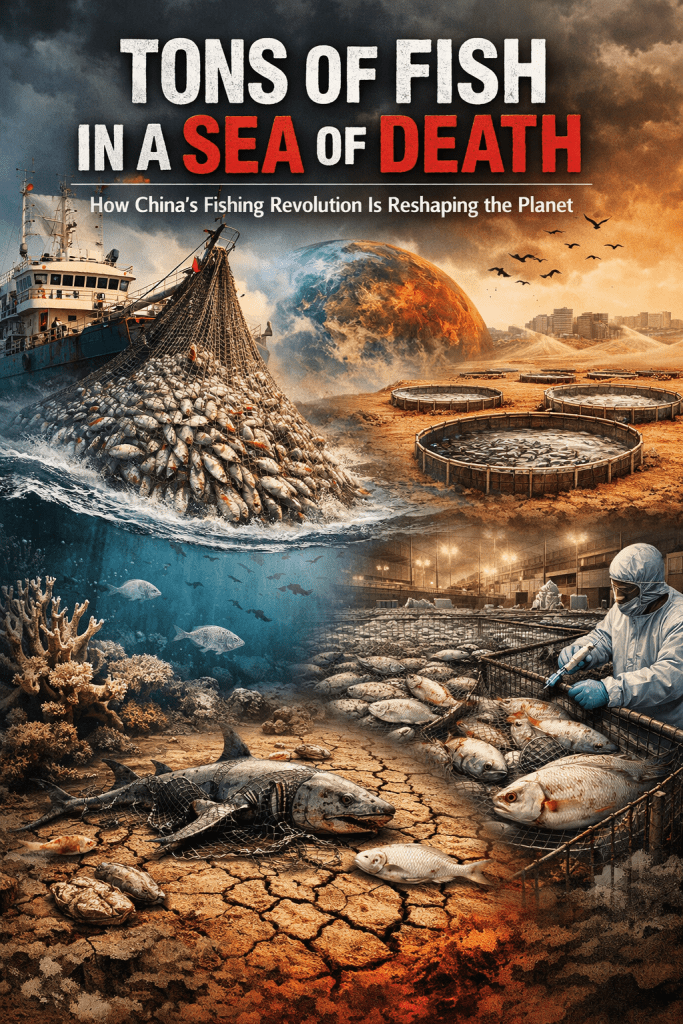
    Across oceans and even on land stripped of life, China’s fishing and aquaculture expansion is producing millions of tonnes of fish every year. From deep-sea industrial fleets to artificial ponds carved into lifeless terrain, fish are harvested at a scale never seen before in human history.

    But this is not a story of food security alone. It is a story of ecological imbalance.

    Relentless fishing has emptied natural oceans, destroyed coral systems, and pushed several species to the edge of extinction. To compensate, fish are now being “manufactured” in controlled environments — deserts turned into ponds, ecosystems replaced by machines, antibiotics, and artificial feed. Life is produced, but nature is erased.

    The paradox is cruel:
    more fish than ever before, yet oceans closer to death.

    This silent transformation raises a question the world cannot avoid anymore —
    are we feeding humanity, or slowly exhausting the planet that sustains it?

    Progress measured only in tonnes may soon cost us oceans measured in loss.

  • In the cultural heart of Kerala, where ancient literary traditions meet a restless modern world, the Mathrubhumi International Festival of Letters has quietly become one of India’s most compelling global conversations. This year, its spotlight veered boldly into the shadowy realms of geopolitics and human experience.

    Among the voices that the festival brought to the stage was Pulitzer Prize-winning journalist Declan Walsh, a reporter whose life has been shaped by the very forces he has spent decades trying to explain. Once expelled from Pakistan after a decade of frontline reporting, Walsh’s stories peeled back the curtain on the country’s deep state—an intertwining network of intelligence, politics, militancy and unspoken power structures that few outside the region truly understand.

    Walsh’s journey wasn’t merely professional; it was personal. Ordered out of the country with only 72 hours’ notice, he left behind not just a bureau but a life and relationships forged in markets, cafes, conflict zones and border towns. His encounters ranged from clerics and human-rights defenders to militants and political insiders. These interactions—fraught with danger, compassion, absurdity and contradiction—have shaped his unique insight into how unseen forces shape nations and their narratives.

    At MBIFL, Walsh spoke not just about borders or geopolitics, but about stories—the narratives that define societies and the invisible lines that separate perception from reality. In a world increasingly tempted by simplistic explanations, his reflections reminded his audience that truth is often found in the spaces between certainty and doubt.

    But this festival is more than global politics. From poetry and prose to panels on culture and identity, the Mathrubhumi International Festival of Letters continues to be a space where writers, thinkers and readers explore what it means to listen—to history, to each other, and to the unquiet rumblings of the modern world.

    At a time when the stories that matter are too often drowned out by noise, this gathering stands as a testament to the enduring power of letters and the courage of those willing to tell hard truths.

  • Some foods are eaten.
    Some foods are remembered.
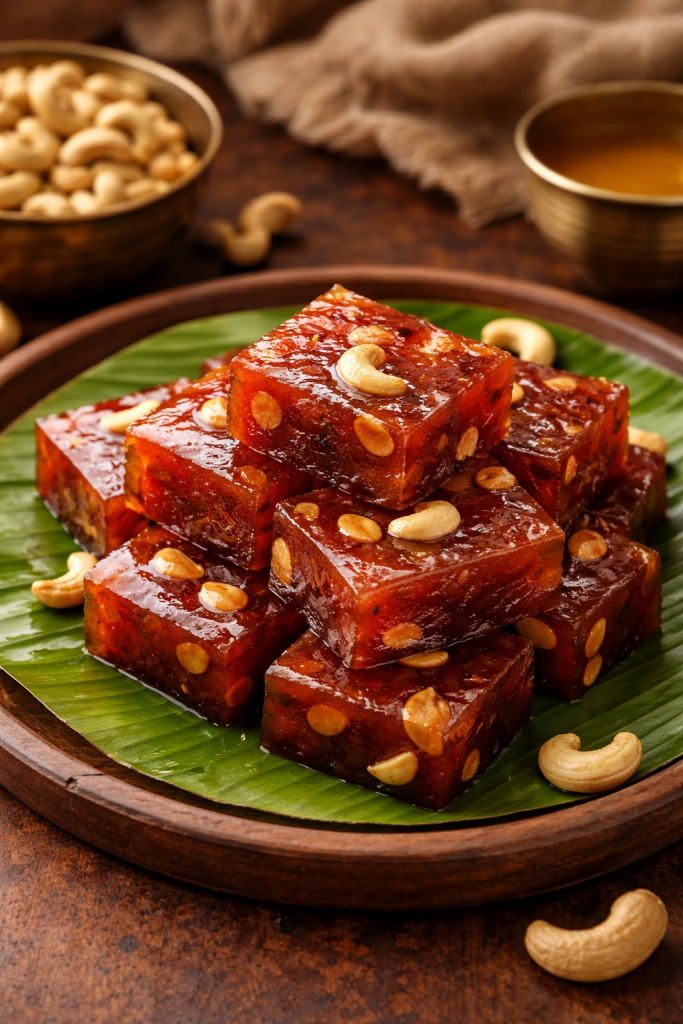
    And then there is Kozhikodan Halwa — a sweet that carries history in every glossy slice.

    Walk through the narrow lanes of SM Street, Kozhikode, and you’ll notice something magical. Rows of halwa, glowing in deep shades of amber, ruby, and bronze, stacked like edible jewels. This is not just dessert on display; it’s heritage, patience, and pride — quietly waiting to be tasted.

    A Sweet Born from Patience

    Unlike quick-made confections, Kozhikodan Halwa demands time and discipline. Prepared using refined wheat flour, coconut oil, sugar, and nuts, it is slow-cooked for hours, stirred continuously until it reaches that unmistakable texture — soft yet firm, shiny yet dense.

    There are no shortcuts here.
    Every batch is a test of endurance.
    Every slice is proof of craftsmanship.

    More Than Ingredients — It’s Emotion

    What makes Kozhikodan Halwa special is not just how it’s made, but why it’s made. It is served to guests as a symbol of respect. It appears at weddings, festivals, and celebrations, silently saying, “You are welcome here.”

    For many Malayalis, one bite can bring back childhood memories — family trips, crowded sweet shops, the sound of knives slicing through thick slabs of halwa wrapped in butter paper.

    Tradition That Refuses to Fade

    In an age of factory-made sweets and artificial flavors, Kozhikodan Halwa has held its ground. Still handmade. Still slow-cooked. Still proudly local.

    Its popularity isn’t driven by marketing.
    It’s driven by trust passed from one generation to the next.

    That’s why people travel miles just to buy it from their favorite shop. That’s why it’s gifted across states and countries. That’s why it’s not just called halwa — it’s called Kozhikodan Halwa.

    A Legacy You Can Taste

    This is not a sweet created for trends.
    It was created for time.

    Kozhikodan Halwa reminds us that the finest things in life aren’t rushed — they are earned, preserved, and shared.

    Because some legacies aren’t written in books.
    They’re cooked slowly… and remembered forever.

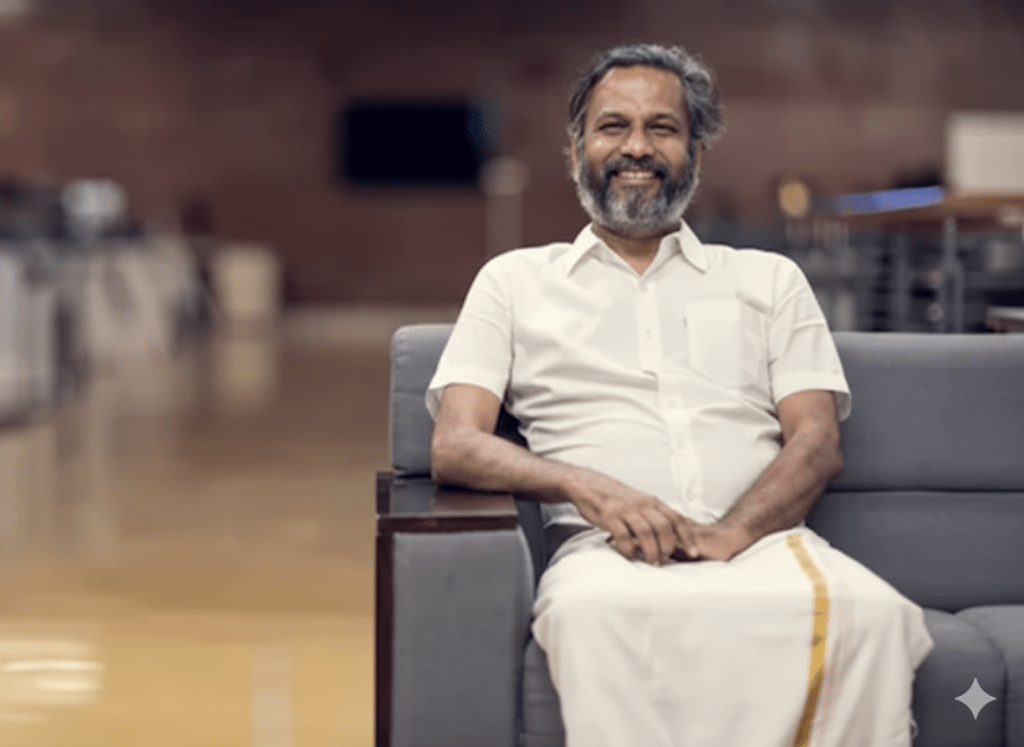
  • In the world of software and technology, few entrepreneurs embody resilience and unconventional thinking like Sridhar Vembu, the co-founder and CEO of Zoho Corporation. From his humble beginnings in India to building one of the most respected SaaS companies globally, Vembu’s journey is a masterclass in innovation, perseverance, and values-driven leadership.

    Born in 1968 in Tamil Nadu, India, Vembu displayed a keen aptitude for mathematics and technology early in life. After completing his education in India, he moved to the United States to pursue higher studies at Princeton University, earning a PhD in Electrical Engineering. However, the allure of entrepreneurship and the dream of building something meaningful brought him back to India.

    In 1996, Vembu co-founded AdventNet, which later rebranded as Zoho Corporation, with the vision of creating software that empowers businesses globally. Unlike many tech giants, Zoho chose to bootstrapped its growth, refusing venture capital and staying privately owned. This independence allowed Vembu to prioritize customer value over aggressive expansion, a principle that still defines Zoho today.

    Vembu is well-known for his innovative approach to talent and rural development. Rather than concentrating employees only in major cities, he opened Zoho offices in small towns across India, giving opportunities to underrepresented talent and fostering community growth. This not only transformed lives but also redefined how tech companies could operate outside traditional urban hubs.

    Under his leadership, Zoho has become a global SaaS powerhouse, serving over 80 million users across 180 countries with a suite of products ranging from CRM and productivity tools to finance software. Vembu’s vision of creating self-reliant technology solutions has helped Zoho stay profitable, competitive, and impactful without losing sight of its social and ethical responsibilities.

    What sets Sridhar Vembu apart is not just his business acumen, but his values-driven approach. He believes in frugality, sustainability, and giving back to society—a philosophy evident in Zoho’s rural initiatives, affordable products, and employee-centric culture.

    In an era where startups chase valuations and rapid growth, Sridhar Vembu’s story is a reminder that vision, patience, and integrity can create lasting impact. For aspiring entrepreneurs and business leaders, he is a living example that success is not just measured in numbers but in the positive difference one makes in people’s lives.

  • Some leaders are remembered for speeches.
    Some for positions.
    A rare few are remembered for calm, courage, and clarity when everything is falling apart.

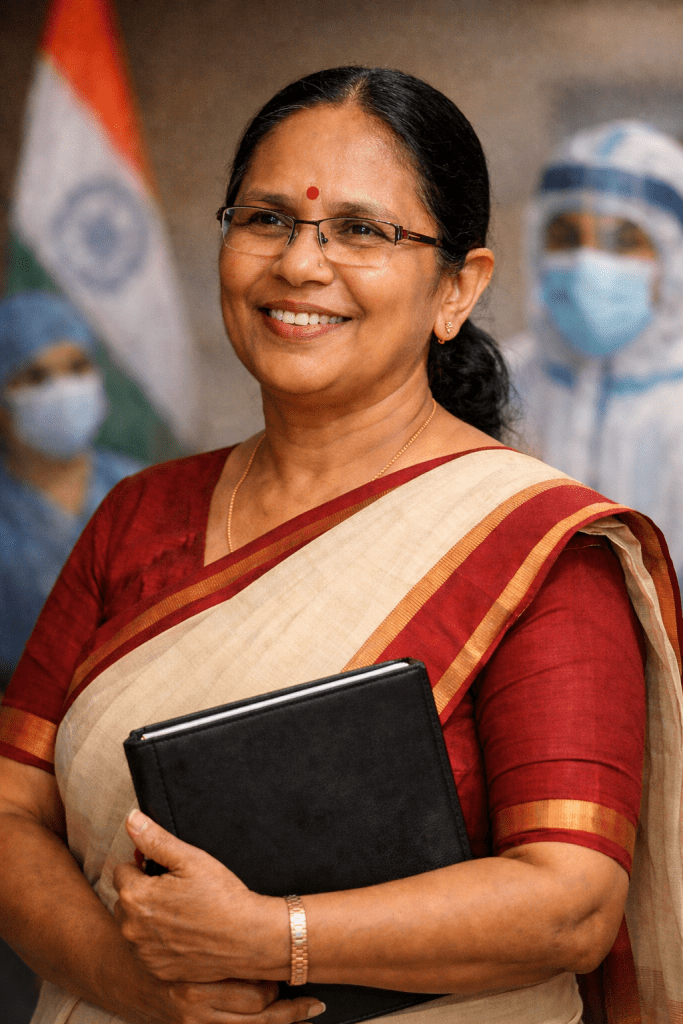
    K. K. Shailaja Teacher belongs to that rare few.

    In a political world often driven by noise, she stood out for her silence—and the work that spoke through it. When fear gripped Kerala during crises, she didn’t dramatize leadership. She practiced it. With the mindset of a teacher and the discipline of a public servant, she approached governance the way classrooms are run: prepare well, explain clearly, care deeply, and never panic the students.

    What made her leadership exceptional was not authority, but credibility. She trusted science when misinformation was louder. She trusted systems when shortcuts were tempting. And most importantly, people trusted her—because trust is earned long before a crisis arrives.

    She communicated without arrogance, decided without ego, and worked without craving applause. There was no hero syndrome. No performative politics. Just long hours, tough decisions, and a visible sense of responsibility to human lives rather than headlines.

    Her journey reminds us that real leadership is not about being in power; it’s about being useful when it matters most. Titles come and go. Impact stays.

    In a time when leadership is often confused with popularity, K. K. Shailaja Teacher proved something far more powerful:
    competence is timeless, integrity is magnetic, and calm is contagious.

    That is not just political success.
    That is legacy.

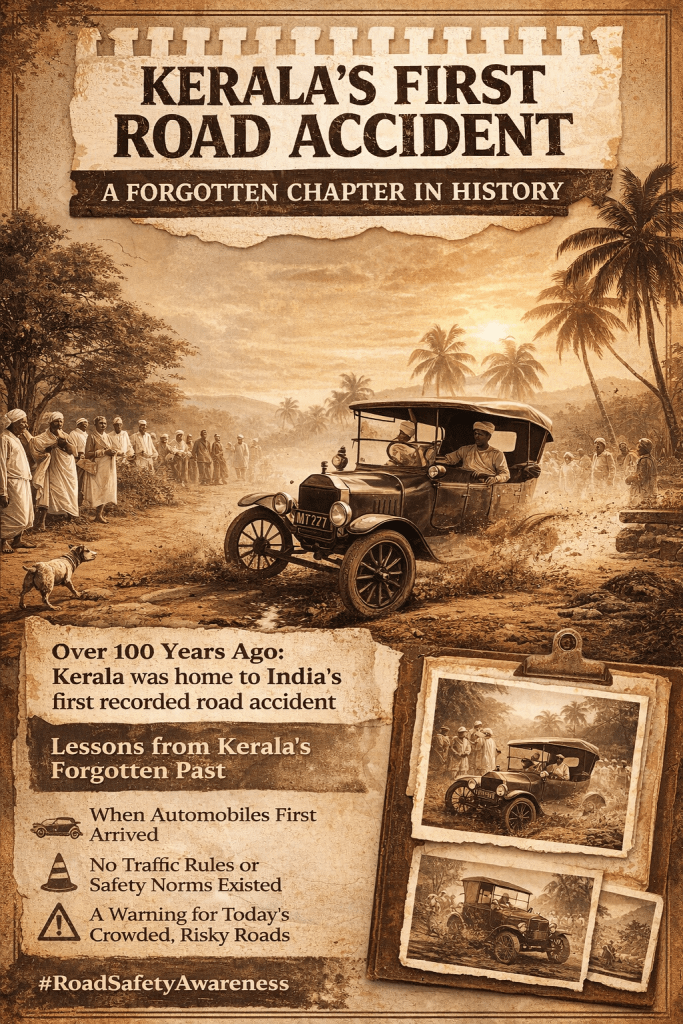
  • When we talk about road accidents today, we think of speeding vehicles, traffic congestion, and modern highways. But very few people know that Kerala’s history with road accidents dates back more than a century—long before traffic signals, helmets, or even proper roads existed.

    This is the story of Kerala’s first recorded road accident, a moment that quietly marked the beginning of road safety concerns in the state.

    The Arrival of the Automobile in Kerala

    In the early 1900s, automobiles were a rare sight in Kerala. Roads were mostly mud tracks meant for bullock carts, pedestrians, and horse-drawn vehicles. When motor cars first appeared, they were symbols of power and prestige—owned only by kings, landlords, or colonial administrators.

    One such car belonged to Kerala Varma Valiya Koil Thampuran, a prominent royal figure of the time. His vehicle was among the earliest automobiles to run on Kerala’s roads.

    The Incident That Made History

    During one of his journeys, the car met with an accident—an event unimaginable for people of that era. Villagers gathered in shock, many seeing a motor vehicle up close for the first time, and now witnessing it involved in a mishap.

    There were no traffic rules, no road signs, no safety norms. Roads were uneven, visibility was poor, and people had little understanding of how dangerous these machines could be.

    That incident went down in history as Kerala’s first known road accident.

    No Speed, Yet No Safety

    What makes this story striking is that speed was not the problem. Cars back then moved slowly compared to today’s standards. Yet accidents still happened—because safety is not only about speed, but about awareness, infrastructure, and discipline.

    This single accident silently warned society about a future where roads would become crowded and risks would multiply.

    From Then to Now

    Fast forward to today, Kerala has one of the highest vehicle densities in India. Despite advanced vehicles, better roads, and strict laws, road accidents remain a major concern.

    The contrast is powerful:

    • Then: One car, shocked onlookers, no safety systems
    • Now: Millions of vehicles, daily accidents, constant warnings

    Yet the lesson remains the same.

    A Lesson from History

    Kerala’s first road accident reminds us that road safety is not a modern issue—it is a timeless responsibility. Technology alone cannot save lives. Awareness, discipline, and respect for life are what truly matter.

    As we observe Road Safety Month and share statistics and slogans, it is worth remembering this forgotten moment from history—when Kerala learned, for the first time, that roads demand responsibility.

    History doesn’t just tell us where we came from.
    Sometimes, it quietly warns us where we might be headed.

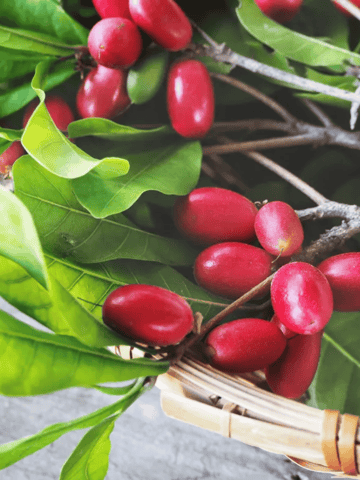
  • China’s Miracle Fruit is not just a fruit—it is a story of patience, science, and quiet transformation. Known to many as goji berry, this tiny red fruit has traveled from ancient Chinese medicine books to modern global supermarkets, earning its reputation as a “miracle” through consistency rather than hype.

    For centuries, goji berries were cultivated in the Ningxia region of China, where farmers believed the fruit carried the balance of nature itself. It was consumed not as a luxury, but as a daily habit—added to soups, teas, and simple meals. Longevity, strong eyesight, immunity, and vitality were not marketed benefits; they were lived experiences passed down through generations.

    What makes this fruit remarkable is not one single nutrient, but its natural combination of antioxidants, vitamins, amino acids, and minerals. In a world obsessed with synthetic supplements and instant results, China’s Miracle Fruit stands out for being slow, natural, and dependable. It does not promise overnight change, but long-term resilience.

    The global rise of wellness culture brought goji berries into the spotlight. As consumers began shifting from processed food to functional nutrition, this humble fruit became a symbol of ancient wisdom meeting modern lifestyle. Smoothies, energy bars, herbal blends, and health drinks adopted it—not because it was trendy, but because it worked.

    Beyond health, the fruit represents something larger about China’s agricultural philosophy. Scale with discipline. Tradition with adaptation. Farmers improved cultivation techniques without disturbing the fruit’s natural essence, turning a regional crop into a global export while preserving its identity. This balance is rare—and powerful.

    China’s Miracle Fruit reminds us of an important truth: real value compounds quietly. Whether in health, business, or life, the most impactful results often come from small, consistent inputs over time. A tiny berry, grown patiently, consumed mindfully, and trusted for centuries—this is not just nutrition. It is a lesson.

    In a fast world chasing shortcuts, China’s Miracle Fruit proves that nature, when respected, still outperforms noise.