Sea turtles have been navigating the world’s oceans for more than 110 million years. They existed before the extinction of dinosaurs, before continents took their current form, and long before humans began shaping the planet to suit their needs. Slow, silent, and resilient, sea turtles are among Earth’s most ancient living beings.
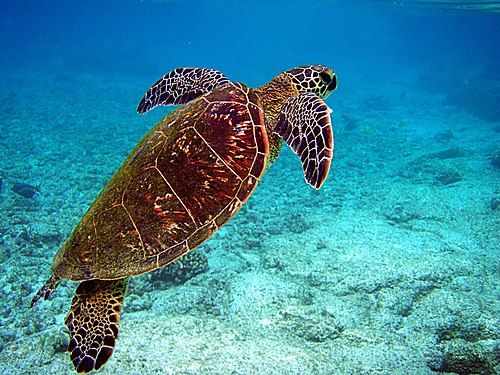
They travel thousands of kilometers across open oceans without maps or technology, guided only by natural instincts and the Earth’s magnetic fields. After decades at sea, many return to the very same beach where they were born to lay their eggs. This journey, repeated generation after generation, is one of nature’s most remarkable acts of precision and memory.
Sea turtles are not just survivors of history; they are essential to the health of marine ecosystems. By grazing on seagrass, they help maintain underwater meadows that support fisheries and store carbon. By controlling jellyfish populations, they protect marine food chains. Their nesting activities also enrich coastal ecosystems, strengthening beaches and supporting plant life. When sea turtles disappear, the ocean quietly begins to lose its balance.
Despite surviving natural catastrophes for millions of years, sea turtles are now facing dangers they are not equipped to handle. Plastic waste in the ocean is often mistaken for food. Fishing nets and accidental bycatch trap and drown them. Coastal development destroys nesting beaches. Rising temperatures caused by climate change affect egg survival and even the gender balance of hatchlings. Many turtles never reach adulthood, and those that do often carry the marks of human interference.
India plays a crucial role in this global story. Along its coastline, especially in the east, Olive Ridley turtles arrive every year in large numbers for mass nesting events known as arribadas. These rare natural events are globally significant and increasingly fragile. Their survival depends on protection, awareness, and responsible human behavior.
Yet, there is still hope. Conservation efforts, community involvement, and better fishing practices have proven that recovery is possible. Protected beaches, turtle-friendly nets, and local stewardship have saved countless lives. When humans choose responsibility over convenience, nature responds.
Sea turtles do not ask for attention. They do not resist change loudly. They simply try to exist, as they always have. Their survival is not just about saving a species; it is about protecting the balance of the oceans and respecting life that moves at nature’s pace.
If a creature that has survived for over a hundred million years now struggles to survive, the question is not whether sea turtles are strong enough. The question is whether we are wise enough to let them live.
 Histopedia
Leave a comment