Princess Diana was not afraid of the spotlight. She had lived with it for years. What changed in the final year of her life was something far heavier—fear.
Those close to her noticed it first. The guarded conversations. The unease. The feeling that she knew too much, said too much, and stood too independently for someone bound to an institution built on silence and control. Diana had begun speaking her truth—about her marriage, her struggles, her emotional pain, and her refusal to be shaped quietly by royal expectations.
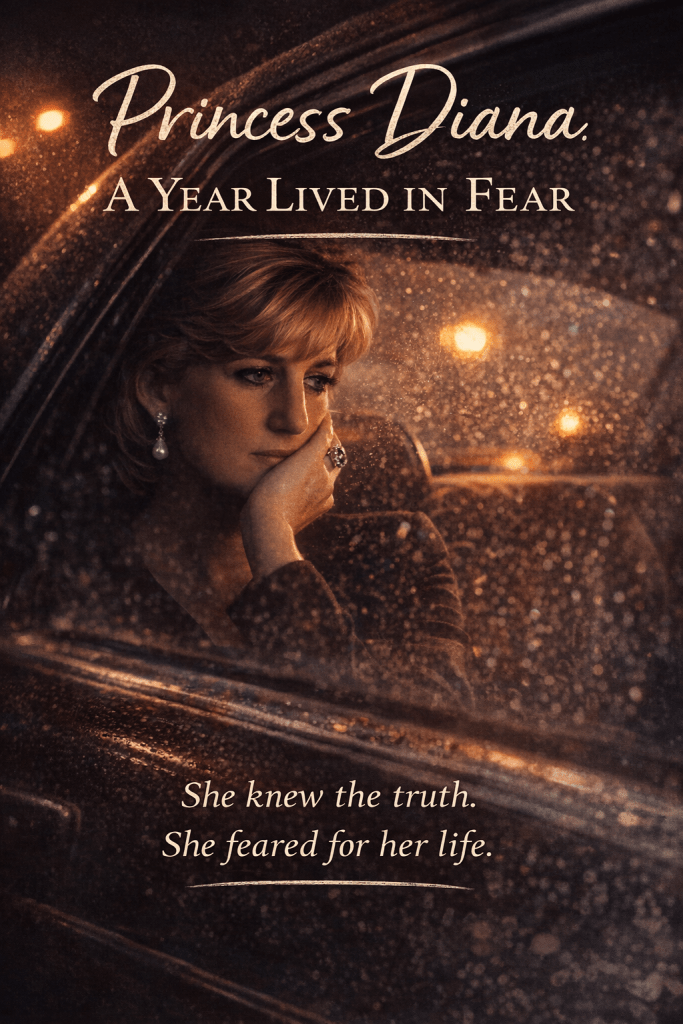
She was no longer just a princess.
She was a voice.
In her final year, Diana moved cautiously. She trusted selectively. She expressed concerns about her safety, documented in letters and shared in private conversations. Whether these fears were intuition, pressure, or the weight of constant surveillance is still debated—but what is undeniable is this: she did not feel safe.
Diana challenged power in subtle but dangerous ways. She humanized royalty. She stood with the marginalized. She exposed emotional realities that institutions prefer hidden. And history shows us that truth, when spoken by someone with influence, often makes powerful enemies.
Her death shocked the world. The questions that followed never truly disappeared.
Was it an accident?
Was it negligence?
Or was it something more?
Time has offered investigations, reports, and official conclusions—but it has not erased doubt. What remains is a lingering discomfort, fueled by the knowledge that Diana herself feared for her life.
In her last year, she lived not as a fairytale princess, but as a woman navigating unseen dangers—aware that truth has a cost.
Princess Diana’s legacy is not defined by how she died, but by how bravely she lived when silence would have been safer.
And perhaps that is why her story still refuses to rest.
 Histopedia
Leave a comment