It was a typical Monday morning at the Louvre Museum in Paris, the air thick with the scent of history and the soft murmur of visitors. But amidst the usual chaos, a sense of unease settled over the museum’s security team. Something was off.
As the morning light crept into the Denon Wing, museum staff discovered that the Mona Lisa, the world’s most famous painting, was gone. The empty frame hung on the wall, a haunting reminder of the brazen heist that had taken place under their noses.
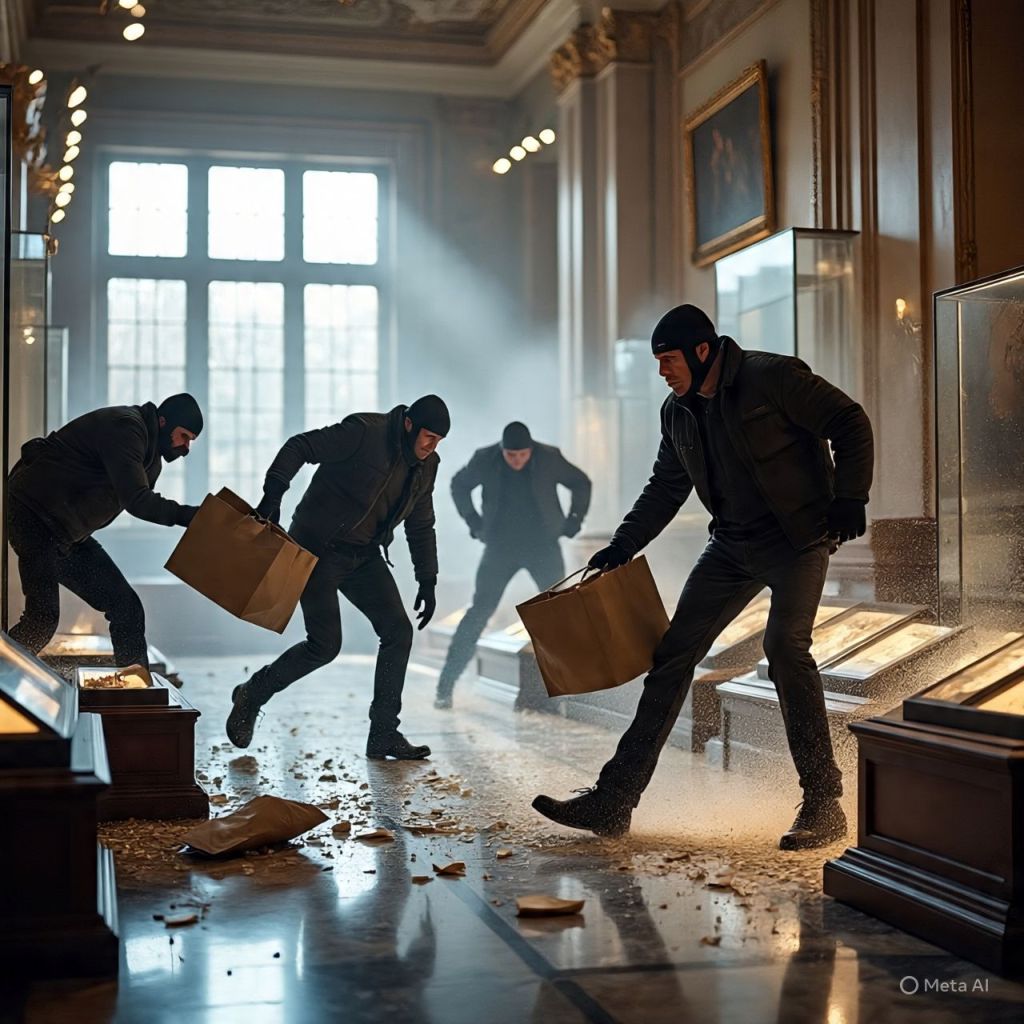
The thief, Vincenzo Peruggia, was a skilled Italian painter and decorator who had worked on the Louvre’s glass dome. He had used his knowledge of the museum’s layout and security to plan the perfect heist.
On August 21, 1911, Peruggia snatched the Mona Lisa from the wall, hiding it under his painter’s smock. He walked calmly out of the museum, disappearing into the crowded streets of Paris.
The investigation was led by Detective Marie-François Canella, a seasoned detective with a keen eye for detail. The police scoured the city, following a trail of clues that led them on a wild goose chase.
As the days turned into weeks, the mystery deepened. The Mona Lisa had vanished, leaving behind only a faint scent of turpentine and a discarded handprint.
The investigation was a rollercoaster ride of twists and turns. A suspicious letter from the thief led the police to a local antique dealer, who revealed that he had been approached by a shady character offering to sell the Mona Lisa.
The trail led to Florence, Italy, where Peruggia had been trying to sell the painting to a wealthy collector. But the buyer was a trap, and Peruggia was caught red-handed.
The Mona Lisa was recovered in 1913, and Peruggia was arrested. The painting was returned to the Louvre, where it was greeted with a hero’s welcome.
The heist had lasted 28 months, and it had shaken the art world to its core. But in the end, justice was served, and the Mona Lisa was back where she belonged.
The image that comes to mind is a haunting one: a dark, empty room, the Mona Lisa’s frame hanging empty on the wall, and the faint scent of turpentine lingering in the air.
Key Players:
- Vincenzo Peruggia: The thief who stole the Mona Lisa
- Detective Marie-François Canella: The detective who led the investigation
- Leonardo da Vinci: The artist who painted the Mona Lisa
Timeline:
- August 21, 1911: The Mona Lisa is stolen from the Louvre
- September 1911: The investigation begins
- November 1911: A suspicious letter is received from the thief
- December 1911: The trail leads to Florence, Italy
- February 1913: The Mona Lisa is recovered
- November 1913: Peruggia is arrested and sentenced to prison
 Histopedia
Leave a comment