As I walked into the packed stadium, the electric atmosphere and deafening roar of the crowd took me back to the rich history of the game. Football, or soccer as it’s known in some parts of the world, is more than just a sport – it’s a global phenomenon that has captured the hearts of billions.
The earliest evidence of games similar to football being played dates back to ancient civilizations in China, Greece, and Rome. In China, a game called cuju was played as early as the 2nd century BC, where players kicked a ball into a hole. The ancient Greeks and Romans also played games that involved ball-kicking and carrying, which were often played for entertainment and as a way to showcase physical prowess.
Fast-forward to 19th-century England, where the modern version of football was born. In 1863, the Football Association was established, and the first official rules were set, standardizing the game and paving the way for its widespread popularity. The rules were developed by a committee of public schools, including Charterhouse, Eton, and Harrow, with the aim of creating a unified set of rules for the game.
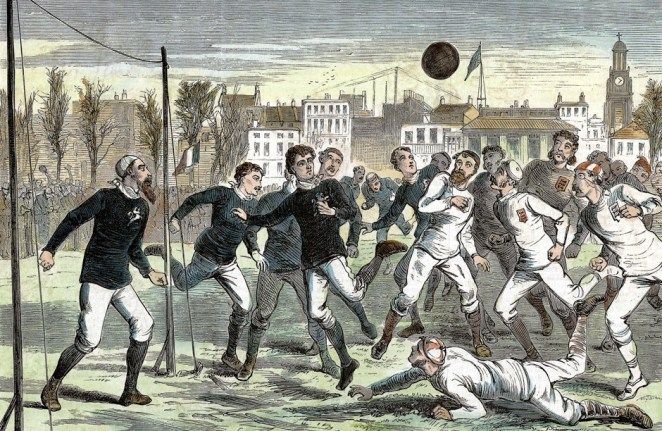
As British sailors and traders traveled the world, they brought football with them, introducing the game to new countries and cultures. The first international match was played between England and Scotland in 1872, and the sport quickly gained popularity across Europe and beyond. The FIFA World Cup, the most widely viewed sporting event in the world, was first held in 1930 in Uruguay and has since become a global phenomenon, with teams from over 200 countries competing for the coveted trophy.
Over the years, football has undergone significant changes, from the introduction of the World Cup to the development of new technologies and playing styles. The game has also become more global, with players from diverse backgrounds and countries making their mark on the sport. The introduction of the Copa Libertadores, the UEFA Champions League, and the English Premier League has further increased the game’s popularity and competitiveness.
Football is more than just a game; it’s a way of life. It has the power to unite people across cultures and borders, providing a common language and a shared passion. Football has also been a platform for social change, with many players and teams using their influence to promote equality, justice, and human rights.
As the game continues to evolve, it’s exciting to think about what the future holds. With advancements in technology, social media, and player development, the sport is more accessible and engaging than ever. The growth of women’s football, the increasing popularity of the sport in new markets, and the development of new competitions and formats will likely shape the future of the game.
The history of football is a rich and fascinating story that spans centuries and continents. From its ancient roots to its modern-day global phenomenon, the sport has captured the hearts of billions. Whether you’re a die-hard fan or a casual observer, football has something to offer everyone.
As I left the stadium, the final whistle still echoing in my ears, I couldn’t help but feel grateful for the beautiful game and its ability to bring people together. Whether you’re a fan of the sport or just discovering it, there’s no denying the power and passion of football.

 Histopedia
Leave a comment