Once upon a time in Japan, there was a young, passionate mechanic named Soichiro Honda. He wasn’t born rich. He didn’t have a college degree. What he did have was a wild curiosity about machines — and a burning desire to make them better.
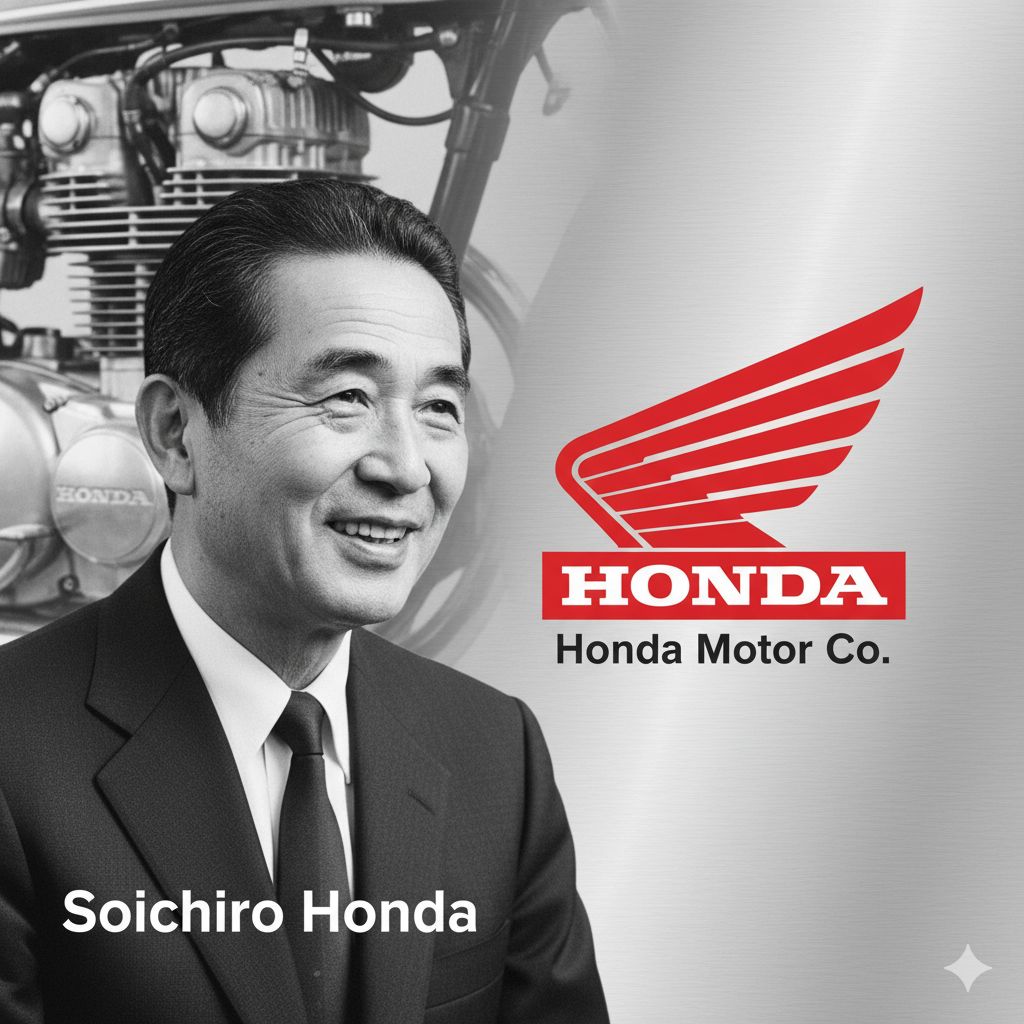
In the early 1930s, Soichiro worked as a humble mechanic, fixing cars and dreaming big. He spent countless nights tinkering in his small workshop, trying to build a new kind of piston ring — something lighter, stronger, and more efficient.
After years of trial and error, he finally succeeded. With a heart full of hope, he took his design to Toyota, Japan’s rising automobile giant.
But when the engineers at Toyota examined his work, they rejected it.
They said his design didn’t meet their standards.
Imagine the heartbreak — years of sweat, sleepless nights, and dreams shattered in a few sentences.
But Soichiro Honda didn’t quit.
He went back to his small workshop, learned from his mistakes, refined his design, and started again.
Soon, his piston rings caught Toyota’s attention once more — this time, they accepted them. But the story doesn’t end there.
During World War II, his factory was bombed twice. Then, an earthquake destroyed what was left. Most people would have given up.
But not Soichiro.
He sold the remnants of his factory, bought a few engines, and started building motorized bicycles. People loved them. That tiny idea grew into the foundation of a new company — Honda Motor Co.
Within a few years, Honda was producing motorcycles faster than anyone else in Japan.
And soon, the world knew the name Honda — not as a mechanic, but as a visionary.
Today, Toyota and Honda both stand as global automotive titans — but one was born from rejection.
 Histopedia
Leave a comment