It was a typical flight from Tel Aviv to Paris for the passengers and crew of Air France Flight 139. But on June 27, 1976, their lives took a dramatic turn. Four heavily armed terrorists, two Palestinians and two Germans, hijacked the plane, diverting it to Benghazi, Libya, and later to Entebbe Airport in Uganda. The hijackers demanded the release of 53 Palestinian and pro-Palestinian militants held in Israel and other countries, threatening to kill the hostages if their demands weren’t met.
The plane landed at Entebbe Airport, where the hijackers were joined by more militants and received support from Ugandan dictator Idi Amin’s forces. They separated the Jewish and Israeli passengers from the others, holding 106 hostages in the airport’s old terminal building. Amin visited the hostages, promising to help negotiate their release, but his true intentions remained unclear.
As negotiations stalled, the Israeli government decided to take matters into their own hands. A team of elite commandos, led by Lieutenant Colonel Yonatan Netanyahu, was tasked with rescuing the hostages. The plan was daring: fly 4,000 kilometers from Israel to Uganda, land undetected, and rescue the hostages within a tight 90-minute window.
The Israeli forces used four C-130 Hercules transport planes, accompanied by two Boeing 707 jets, one with medical facilities and the other serving as a command center. They flew over the Red Sea, avoiding detection by Soviet ships and Egyptian radar. To avoid detection, the Israelis brought a black Mercedes-Benz 600, similar to Amin’s vehicle, and Land Rovers to blend in with Amin’s motorcade.
On July 3, 1976, at 11 PM, the Israeli planes landed at Entebbe Airport. The commandos, dressed in Ugandan uniforms, quickly secured the airport and made their way to the terminal building. In a fierce 30-minute battle, they killed the hijackers and Ugandan soldiers, while Netanyahu was fatally shot. The commandos rescued 102 hostages, with three killed during the raid. Unfortunately, one hostage, Dora Bloch, was murdered by Ugandan authorities after being taken to a hospital in Kampala.
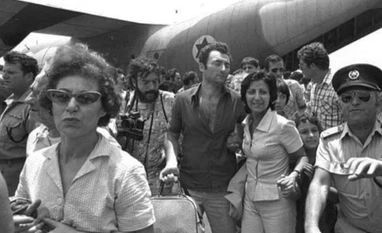
The operation was a stunning success, showcasing Israel’s military prowess and determination to protect its citizens. The raid resulted in the deaths of all seven hijackers, 45 Ugandan soldiers, and the destruction of 11 Soviet-built MiG fighter jets on the ground. The Israeli military suffered one fatality, Lieutenant Colonel Netanyahu, and five wounded commandos. The rescued hostages were flown to Israel via Nairobi, Kenya, where they received medical attention and a hero’s welcome.
Operation Entebbe has become a legendary example of counter-terrorism and special operations. It demonstrated the effectiveness of precise planning, intelligence gathering, and decisive action. The operation’s success has inspired numerous books, films, and documentaries, cementing its place in military history.
 Histopedia
Leave a comment