When you think of Pisa, the first image that likely springs to mind is the Leaning Tower. An architectural marvel and a testament to human ingenuity, this iconic structure continues to captivate millions of visitors from around the world. But beyond the Instagram-worthy photo ops, there’s a rich history and fascinating science that make the Leaning Tower of Pisa truly remarkable.
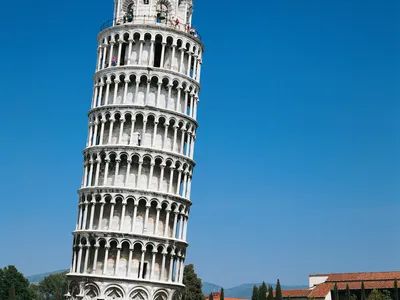
Construction of the Leaning Tower of Pisa began in August 1173. Intended to be a freestanding bell tower for the cathedral of Pisa, the tower’s foundation was laid on unstable, soft soil—a mix of sand, clay, and shells. After the construction reached the second floor in 1178, the tower began to sink on one side. Work was halted for almost a century due to wars, which ironically allowed the underlying soil to settle, preventing an earlier collapse.
The project resumed in 1272 under architect Giovanni di Simone, who attempted to compensate for the tilt by adding taller columns and arches on the shorter side. This only added to the tower’s unique, banana-like curve. The tower was finally completed in 1372, standing at about 56 meters tall.
The Science Behind the Tilt
The tower’s infamous tilt is due to its poor foundation. With a shallow depth of only three meters and unstable subsoil, the structure began leaning even before its construction was completed. Over the centuries, numerous efforts have been made to stabilize the tower.

In the 20th century, engineers placed lead weights on the north side to counterbalance the tilt. Between 1990 and 2001, the tower was closed to the public while engineers undertook a massive restoration project. They removed soil from underneath the elevated side and anchored the structure with steel cables. Today, the tower leans at a safe angle of about 3.97 degrees.
Cultural Significance
The Leaning Tower of Pisa isn’t just an architectural wonder; it’s also a cultural icon. It has inspired countless works of art, literature, and even scientific experiments. Galileo Galilei, the renowned physicist, is said to have conducted his gravitational experiments by dropping objects from the tower to demonstrate the principles of motion.
Each year, millions of tourists visit Pisa to marvel at the tower and, of course, to pose for the classic “holding up the tower” photo. Beyond the clichés, the tower continues to be a powerful symbol of human perseverance and ingenuity.
Visiting the Tower
If you’re planning a trip to Pisa, a visit to the Leaning Tower is a must. Located in the Piazza dei Miracoli (Square of Miracles), the tower is part of a stunning complex that includes the Pisa Cathedral, the Baptistery, and the Camposanto Monumentale.
Tickets are required to climb the tower, and it’s best to book in advance, as slots can fill up quickly. As you ascend the 294 steps to the top, you’ll feel the tilt more pronouncedly, and you’ll be rewarded with breathtaking views of Pisa and its surrounding countryside.
In conclusion, the Leaning Tower of Pisa is more than just a leaning structure—it’s a testament to the quirks of history, the challenges of engineering, and the resilience of human ambition. Whether you’re an architecture aficionado, a history buff, or just someone looking for an unforgettable experience, the Leaning Tower of Pisa is sure to leave a lasting impression.
 Histopedia
Leave a comment