• In the world of comedy, few names evoke as much laughter and joy as Rowan Atkinson. Born on January 6, 1955, in Consett, County Durham, England, Atkinson’s rise to fame is a testament to his unique blend of physical comedy, wit, and clever writing.

    Atkinson’s childhood was marked by a stutter, which he overworked to overcome. This early struggle would later influence his comedic style, often incorporating physical humor and facial expressions. He studied electrical engineering at Newcastle University, later earning a master’s degree from The Queen’s College, Oxford.

    Atkinson’s big break came in the late 1970s with the British comedy show “Not the Nine O’Clock News.” His character, Mr. Bean, debuted in 1990, catapulting him to international stardom. The show’s success spawned two feature films, “Bean” (1997) and “Mr. Bean’s Holiday” (2007).

    Atkinson’s contributions to comedy have earned him numerous accolades, including a BAFTA Award and a star on the Hollywood Walk of Fame.

    Rowan Atkinson’s impact on comedy is undeniable. His unique style has inspired generations of comedians and entertainers. As Mr. Bean, he brought laughter to millions, cementing his place in the annals of comedy history.

    Interesting Facts:

    • Atkinson is a car enthusiast and has participated in various racing events.
    • He was appointed an Officer of the Order of the British Empire (OBE) in 2013.
    • His net worth is estimated to be around £85 million.

    Rowan Atkinson’s journey is a testament to the power of creativity and perseverance.

  • In the golden era of Bollywood, one actor stood tall – literally! Dharmendra, fondly known as the “He-Man” of Indian cinema, has left an indelible mark on the hearts of millions. Born on December 8, 1935, in Nasrali, Punjab, Dharmendra’s rise to stardom is a testament to his dedication, talent, and charisma.

    Dharmendra’s journey began in a traditional Jat Sikh household, where he studied at Government Senior Secondary School, Lalton Kalan, and later pursued his intermediate education at Ramgarhia College, Phagwara. His passion for films led him to participate in the Filmfare talent contest, which he won, paving the way for his entry into Bollywood.

    Dharmendra’s debut film, “Dil Bhi Tera Hum Bhi Tere” (1960), marked the beginning of his illustrious career. He quickly gained popularity with films like “Ayee Milan Ki Bela” (1964), “Phool Aur Patthar” (1966), and “Aaye Din Bahar Ke” (1966). His versatility and charm earned him the nickname “He-Man” of Bollywood.

    Dharmendra’s iconic roles in films like “Sholay” (1975), “Satyakam” (1969), and “Seeta Aur Geeta” (1972) showcased his acting prowess. He received numerous awards, including the Filmfare Lifetime Achievement Award (1997), Padma Bhushan (2012), and National Film Award (1990) .

    Dharmendra’s legacy extends beyond his impressive filmography. He inspired a generation of actors, including his sons Sunny and Bobby Deol. His contributions to Indian cinema have earned him a permanent place in the hearts of fans worldwide.

    Awards and Recognition

    • Filmfare Lifetime Achievement Award (1997)
    • Padma Bhushan (2012)
    • National Film Award (1990)
    • Babasaheb Ambedkar Nobel Award (2017)

    Dharmendra’s journey is a testament to his hard work, talent, and dedication. As we remember this legendary actor, we celebrate his enduring legacy in Indian cinema.

  • In the dark alleves of Italy’s underworld, a mysterious organization has been shaping the country’s history for centuries. The Italian Mafia, also known as Cosa Nostra, is a powerful and feared entity that has infiltrated every aspect of Italian society.

    The Mafia’s roots date back to the 19th century in Sicily, where it emerged as a secret society. Its name, “Mafia,” is believed to have originated from the Sicilian word “maffia,” meaning “boldness” or “bravado.” Initially, the Mafia presented itself as a group of vigilantes, protecting the people from oppressive rulers. However, it soon evolved into a complex network of organized crime, exploiting the vulnerable and amassing wealth and power.

    The Italian Mafia is a hierarchical organization, with a strict code of conduct and a powerful leader, known as the “Capo dei Capi.” The structure is divided into families, each controlling a specific territory. Members, known as “made men,” are sworn to secrecy and loyalty, with a code of silence, “omertà,” governing their actions.

    The Mafia’s influence extends far beyond Italy’s borders, with involvement in:

    • Narcotics trafficking
    • Extortion
    • Money laundering
    • Construction and real estate
    • Prostitution

    Their reach is global, with connections in Europe, the Americas, and beyond.

    Key Facts:

    • The Italian Mafia is estimated to have over 150,000 members worldwide
    • It’s considered one of the most powerful organized crime groups globally
    • The Mafia’s annual revenue is estimated to be over $100 billion
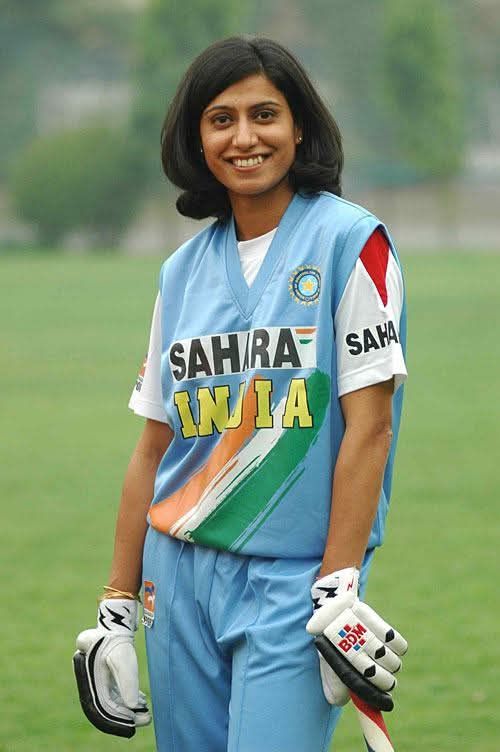
  • In the world of Indian women’s cricket, Anju Chopra is a name that echoes with pride and admiration. Her journey is a testament to her unwavering dedication, unrelenting passion, and an unbreakable spirit.

    Born on May 1, 1977, in Lucknow, Uttar Pradesh, Anju’s love affair with cricket began at a young age. Growing up in a family that encouraged sports, she started playing cricket with her brothers and quickly fell in love with the game. Her talent was evident, and she was selected for the Indian women’s cricket team at just 19.

    Anju made her international debut in 1995 and quickly established herself as a force to be reckoned with. She was known for her aggressive batting style and impressive all-round skills. Her partnership with other Indian women cricketers formed the backbone of the team’s success.

    Anju’s achievements are a reflection of her hard work and dedication. She became the first Indian woman cricketer to score a century in an ODI match, and her impressive performance in the 2000 World Cup earned her the Player of the Match award.

    Anju’s contribution to Indian women’s cricket is immense. She has inspired a generation of young girls to take up the sport, and her legacy continues to be celebrated in the cricketing world.

    Key Achievements:

    • First Indian woman cricketer to score a century in an ODI match
    • Player of the Match award in the 2000 World Cup
  • In the world of cricket, where legends are born and memories are etched forever, Ricky Ponting stands tall as one of the greatest batsmen of all time. From the rugged shores of Tasmania to the grandeur of international cricket, Ponting’s story is one of unrelenting passion, unwavering dedication, and a fierce determination to succeed.

    Born on December 19, 1974, in Launceston, Tasmania, Ponting’s love affair with cricket began at a young age. Growing up in a sporting family, he was introduced to the game by his father, Graeme, and quickly fell in love with the thrill of batting. His talent was evident, and he made his debut for Tasmania at just 18.

    Ponting’s international debut in 1995 marked the beginning of an illustrant career. He quickly established himself as a force to be reckoned with, known for his aggressive batting style and razor-sharp instincts on the field. His partnership with Adam Gilchrist formed the backbone of Australia’s dominant era, and he went on to become one of the most successful captains in cricket history.

    Ponting’s leadership was characterized by his tactical brilliance, unwavering confidence, and ability to inspire his team to perform at their best. Under his captaincy, Australia won two World Cups, and he became the most successful captain in Australian cricket history.

    A photo of Ponting, bat raised high, celebrating a century at the MCG, comes to mind. The image captures his raw emotion, his unyielding passion for the game, and his unrelenting drive to succeed.

    Key Achievements:

    • 71 Test centuries
    • 30 ODI centuries
    • 2 World Cup wins as captain
    • Most successful captain in Australian cricket history
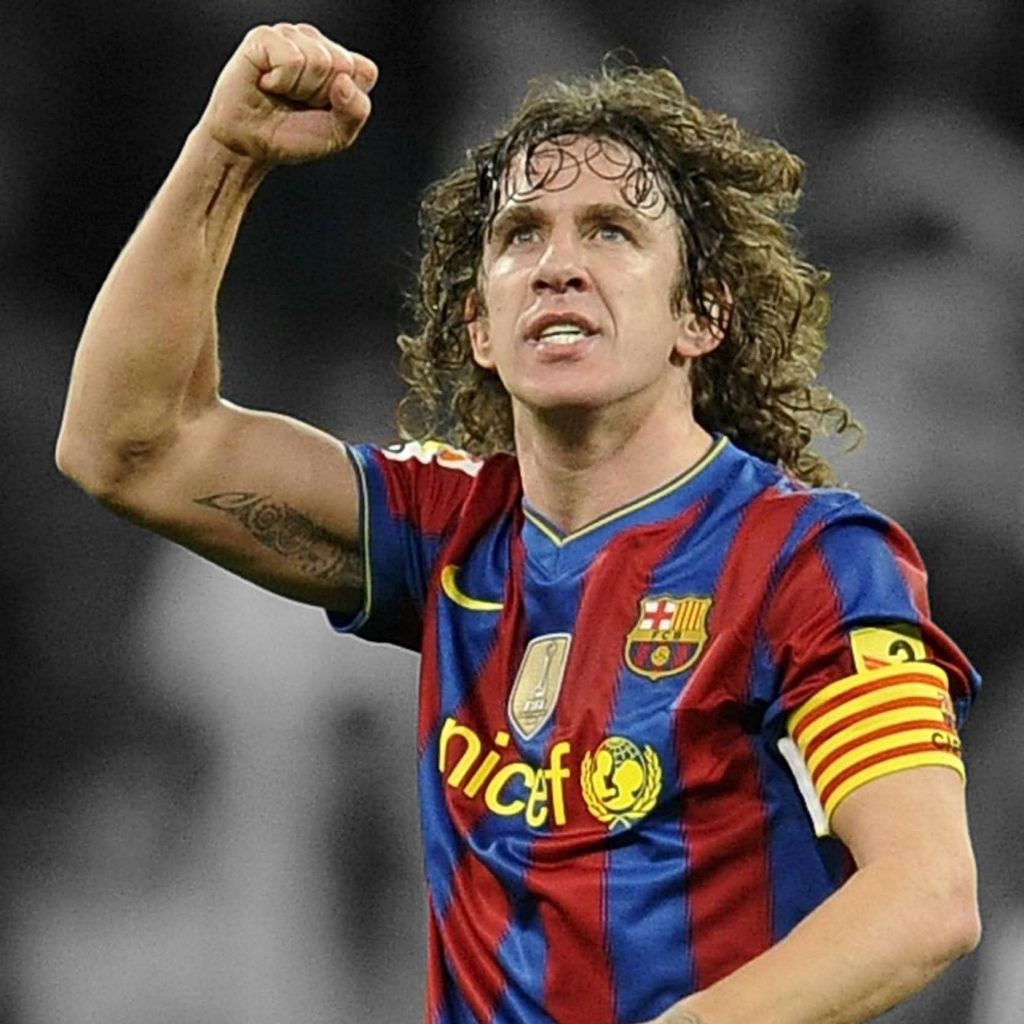
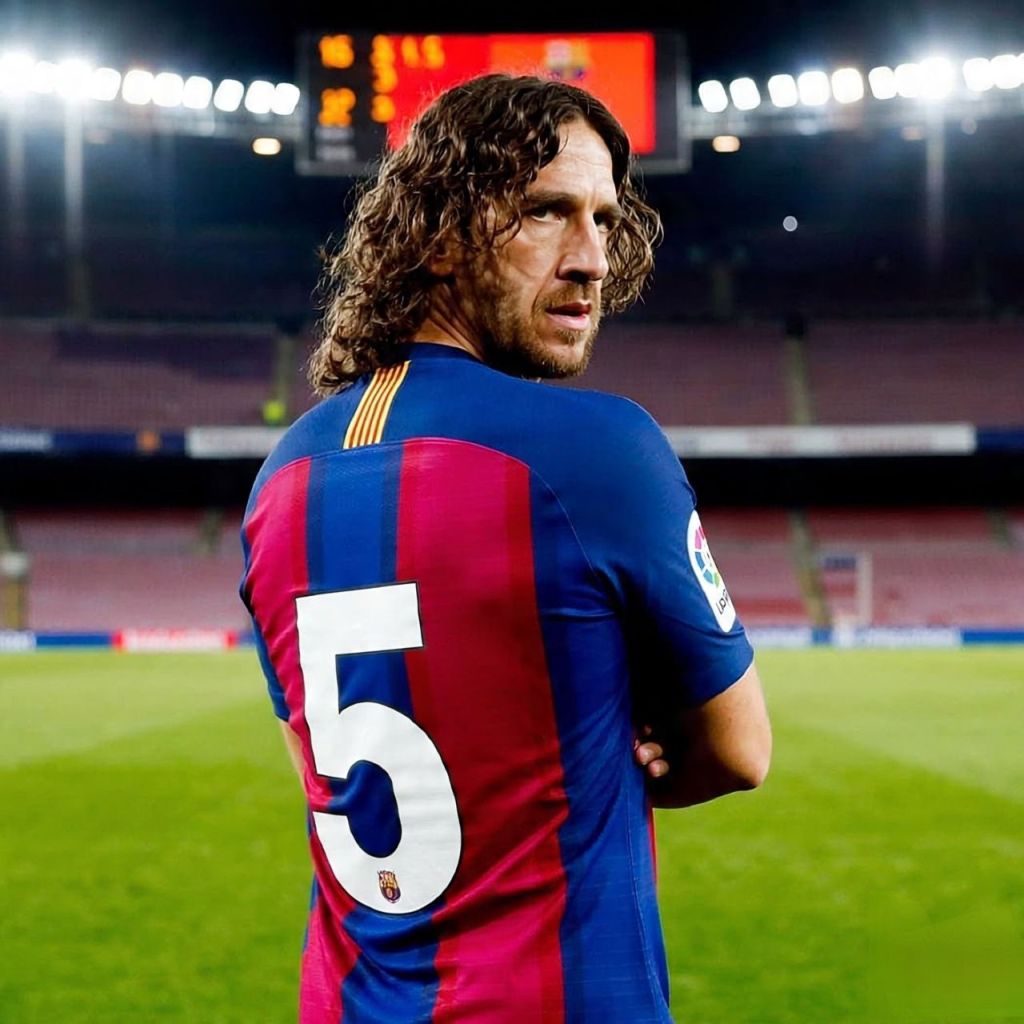
  • In the world of football, there are legends, and then there’s Carles Puyol. A name that echoes through the corridors of Camp Nou, Puyol’s story is one of unwavering dedication, unrelenting passion, and an unbreakable spirit.

    Born on April 13, 1978, in La Pobla de Segur, Catalonia, Puyol’s love affair with football began on the dusty streets of his hometown. A natural defender, he joined FC Barcelona’s youth academy, La Masia, at the tender age of 17.

    Puyol’s ascent was meteoric. He made his debut for Barcelona’s first team in 1999 and soon became the heartbeat of the team. His partnership with Rafael Márquez formed the backbone of Frank Rijkaard’s dream team. Puyol’s leadership skills were evident, and he was soon appointed captain, a role he would hold for over a decade.

    Puyol’s trophy cabinet is a testament to his greatness. He won everything: La Liga, Copa del Rey, UEFA Champions League, and the FIFA World Cup with Spain. His leadership and defensive prowess inspired Barcelona to unprecedented success.

    A photo of Puyol, arms aloft, clutching the Champions League trophy, comes to mind. The image captures his unyielding spirit, his unwavering commitment to the beautiful game.

    Key Achievements:

    • 6 La Liga titles
    • 2 UEFA Champions League titles
    • 1 FIFA World Cup winner with Spain
    • 21 trophies with FC Barcelona
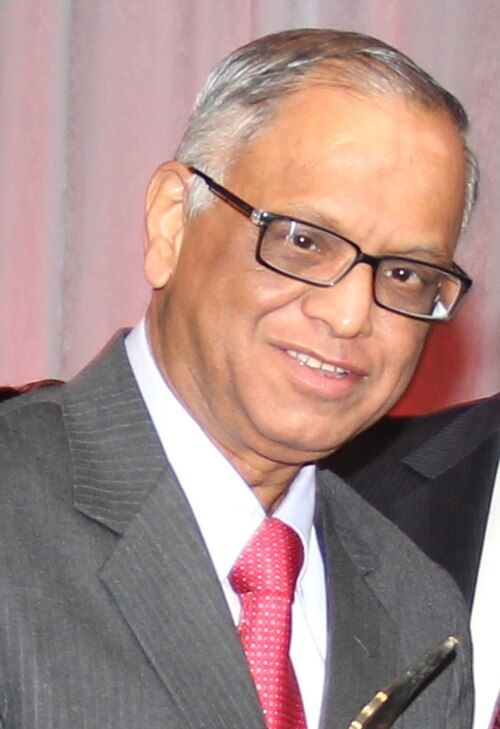
  • In a small town in Karnataka, India, a young boy named Narayana Murthy dreamed big. Born in 1946, Murthy’s early life was marked by simplicity and determination. His father, a teacher, instilled in him the value of education and hard work.

    Murthy’s fascination with technology led him to pursue electrical engineering at the University of Mysore. He later earned his master’s degree from the Indian Institute of Technology (IIT) Bombay. His academic excellence earned him a scholarship to work on a project at the University of Texas, but he chose to return to India and contribute to the country’s growth.

    In 1981, Murthy, along with six others, founded Infosys in Pune, India. With an initial investment of ₹10,000, the company started small but had big ambitions. Murthy’s vision was to create a global IT services company that would deliver quality services and change the face of Indian IT.

    Murthy faced numerous challenges, from financial struggles to talent acquisition. However, his perseverance and focus on innovation helped Infosys grow exponentially. The company went public in 1993 and became one of India’s largest corporations.

    Murthy is also known for his philanthropic work. He and his wife, Sudha Murthy, have donated millions to various causes, including education and healthcare.

    A photo of Murthy, with his signature glasses and warm smile, comes to mind. It’s a testament to his down-to-earth personality and vision for a better India.

    Key Achievements:

    • Co-founder and former CEO of Infosys
    • Padma Vibhushan (2008) and Padma Shri (2000) awardee
    • Advocate for corporate governance and social responsibility
  • In the bustling city of Kochi, Kerala, a story of growth and prosperity unfolds. The Cochin Stock Exchange (CSE), established in 1978, has been the backbone of India’s financial landscape, connecting investors, businesses, and entrepreneurs.

    Kochi, a hub of trade and commerce, was the perfect setting for the CSE. The exchange was founded by a group of visionaries who saw the potential of a stock exchange in the region. With its strategic location and strong business ecosystem, the CSE quickly gained traction.

    The CSE provided a platform for companies to raise capital, investors to participate in the market, and entrepreneurs to showcase their ideas. It became a catalyst for India’s economic growth, supporting businesses and fueling innovation.

    In the 1990s, the CSE embraced technology, introducing electronic trading and online platforms. This forward-thinking approach enabled the exchange to stay ahead, attracting investors and companies from across the country.

    Today, the CSE continues to thrive, with a strong focus on transparency, efficiency, and innovation. Its legacy is built on the principles of fairness, integrity, and service to the nation.

    The image that comes to mind is a vibrant one: the bustling floor of the CSE, with traders, investors, and entrepreneurs coming together to shape India’s economic future.

    Key Milestones:

    • 1978: Cochin Stock Exchange established
    • 1990s: Electronic trading introduced
    • Present day: CSE continues to thrive, focusing on innovation and excellence
  • In a time when women were expected to conform to societal norms, one woman dared to dream big. Marie Curie, a Polish-born physicist and chemist, defied the odds to become the first woman to win a Nobel Prize, and the first person to win two Nobel Prizes in different fields.

    Born Maria Skłodowska in 1867, Marie grew up in a time when women’s education was not a priority. But her thirst for knowledge and determination to learn led her to clandestine “floating universities” in Poland, where women could secretly pursue their studies.

    In 1891, Marie traveled to Paris, where she enrolled in the Sorbonne, one of the few places where women could pursue higher education. It was here that she met her future husband, Pierre Curie, and began her research on radioactivity.

    Marie’s work with Pierre led to the discovery of two new elements: polonium (named after her homeland, Poland) and radium. Their research paved the way for groundbreaking discoveries in physics, chemistry, and medicine.

    Marie’s achievements were met with skepticism and sexism, but she persevered. She became the first woman to teach at the University of Paris and was awarded the Nobel Prize in Physics in 1903, along with Pierre and Henri Becquerel.

    In 1911, Marie was awarded the Nobel Prize in Chemistry for her work on isolating pure radium. She remains the only person to have won two Nobel Prizes in different fields.

    Marie’s legacy extends far beyond her scientific achievements. She paved the way for women in STEM, inspiring generations to pursue careers in science and research. Her discovery of radioactivity has saved countless lives through cancer treatment and continues to shape our understanding of the world.

    The image that comes to mind is a haunting one: a photo of Marie Curie in her laboratory, surrounded by equipment and notes, her eyes fixed intently on the task at hand – a true pioneer in every sense.

    Key Achievements:

    • First woman to win a Nobel Prize (1903)
    • First person to win two Nobel Prizes in different fields (1903 and 1911)
    • Discovered polonium and radium
    • Paved the way for women in STEM
  • In the shadowy streets of 1960s London, a legend was born. Reggie and Ronnie Kray, identical twins with a bond that would change the course of history. They were the masters of London’s underworld, feared and respected in equal measure.

    The Kray twins grew up in a working-class family in Bethnal Green, East London. Their childhood was marked by poverty and hardship, but the twins found solace in each other. They were inseparable, and their bond was forged in the fire of adversity.

    As they entered their teenage years, the twins began to dabble in petty crime. They started with small-time theft and gradually moved on to more serious offenses. Their reputation grew, and so did their ambition.

    The Kray twins’ rise to power was meteoric. They became infamous for their brutal violence and razor-sharp business acumen. Their nightclub, the Esquire, was the place to be, attracting celebrities and politicians alike.

    Reggie’s charm and charisma made him a popular figure, while Ronnie’s volatile nature kept enemies in check. Together, they ruled London, with Reggie as the brains and Ronnie as the brawn.

    The Kray twins’ empire was built on protection rackets, loan-sharking, and organized crime. They were involved in some of the most high-profile crimes of the era, including the murder of George Cornell, a rival gangster.

    Their reign was marked by violence, intimidation, and corruption. They bribed police officers, politicians, and judges to turn a blind eye to their activities. The Kray twins were above the law, and they knew it.

    In 1968, Reggie was arrested and charged with Cornell’s murder. Ronnie was already in prison for stabbing a policeman. Reggie’s trial was a media sensation, with the Kray twins’ legend growing with each passing day.

    Reggie was sentenced to life in prison, and the Kray empire crumbled. Ronnie died in 1995, and Reggie followed in 2000. But their legend lives on, a testament to the power of brotherhood and the allure of the gangster lifestyle.

    The image that comes to mind is a haunting one: a black-and-white photo of Reggie and Ronnie, their faces set in a tough, unyielding expression, the streets of London forever etched in their eyes.

    Key Events:

    • 1933: Reggie and Ronnie Kray are born
    • 1952: The Kray twins are arrested for the first time
    • 1960s: The Kray twins rise to power
    • 1968: Reggie is arrested and charged with murder
    • 2000: Reggie Kray dies in prison