• When we talk about road accidents today, we think of speeding vehicles, traffic congestion, and modern highways. But very few people know that Kerala’s history with road accidents dates back more than a century—long before traffic signals, helmets, or even proper roads existed.

    This is the story of Kerala’s first recorded road accident, a moment that quietly marked the beginning of road safety concerns in the state.

    The Arrival of the Automobile in Kerala

    In the early 1900s, automobiles were a rare sight in Kerala. Roads were mostly mud tracks meant for bullock carts, pedestrians, and horse-drawn vehicles. When motor cars first appeared, they were symbols of power and prestige—owned only by kings, landlords, or colonial administrators.

    One such car belonged to Kerala Varma Valiya Koil Thampuran, a prominent royal figure of the time. His vehicle was among the earliest automobiles to run on Kerala’s roads.

    The Incident That Made History

    During one of his journeys, the car met with an accident—an event unimaginable for people of that era. Villagers gathered in shock, many seeing a motor vehicle up close for the first time, and now witnessing it involved in a mishap.

    There were no traffic rules, no road signs, no safety norms. Roads were uneven, visibility was poor, and people had little understanding of how dangerous these machines could be.

    That incident went down in history as Kerala’s first known road accident.

    No Speed, Yet No Safety

    What makes this story striking is that speed was not the problem. Cars back then moved slowly compared to today’s standards. Yet accidents still happened—because safety is not only about speed, but about awareness, infrastructure, and discipline.

    This single accident silently warned society about a future where roads would become crowded and risks would multiply.

    From Then to Now

    Fast forward to today, Kerala has one of the highest vehicle densities in India. Despite advanced vehicles, better roads, and strict laws, road accidents remain a major concern.

    The contrast is powerful:

    • Then: One car, shocked onlookers, no safety systems
    • Now: Millions of vehicles, daily accidents, constant warnings

    Yet the lesson remains the same.

    A Lesson from History

    Kerala’s first road accident reminds us that road safety is not a modern issue—it is a timeless responsibility. Technology alone cannot save lives. Awareness, discipline, and respect for life are what truly matter.

    As we observe Road Safety Month and share statistics and slogans, it is worth remembering this forgotten moment from history—when Kerala learned, for the first time, that roads demand responsibility.

    History doesn’t just tell us where we came from.
    Sometimes, it quietly warns us where we might be headed.

  • China’s Miracle Fruit is not just a fruit—it is a story of patience, science, and quiet transformation. Known to many as goji berry, this tiny red fruit has traveled from ancient Chinese medicine books to modern global supermarkets, earning its reputation as a “miracle” through consistency rather than hype.

    For centuries, goji berries were cultivated in the Ningxia region of China, where farmers believed the fruit carried the balance of nature itself. It was consumed not as a luxury, but as a daily habit—added to soups, teas, and simple meals. Longevity, strong eyesight, immunity, and vitality were not marketed benefits; they were lived experiences passed down through generations.

    What makes this fruit remarkable is not one single nutrient, but its natural combination of antioxidants, vitamins, amino acids, and minerals. In a world obsessed with synthetic supplements and instant results, China’s Miracle Fruit stands out for being slow, natural, and dependable. It does not promise overnight change, but long-term resilience.

    The global rise of wellness culture brought goji berries into the spotlight. As consumers began shifting from processed food to functional nutrition, this humble fruit became a symbol of ancient wisdom meeting modern lifestyle. Smoothies, energy bars, herbal blends, and health drinks adopted it—not because it was trendy, but because it worked.

    Beyond health, the fruit represents something larger about China’s agricultural philosophy. Scale with discipline. Tradition with adaptation. Farmers improved cultivation techniques without disturbing the fruit’s natural essence, turning a regional crop into a global export while preserving its identity. This balance is rare—and powerful.

    China’s Miracle Fruit reminds us of an important truth: real value compounds quietly. Whether in health, business, or life, the most impactful results often come from small, consistent inputs over time. A tiny berry, grown patiently, consumed mindfully, and trusted for centuries—this is not just nutrition. It is a lesson.

    In a fast world chasing shortcuts, China’s Miracle Fruit proves that nature, when respected, still outperforms noise.

  • The dominance of the U.S. dollar is not accidental. It is the outcome of history, economic power, institutional trust, and global influence working together over decades. While many nations discuss alternatives, the dollar continues to sit at the center of the global financial system.

    After World War II, the United States emerged as the strongest economic power in the world. The Bretton Woods Agreement placed the dollar at the core of the international monetary system, linking global currencies to it and anchoring it to gold. Even after the gold standard ended in 1971, the structure and dependence created by this system remained intact.

    The U.S. economy plays a critical role in maintaining dollar dominance. As the world’s largest and most dynamic economy, it offers unmatched scale, innovation, and consumption power. Global investors, governments, and institutions rely on the stability and predictability of the U.S. market, especially during periods of uncertainty.

    Trust is another key factor. The United States benefits from strong financial institutions, an independent central bank, transparent markets, and a legal framework that protects capital. In times of global crisis, the dollar is often treated as a safe haven rather than a risk, reinforcing its role as the preferred global currency.

    International trade further strengthens the dollar’s position. Major commodities such as oil, gas, and metals are priced and settled in U.S. dollars. Even trade between two non-U.S. countries frequently uses the dollar as the settlement currency, creating continuous global demand.

    The depth and liquidity of U.S. financial markets also matter. The U.S. Treasury market is the most liquid in the world, allowing central banks and large institutions to store vast reserves without fear of instability. No other country currently provides a comparable alternative at this scale.

    Geopolitical influence plays a supporting role. The United States holds significant global military and diplomatic power, which indirectly reinforces the dollar’s position in global settlements, sanctions, and international finance.

    Despite increasing discussions around de-dollarization, replacing the U.S. dollar is extremely difficult. A global currency requires more than ambition—it demands trust, stability, open markets, and decades of credibility. So far, no alternative has been able to meet all these conditions simultaneously.

    The U.S. dollar remains dominant not because it is flawless, but because it is deeply embedded in the global system and trusted during both growth and crisis. Until another currency can match this level of confidence and infrastructure, the dollar will continue to serve as the world’s financial backbone.

  • The relationship between the United States and Israel often appears deeper than a normal alliance. Military aid, diplomatic protection, intelligence sharing, and unwavering political support make many people believe that the U.S. treats Israel almost like part of its own state. This perception is not accidental. It is the result of long-term strategic calculation rather than emotion.

    At the core, the Middle East is one of the most sensitive regions for global power. Energy routes, trade corridors, and security dynamics intersect here. Israel provides the United States with a stable and reliable partner in a region where political systems frequently change. While alliances elsewhere may shift, Israel remains consistent in supporting U.S. strategic interests.

    Another key factor is alignment in political structure and worldview. Both countries project themselves as democracies with similar legal systems and governance values. This creates trust and ease of cooperation, especially in defense and intelligence. For the U.S., Israel is not just an ally, but a partner that understands and operates within the same strategic framework.

    Security and intelligence cooperation further strengthens this bond. Israel’s intelligence capabilities offer the U.S. deep insights into regional threats, militant networks, and geopolitical movements. In modern geopolitics, information is power, and Israel acts as a critical source of that power for Washington.

    Domestic politics inside the United States also play a significant role. Support for Israel is deeply rooted across political parties, influenced by lobbying groups, voter bases, and historical narratives. This internal consensus ensures continuity in U.S. policy toward Israel, regardless of leadership changes.

    Economically and technologically, the relationship is mutually beneficial. Israel is a global leader in innovation, particularly in defense technology, cybersecurity, artificial intelligence, and medical research. U.S. investments and collaborations in these sectors generate long-term strategic and economic returns, making support for Israel a calculated investment rather than charity.

    Most importantly, Israel allows the U.S. to project power in the Middle East without direct control or occupation. By supporting a strong regional ally, the U.S. maintains influence while reducing the costs and risks of direct involvement.

    Legally, Israel is not part of the United States. But strategically, it functions as an extension of American influence, security interests, and geopolitical presence. In global politics, nations that consistently deliver results are treated not just as allies, but as indispensable partners.

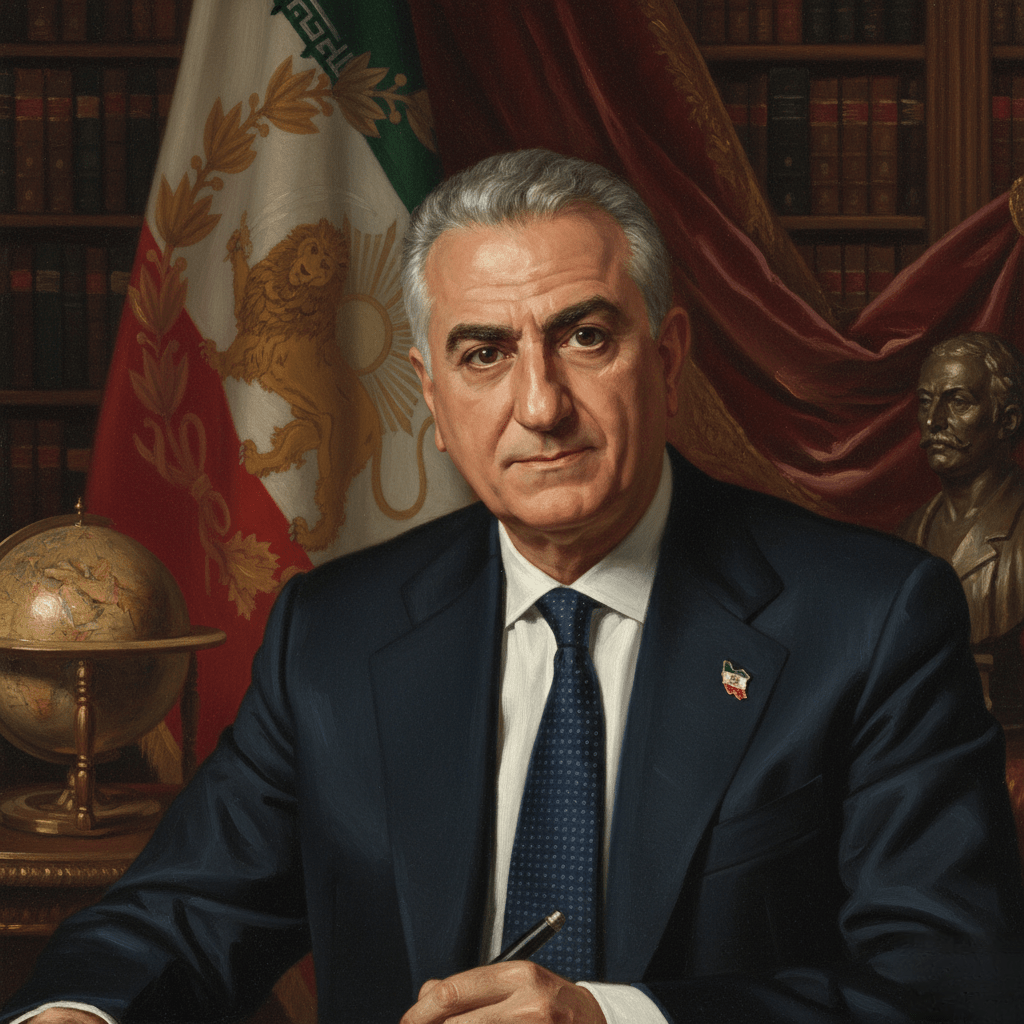
  • Reza Pahlavi is one of the most discussed yet misunderstood figures in modern Iranian politics. As the son of Iran’s last Shah, Mohammad Reza Pahlavi, his name carries history, controversy, nostalgia, and resistance—all at once.

    Born in 1960, Reza Pahlavi was named Crown Prince during a time when Iran stood at a crossroads between modernization and deep political unrest. The 1979 Iranian Revolution changed everything. The monarchy collapsed, the royal family went into exile, and Iran entered a new era under the Islamic Republic.

    Unlike many political figures shaped by power, Reza Pahlavi was shaped by its loss.

    Life in Exile, Voice in Opposition

    Since leaving Iran, Reza Pahlavi has lived mostly in the United States. Over the decades, he has positioned himself not as a ruler-in-waiting, but as a supporter of democratic transition. He has consistently stated that Iran’s future leadership should be decided by its people—not imposed by monarchy or clerical rule.

    This stance has earned him both supporters and critics.

    To some Iranians, especially those who remember pre-revolution Iran, he represents stability, national pride, and a lost sense of global standing. To others, he is a reminder of a system they believe failed to protect political freedom.

    Yet, his relevance has grown again in recent years.

    A Unifying Figure in a Divided Opposition

    As protests and civil unrest continue inside Iran, Reza Pahlavi has increasingly appeared as a unifying voice among fragmented opposition groups. Rather than promoting restoration of the monarchy, he often speaks about secular governance, human rights, women’s freedom, and national reconciliation.

    His message is strategic:
    Iran’s problem is not about replacing one ruler with another—it is about rebuilding trust between the state and its people.

    In a political landscape filled with ideological extremes, this moderate positioning makes him stand out.

    Legacy Beyond the Crow

    Reza Pahlavi’s influence today is less about royal lineage and more about symbolism. He represents an alternative narrative—one that challenges both authoritarian theocracy and violent revolution.

    Whether he will ever play a direct political role inside Iran remains uncertain. But his presence in global discussions about Iran’s future is undeniable.

  • Kollywood superstar Vijay, fondly called “Thalapathy” by fans, has been a household name for decades. Known for his charismatic performances, box office hits, and social influence, Vijay has always had a unique connection with the public. But now, whispers in the corridors of power suggest a bold new chapter—Vijay might be entering politics.

    The transition from cinema to politics isn’t new in Tamil Nadu. Legends like M.G. Ramachandran (MGR) and Jayalalithaa made the leap, proving that mass appeal on screen can translate into political clout. Vijay, with his vast fan base and youth appeal, seems poised to follow in their footsteps.

    Fans are curious: Will he form a new party, or join an existing political force? How will his cinematic persona shape his political image? What issues will he champion? While details are scarce, one thing is certain—Vijay’s entry could reshape the political landscape in Tamil Nadu.

    Beyond films, Vijay has always engaged in philanthropy and public welfare. This move could amplify his impact, giving him a platform to address education, healthcare, and social justice on a larger scale.

    As the lines between cinema and politics blur, all eyes are on Thalapathy. Will the silver screen hero become a political leader? Only time will tell, but the excitement and speculation are already palpable across the state.

  • When people talk about global healthcare excellence, the focus often goes to high-spending nations with advanced technology and massive hospital networks. Yet quietly, without loud branding or excessive expenditure, India—and particularly Kerala—has built a healthcare model that many countries study and admire. What makes Kerala exemplary is not wealth, but wisdom in how healthcare is designed, delivered, and sustained over decades.

    Kerala made a crucial choice early on: to strengthen public healthcare at the grassroots level. Instead of concentrating only on large hospitals, the state invested in primary health centers, community clinics, maternal care, vaccination programs, and preventive medicine. This ensured that healthcare reached people before illnesses became emergencies. As a result, hospitals were not overwhelmed, costs remained controlled, and health outcomes steadily improved.

    Another invisible pillar of Kerala’s success is literacy and health awareness. An educated population understands symptoms, values early diagnosis, follows medical advice, and actively participates in preventive care. This drastically reduces late-stage disease treatment, which is often expensive and complex. In Kerala, healthcare is not something people approach only when critically ill—it is part of everyday life.

    Despite modest healthcare spending compared to developed countries, Kerala consistently reports low infant mortality, high life expectancy, and strong maternal health outcomes. These indicators rival those of many high-income nations, proving that effective systems and preventive care can outperform high budgets alone. Efficiency, not excess, defines the model.

    The balance between public and private healthcare further strengthens the ecosystem. Government hospitals provide accessible and affordable care, while private institutions offer advanced treatments and specialization. Strong regulation and accountability prevent extremes—healthcare remains neither entirely commercial nor underfunded. This balance builds public trust, an essential but often overlooked component of any successful health system.

    Kerala’s approach to crisis management has also drawn global attention. Whether during Nipah outbreaks, floods, or the COVID-19 pandemic, the state demonstrated the power of preparedness, transparent communication, community-level monitoring, and coordinated governance. These responses showed that well-trained systems and clear leadership save more lives than emergency spending after a crisis erupts.

    Human capital is another cornerstone. Kerala produces highly skilled doctors, nurses, and healthcare workers who are respected globally. Their training emphasizes not just technical skill but ethics, compassion, and patient-centric care. Even as many professionals work abroad, the culture of healthcare excellence continues to feed back into the local system.

    At its core, Kerala’s healthcare success comes from one fundamental belief: healthcare is not merely a business or a service—it is social infrastructure. When health is treated as a long-term investment tied to education, governance, and community wellbeing, positive outcomes become inevitable.

    In a world increasingly focused on expensive technology and profit-driven healthcare models, Kerala offers a quieter, more powerful lesson. Healthy societies are not built by hospitals alone. They are built by informed people, accessible systems, preventive care, and decades of consistent public commitment. That is why India’s healthcare sector—and Kerala in particular—stands as an exemplary model for the world.

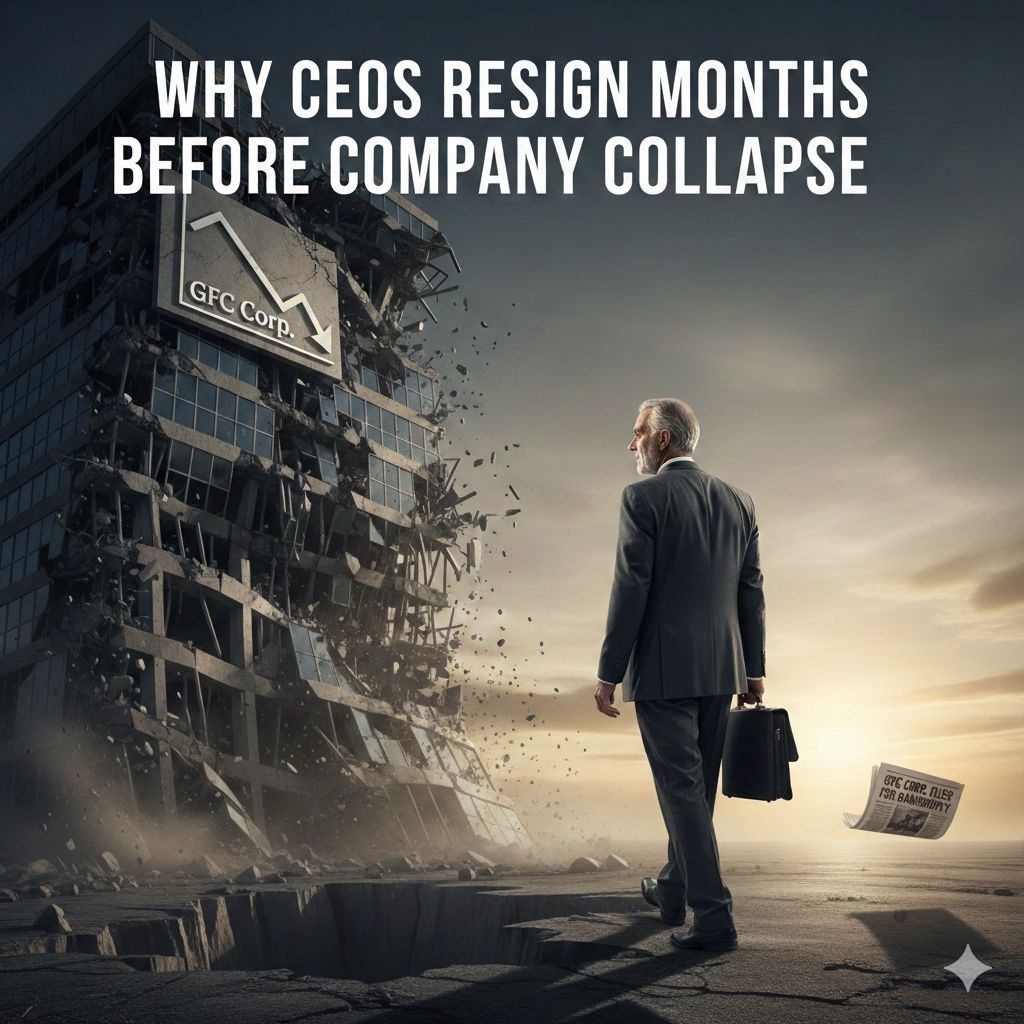
  • In recent years, the corporate world has witnessed a curious pattern—many high-profile CEOs step down months before their companies face serious financial trouble or, in some cases, complete collapse. These exits are often framed as personal decisions or routine leadership transitions, but history suggests they are rarely coincidental.

    A CEO usually has access to internal data long before the public does. When financial performance begins to weaken, stock prices slip, or growth stalls, pressure quietly builds behind boardroom doors. Sometimes, the board loses confidence in the CEO’s ability to reverse the decline. In other cases, the CEO recognizes that the challenges ahead may be too deep or politically complex to overcome, making resignation the least damaging option.

    Internal conflicts also play a major role. Disagreements with board members, major investors, or senior leadership teams can turn decision-making into a battlefield. When alignment disappears at the top, leadership change becomes inevitable. Scandals and reputational risks further accelerate exits, as companies attempt to contain damage by separating from leadership before issues escalate publicly. At times, a company may be entering a new strategic phase—restructuring, cost-cutting, or cultural change—and the existing CEO may simply not fit the future direction.

    Several real-world examples reflect this pattern clearly. Heineken’s CEO Dolf van den Brink resigned in 2026 amid slow sales growth and rising investor dissatisfaction. Starbucks dismissed Laxman Narasimhan in 2024 after just 18 months, following underwhelming global performance and persistent controversies. Uber’s Travis Kalanick stepped down in 2017 after internal turmoil and repeated scandals threatened the company’s survival. In each case, the resignation was not the root cause of the problem but an early signal of deeper issues within the organization.

    CEO departures often act as silent warnings for investors, employees, and customers. Leadership changes at the top create uncertainty and invite scrutiny, even when companies appear stable from the outside. As Ariane Marchis-Mouren of The Conference Board has noted, the rise in CEO departures—even among strong-performing firms—reflects a broader trend of higher executive turnover in today’s business environment.

    A CEO resignation does not always mean a company is about to fail. However, when it happens suddenly, without clear explanation, or after a period of quiet underperformance, it is rarely meaningless. More often than not, it signals challenges that have already begun beneath the surface. In business, leadership exits tend to whisper the truth long before financial results make it impossible to ignore.

  • It may sound strange, but there is an interesting connection between US military actions and pizza sales. This idea is often called the “Pizza Index.”

    What Is the Pizza Index?

    Over the years, people noticed a pattern.
    Whenever the US government prepares for a major military operation or war-related decision, pizza orders near the Pentagon suddenly increase.

    This is not a joke. It has happened many times.

    Why Does This Happen?

    Before an attack or major operation:

    • Military officials work late into the night
    • Emergency meetings happen
    • Staff cannot leave the building
    • They need quick, easy food

    Pizza becomes the fastest option.

    So nearby pizza shops get unusually high orders — especially late at night.

    Real Examples

    During:

    • The Gulf War
    • The Iraq War
    • Other major military operations

    Pizza delivery shops near the Pentagon reported record-breaking sales just hours before official announcements.

    What Does This Tell Us?

    This doesn’t mean pizza causes war.
    It simply shows that human behavior leaves clues.

    When pressure rises:

    • Work hours increase
    • Decisions become urgent
    • Small signals like food orders change

    These small patterns can sometimes hint at big events coming.

    A Lesson From This Story

    Even in serious matters like war, simple daily actions tell stories.
    Data is everywhere — in markets, food, travel, and behavior.

    If we observe carefully,
    we can understand how the world moves before headlines appear.

    Sometimes, history begins…
    with a pizza order 🍕

  • In the vast expanse of space, a revolution is unfolding – one that’s about to redefine how we connect to the world. Elon Musk’s Starlink, a satellite internet constellation, is on a mission to bridge the digital divide and bring high-speed internet to every corner of the globe.

    Imagine living in a remote village, where the nearest internet tower is miles away, and connectivity is a luxury. For millions, this is reality. But Starlink is changing the game. With its low-Earth orbit (LEO) satellites, it’s beaming internet signals directly to users, bypassing traditional infrastructure woes.

    The Magic of Starlink

    • Blazing Fast Speeds: Starlink promises speeds of up to 200 Mbps, making it perfect for streaming, gaming, and remote work.
    • Low Latency: With LEO satellites, latency is reduced to 20-40 ms, a game-changer for real-time applications.
    • Global Coverage: Starlink is expanding its reach, with services available in over 150 countries.

    A New Era of Connectivity

    Starlink isn’t just about internet; it’s about empowerment. It’s about connecting rural communities, supporting emergency services, and bridging the digital divide. As Starlink expands, it’s poised to revolutionize industries, from education to healthcare, and beyond.

    The Future is Bright

    With plans to launch thousands more satellites, Starlink is set to become the backbone of global connectivity. Will it be the game-changer we need? Time will tell, but one thing’s certain – the internet landscape is about to get a whole lot more exciting 🌟.