• The world’s first motorcycle was invented and built by:

    Gottlieb Daimler and Wilhelm Maybach (Germany) in 1885

    Daimler’s Reitwagen (Riding Car)

    1. First powered two-wheeler
    2. Engine: 0.5 horsepower, single-cylinder, gasoline-powered
    3. Top speed: Approximately 10 mph (16 km/h)
    4. Transmission: Belt-driven

    Key Features:

    1. Wooden frame
    2. Iron wheels
    3. Hand-operated brakes
    4. No suspension

    Evolution of Motorcycles:

    1. 1894: First production motorcycle (Hildebrand & Wolfmüller)
    2. 1901: Indian Motorcycle Company founded
    3. 1903: Harley-Davidson founded
    4. 1910s: Electric starters and transmissions introduced
    5. 1950s: Post-war innovations (e.g., suspension, disc brakes)

    Notable Milestones:

    1. 1887: First motorcycle race (Paris)
    2. 1907: First transcontinental motorcycle trip (USA)
    3. 1959: First motorcycle helmet law (UK)

    Early Motorcycle Pioneers:

    1. Gottlieb Daimler
    2. Wilhelm Maybach
    3. Louis-Guillaume Perreaux (France)
    4. Hildebrand & Wolfmüller (Germany)
    5. Indian Motorcycle Company founders

    Modern Motorcycles:

    1. Advanced materials (e.g., aluminum, carbon fiber)
    2. High-performance engines (e.g., 1000cc, turbocharged)
    3. Electronic features (e.g., ABS, traction control)
    4. Comfort and ergonomics innovations

    Interesting Facts:

    1. The first motorcycle was called “Reitwagen” (Riding Car)
    2. Daimler’s motorcycle was initially intended for military use
    3. Early motorcycles were marketed as “motorized bicycles”
  • COVID-19, caused by the SARS-CoV-2 virus, is a global pandemic that has impacted the world since 2019.

    Key Facts:

    1. First reported cases: Wuhan, China (December 2019)
    2. Declared pandemic: World Health Organization (WHO) on March 11, 2020
    3. Global spread: Over 200 countries and territories affected
    4. Cases and deaths: Over 600 million cases, 6.5 million deaths (as of September 2022)

    Symptoms:

    1. Fever
    2. Cough
    3. Shortness of breath
    4. Fatigue
    5. Headache
    6. Sore throat
    7. Runny nose
    8. Body aches

    Transmission:

    1. Respiratory droplets (coughing, sneezing)
    2. Close contact with infected individuals
    3. Contaminated surfaces

    Prevention:

    1. Vaccination
    2. Mask-wearing
    3. Social distancing (6 feet/2 meters)
    4. Hand hygiene (washing/sanitizing)
    5. Avoiding crowded areas

    Vaccines:

    1. Multiple vaccines approved (e.g., Pfizer-BioNTech, Moderna, AstraZeneca)
    2. Effectiveness: 90%+ against severe illness and hospitalization
    3. Booster shots recommended

    Treatment:

    1. Antiviral medications (e.g., remdesivir)
    2. Supportive care (oxygen therapy, ventilation)
    3. Hospitalization for severe cases

    Global Response:

    1. Lockdowns and travel restrictions
    2. Economic stimulus packages
    3. Public health campaigns
    4. Research and development of treatments and vaccines

    Current Status:

    1. Ongoing transmission in many countries
    2. Emergence of variants (e.g., Delta, Omicron)
    3. Continued vaccination efforts
    4. Gradual easing of restrictions

    Resources:

    1. World Health Organization (WHO): (link unavailable)
    2. Centers for Disease Control and Prevention (CDC): (link unavailable)
    3. National Health Service (NHS): (link unavailable)

    Stay informed, follow guidelines, and prioritize your health.

  • The world’s first television was invented and demonstrated by:

    John Logie Baird (Scotland) and Charles Francis Jenkins (USA) in 1926.

    Baird’s Television

    1. Mechanical scanning system
    2. 30 lines per frame resolution
    3. Black and white
    4. First public demonstration on January 26, 1926, in London

    Jenkins’ Television

    1. Mechanical scanning system
    2. 48 lines per frame resolution
    3. Black and white
    4. First public demonstration on June 13, 1926, in Washington, D.C.

    First Television Broadcast

    1. BBC (British Broadcasting Corporation) began regular TV broadcasts in 1929
    2. First TV station: WGY (now WRGB) in Schenectady, New York, USA (1928)

    Color Television

    1. First color TV demonstration by John Logie Baird in 1928
    2. First color TV broadcast by BBC in 1967

    Modern Television

    1. Digital signal processing
    2. High-definition (HD) resolution
    3. Flat-screen displays (LED, LCD, OLED)
    4. Satellite and cable TV
    5. Streaming services (Netflix, Hulu, etc.)

    Television Timeline

    1. 1926: Mechanical TV demonstrated
    2. 1939: First regular TV broadcasts in USA
    3. 1946: Commercial TV broadcasting begins
    4. 1954: Color TV introduced
    5. 1990s: Digital TV emerges
    6. 2000s: HDTV and flat-screens become popular
    7. 2010s: Streaming services rise to prominence

    Interesting Facts

    1. The first TV commercial aired in 1941 (Bulova Watch Company)
    2. The first presidential inauguration broadcast on TV was Franklin D. Roosevelt’s in 1939
    3. The first televised Olympic Games were the 1936 Summer Olympics

  • The first mobile phone was demonstrated by Martin Cooper, an engineer at Motorola, on April 3, 1973.

    First Mobile Phone Details:

    1. Weight: 2.4 pounds (1.1 kg)
    2. Length: 9 inches (23 cm)
    3. Width: 5 inches (13 cm)
    4. Thickness: 1.75 inches (4.5 cm)
    5. Talk time: Approximately 30 minutes
    6. Standby time: Up to 8 hours

    Key Features:

    1. Analog technology
    2. Single-channel, frequency-division multiple access (FDMA)
    3. 0.5 watts transmission power
    4. Handheld device with antenna

    Martin Cooper’s Historic Call:

    Cooper made the first public call on a handheld mobile phone to Joel S. Engel, his rival at AT&T’s Bell Labs, saying: “Joel, this is Marty. I’m calling you from a cell phone.”

    Evolution of Mobile Phones:

    1. 1983: First commercial mobile phone, Motorola DynaTAC 8000X
    2. 1991: First GSM (digital) mobile phone
    3. 1996: First smartphone, Nokia 9000 Communicator
    4. 2007: First iPhone, Apple Inc.
    5. Present day: High-speed data, touchscreen, and AI-powered smartphones

    Interesting Facts:

    1. Cooper’s team developed the first mobile phone in just 90 days.
    2. The first mobile phone call lasted around 3 minutes.
    3. Mobile phones were initially nicknamed “brick phones” due to their shape.

  • Baktashi is the smallest country in the world. Early it was Vatican City its size was  121 acres. Baktashi size is 27 acres it was a part of Albania,

    Baktashi seems to be a term with multiple possible meanings. Here are a few interpretations:

    1. Baktashi (Sufism): A Sufi order or tariqa, also known as the Baktashiyah or Bektashiyah, founded by Haji Bektash Veli in the 13th century. This order emphasizes spiritual growth, love, and self-purification.
    2. Baktashi (Persian): A Persian surname or tribe name.
    3. Baktashi (Kurdish): A Kurdish tribe or family name.
    4. Baktashi (Albanian): A Bektashi Albanian, referring to an Albanian follower of the Bektashiyah Sufi order.

  • The world’s first computer is a subject of debate among historians and computer scientists. However, most credit Charles Babbage’s proposed mechanical general-purpose computer, the Analytical Engine (1837), as the first computer concept.

    Charles Babbage’s Contributions:

    1. Difference Engine (1822): A mechanical calculator for mathematical tables.
    2. Analytical Engine (1837): A proposed mechanical computer with:
      • Input: punched cards
      • Processing: central processing unit (CPU)
      • Storage: memory
      • Output: printed results

    Early Computing Devices:

    1. Abacus ( ancient civilizations): Manual counting device.
    2. Pascaline (1642): Blaise Pascal’s mechanical calculator.
    3. Leibniz Wheel (1671): Gottfried Wilhelm Leibniz’s mechanical calculator.
    4. Charles Xavier Thomas de Colmar’s Arithmometer (1820): Mechanical calculator.

    First Electronic Computers:

    1. ENIAC (1946): Electronic Numerical Integrator and Computer, USA.
    2. UNIVAC 1 (1951): First commercially available computer, USA.
    3. EDSAC (1949): Electronic Delay Storage Automatic Calculator, UK.

    Modern Computers:

    1. Transistors (1950s): Replaced vacuum tubes.
    2. Integrated Circuits (1960s): Miniaturized electronics.
    3. Microprocessors (1970s): Central processing units on a single chip.

    Key Milestones:

    1. 1822: Charles Babbage proposes the Difference Engine.
    2. 1837: Babbage proposes the Analytical Engine.
    3. 1936: Konrad Zuse builds the Z1, a mechanical computer.
    4. 1946: ENIAC, the first electronic computer, is built.
    5. 1951: UNIVAC 1, the first commercial computer, is released.

    The development of computers involved contributions from many pioneers over several centuries.

  • The first bank in India is a matter of some debate. The Madras Bank, established in 1683, and the Bank of Bombay, founded in 1720, are often cited as among the oldest banks in India ¹. However, the Bank of Hindustan, established in 1770 in Calcutta, is also considered one of the first banks in India ² ³.

    The Bank of Hindustan was followed by other banks, including the General Bank of India (1786-1791), the Bank of Bengal (1809), the Bank of Bombay (1840), and the Bank of Madras (1843) ². These three banks were later merged to form the Imperial Bank of India in 1921, which eventually became the State Bank of India (SBI) in 1955 ² ³.

    Some of the Oldest Banks in India:

    • The Madras Bank (1683)
    • The Bank of Bombay (1720)
    • The Bank of Hindustan (1770)
    • The General Bank of India (1786)
    • The Bank of Bengal (1809)

    Today, the State Bank of India (SBI) is the oldest bank still in operation, with its origins dating back to the Bank of Calcutta in 1806.

  • The first cricket match is a topic of much debate among historians and cricket enthusiasts. While the exact date of the first-ever cricket match is unknown, there are records of a match played in 1597 in Guildford, Surrey, England, which is often cited as the earliest known reference to the game ¹.

    This match was mentioned in a court case, where a 59-year-old coroner, John Derrick, testified that he and his school friends had played “creckett” on the site fifty years earlier ¹. This account proves that the game was being played in Surrey around 1550.

    However, the first international cricket match is well-documented. It was played between the US and Canada in 1844 at the grounds of the St George’s Cricket Club in New York ¹. This match marked the beginning of international cricket, which would go on to become a popular sport around the world.

    Key Milestones in Cricket History

    • 1597: First recorded reference to cricket in Guildford, Surrey, England ¹
    • 1611: First reference to cricket being played as an adult sport ¹
    • 1844: First international cricket match between the US and Canada ¹
    • 1877: First Test match between England and Australia ¹

    These milestones highlight the growth and evolution of cricket from a local game in England to a global sport with international competitions.

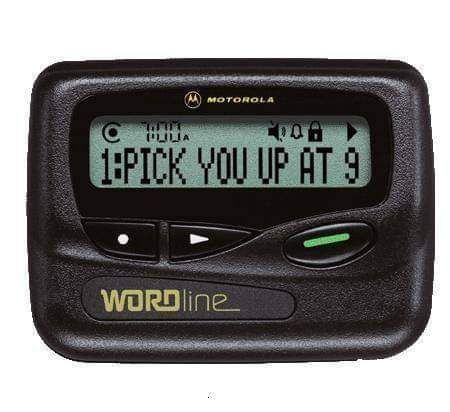
  • A pager, also known as a beeper, is a small communication device that receives short messages, typically numeric or alphanumeric, over a radio frequency signal.

    pager device

    History

    1. First introduced in 1950s for hospital communications
    2. Popularized in 1970s and 1980s for emergency services and business use
    3. Replaced by cell phones and mobile messaging apps in the 1990s and 2000s

    Types of Pagers

    1. Numeric Pager: Displays only numbers
    2. Alphanumeric Pager: Displays text messages
    3. Tone-Only Pager: Receives audio tones to alert users

    How Pagers Work

    1. Message transmission: Sender inputs message into a paging terminal or phone
    2. Signal transmission: Message is broadcast over radio frequency
    3. Reception: Pager receives signal and displays message

    Uses

    1. Emergency services (e.g., doctors, firefighters)
    2. Business communications (e.g., delivery notifications)
    3. Medical alerts (e.g., hospital codes)

    Advantages

    1. Simple, reliable technology
    2. Low cost
    3. Long battery life

    Disadvantages

    1. Limited message length
    2. No confirmation of receipt
    3. No two-way communication

    Modern Alternatives

    1. Cell phones and smartphones
    2. Messaging apps (e.g., SMS, WhatsApp)
    3. Two-way radios and walkie-talkies

    Interesting Facts

    1. The first pager weighed 8.5 pounds!
    2. Pagers were initially called “radio paging systems”
    3. Some hospitals still use pagers due to reliability and simplicity

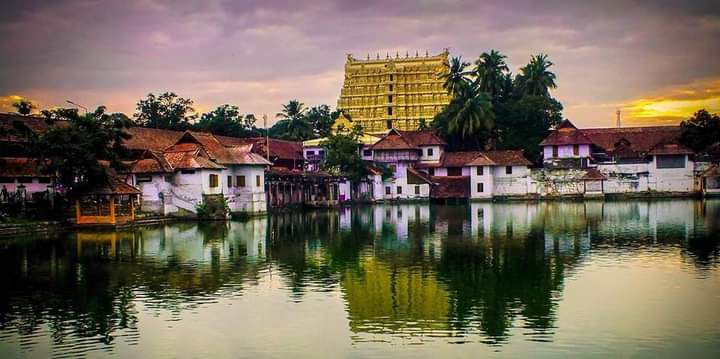
  • Sree Padmanabhaswamy Temple

    The Sree Padmanabhaswamy Temple is a revered Hindu temple located in Thiruvananthapuram, Kerala, India. It’s one of the 108 Divya Desams (holy abodes of Lord Vishnu) and is dedicated to Lord Padmanabha (Vishnu).

    Temple History

    1. Built in the 8th century by the Chera dynasty
    2. Renovated and expanded by the Travancore royal family in the 18th century
    3. Famous for its intricate architecture, sculptures, and murals

    Temple Structure

    1. Main deity: Lord Padmanabha (Vishnu) in Anantha Shayana posture (reclining on the serpent Anantha)
    2. Temple complex covers 7 acres
    3. Gopuram (main entrance) is 100 feet tall
    4. Inner sanctum sanctorum (Sreekovil) is made of granite

    Treasures and Vault

    1. In 2011, the Supreme Court ordered an inventory of the temple’s treasures
    2. Estimated worth: over $22 billion (making it one of the richest temples in the world)
    3. Vault B, rumored to contain vast treasures, remains unopened due to concerns about its curse

    Worship and Festivals

    1. Daily pujas (worship services) and rituals
    2. Annual festivals: Padmanabha Jayanti, Alpasyi Festival, and Navaratri
    3. Processions of deities during festivals

    Conservation Efforts

    1. Temple administration managed by the Travancore Devaswom Board
    2. Ongoing restoration and conservation efforts
    3. UNESCO World Heritage Site nomination in progress

    Interesting Facts

    1. The temple’s design is based on the principles of Vastu Shastra (ancient Indian architecture)
    2. The deity’s reclining posture is 18 feet long
    3. The temple’s murals depict scenes from Hindu epics
    4. Only Hindus are allowed to enter the temple

    Location and Timings

    1. Location: West Fort, Thiruvananthapuram, Kerala, India
    2. Timings: 3:30 AM – 12:00 PM, 5:00 PM – 7:30 PM

    Tips for Visitors

    1. Dress modestly
    2. Remove shoes before entering
    3. Follow temple rules and traditions
    4. Hire a guide for a deeper understanding of the temple’s history and significance