• Once Peter Rebek, An Australian cricket writer who was traveling from Shimla to Delhi by train. During the journey the train stopped at a station .

    After the allowed time the train was not moving, he checked what was happening there, why the train is not moving

    Suddenly the entire people were in the station in front of a television curiously he looked there, in that crowd including the train loco- pilot and ticket examiner and the station master also were there , Peter Rebec checked what is happening there? He asked somebody, and one man replied, that Sachin is batting at 98.

    After that he quoted like this ” “𝗧𝗵𝗶𝘀 𝗺𝗮𝗻 𝗰𝗮𝗻 𝘀𝘁𝗼𝗽 𝘁𝗵𝗲 𝘁𝗶𝗺𝗲”
  • The history of education spans thousands of years, with various civilizations contributing to its development.

    Ancient Civilizations (3000 BCE – 500 CE)

    1. Ancient Mesopotamia: Sumerians established schools for scribes (2500 BCE).
    2. Ancient Egypt: Temple schools taught priests and nobles (2000 BCE).
    3. Ancient Greece: Philosophical schools, e.g., Plato’s Academy (335 BCE).
    4. Ancient Rome: Grammar schools and rhetoric schools (100 BCE).
    5. Ancient India: Vedic schools and Buddhist monasteries (500 BCE).
    6. Ancient China: Confucian academies (500 BCE).

    Middle Ages (500 – 1500 CE)

    1. Monastic schools (500 CE): Preserved classical knowledge.
    2. Cathedral schools (1000 CE): Educated clergy.
    3. Universities emerge (1088 CE): Bologna, Oxford, Cambridge.
    4. Islamic Golden Age (800-1300 CE): Centers of learning, e.g., Al-Azhar.

    Renaissance and Enlightenment (1500 – 1800 CE)

    1. Humanist schools (1500 CE): Emphasized classical education.
    2. Jesuit schools (1540 CE): Established worldwide.
    3. National education systems (1600 CE): Emerged in Europe.
    4. Scientific revolution (1600 CE): Influenced education.

    Modern Era (1800 – 2000 CE)

    1. Industrialization and urbanization (1800 CE): Led to expanded education.
    2. Compulsory education laws (1800s CE): Made education mandatory.
    3. Progressive education movement (1900s CE): Focused on student-centered learning.
    4. Technology integration (1980s CE): Computers and internet transformed education.

    Contemporary Era (2000 CE – present)

    1. Online and blended learning (2000s CE).
    2. MOOCs (Massive Open Online Courses) (2010s CE).
    3. Personalized learning and AI-powered education (2010s CE).
    4. Globalization and internationalization of education.

    Key Figures and Philosophies

    1. Socrates: Questioning and dialogue.
    2. Plato: Idealism and academy.
    3. Aristotle: Empiricism and scientific method.
    4. Confucius: Moral and social philosophy.
    5. John Dewey: Progressive education.
    6. Maria Montessori: Child-centered learning.

    Major Reforms and Initiatives

    1. Education for All (1990 CE).
    2. No Child Left Behind Act (2001 CE).
    3. Common Core State Standards (2010 CE).
    4. Sustainable Development Goal 4 (2015 CE): Quality education.
  • The first university in the world is a matter of debate among historians and scholars, as the definition of a “university” can be somewhat subjective. However, some of the oldest institutions of higher learning that are often considered among the first universities include:

    Ancient Universities:

    1. University of Al-Karaouine (Morocco, 859 AD): Founded by Fatima al-Fihri, a wealthy merchant’s daughter.
    2. University of Bologna (Italy, 1088 AD): Recognized as the oldest continuously operating university in the Western world.
    3. University of Oxford (UK, 1096 AD): Teaching dates back to 1096, but the university was formally established in 1167.
    4. University of Cambridge (UK, 1209 AD): Founded by scholars leaving Oxford after a dispute.
    5. University of Nalanda (India, 427 AD): An ancient Buddhist university that attracted scholars from across Asia.

    Other Contenders:

    1. University of Taxila (India, 6th century BC): An ancient Vedic school that attracted students from across the ancient world.
    2. University of Athens (Greece, 5th century BC): A philosophical school founded by Plato.
    3. University of Alexandria (Egypt, 3rd century BC): A center of learning and scholarship.

    Key Characteristics of Early Universities:

    1. Dedicated institutions for higher learning
    2. Formal curriculum and degree programs
    3. Teacher-student relationships
    4. Emphasis on research and scholarship
    5. Autonomy and self-governance

    Evolution of Universities:

    1. Medieval universities (12th-15th centuries)
    2. Renaissance universities (16th-17th centuries)
    3. Modern universities (18th-19th centuries)
    4. Contemporary universities (20th-21st centuries)

  • Indian spices have a rich and diverse history that spans thousands of years.

    Ancient Era (3000 BCE – 500 CE)

    1. Indus Valley Civilization: Used spices like turmeric, ginger, and cinnamon.
    2. Vedic Period: Mention of spices in ancient texts like Rigveda and Ayurveda.
    3. Spice trade with Middle East and Mediterranean regions.

    Medieval Era (500 – 1500 CE)

    1. Arab traders introduced new spices like cardamom and cloves.
    2. Spice trade flourished under Delhi Sultanate and Vijayanagara Empire.
    3. Indian spices reached Europe through Silk Road.

    Colonial Era (1500 – 1947 CE)

    1. Portuguese, Dutch, and British established spice trade monopolies.
    2. Indian spices became essential in European cuisine.
    3. Spice plantations established in India and Southeast Asia.

    Post-Independence Era (1947 CE – present)

    1. Indian spice industry grew rapidly.
    2. Government initiatives promoted spice exports.
    3. Modernization and mechanization improved spice production.

    Key Indian Spices

    1. Turmeric (haldi)
    2. Red chili (lal mirch)
    3. Coriander (dhaniya)
    4. Cumin (jeera)
    5. Garam masala
    6. Ginger (adrak)
    7. Cardamom (elaichi)
    8. Cinnamon (dalchini)
    9. Cloves (laung)
    10. Black pepper (kali mirch)

    Spice Producing Regions in India

    1. Kerala (cardamom, pepper, cinnamon)
    2. Karnataka (cardamom, coffee)
    3. Tamil Nadu (turmeric, chili)
    4. Andhra Pradesh (chili, coriander)
    5. Gujarat (cumin, coriander)

    Impact of Indian Spices

    1. Shaped global cuisine (e.g., Chinese, European)
    2. Contributed to traditional medicine (Ayurveda)
    3. Influenced cultural and religious practices
    4. Fostered international trade and commerce

    Interesting Facts

    1. India produces 70% of global spice output.
    2. Spices were used as currency in ancient India.
    3. Indian spices were mentioned in ancient Greek and Roman texts.
    4. Spice trade played a significant role in shaping Indian history.

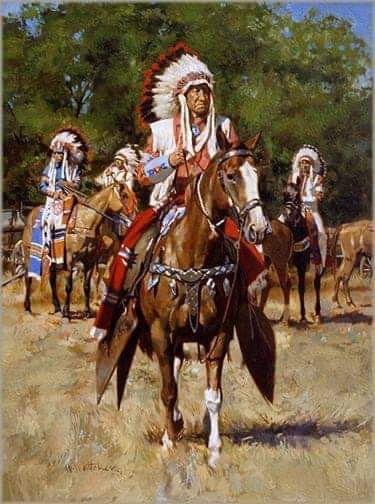
  • The term “Red Indians” refers to Native Americans, specifically the indigenous peoples of the United States. This name originated from Christopher Columbus’s initial mistaken belief that he had reached India when he landed in the Americas in 1492. As a result, he called the native inhabitants “Indians” ¹. Over time, the term “Red Indians” emerged, particularly in reference to the Beothuk tribe, known for painting their bodies with red ochre, a practice that held significant cultural importance .

    Native Americans, also known as American Indians, First Americans, or Indigenous Americans, are the original inhabitants of the land that is now the United States. They comprise numerous distinct tribes, each with their own language, culture, and traditions. Today, there are over 570 federally recognized tribes in the United States, with a population of approximately 3.7 million people identifying as Native American .

    It’s worth noting that many Native Americans find the terms “Red Indians” and “Redskins” derogatory and racist, as they were coined by European colonizers. Instead, they prefer to be referred to by their specific tribal names or the more general term “Native American” .

  • Here’s an overview of the distribution business:

    What is Distribution Business?

    Distribution business involves delivering products or goods from manufacturers to end-consumers through various channels.

    Types of Distribution Businesses:

    1. Wholesale Distribution: Selling products in bulk to retailers or other wholesalers.
    2. Retail Distribution: Selling products directly to end-consumers.
    3. Logistics and Transportation: Managing transportation, warehousing, and delivery.
    4. E-commerce Distribution: Online sales and delivery.

    Key Activities:

    1. Sourcing products from manufacturers.
    2. Warehousing and inventory management.
    3. Transportation and logistics.
    4. Order processing and fulfillment.
    5. Customer service.

    Distribution Channels:

    1. Direct Sales: Manufacturer to consumer.
    2. Indirect Sales: Manufacturer to distributor to retailer to consumer.
    3. Multi-Channel Distribution: Combination of direct and indirect sales.

    Benefits:

    1. Increased market reach.
    2. Improved product availability.
    3. Enhanced customer satisfaction.
    4. Reduced logistics costs.
    5. Competitive advantage.

    Challenges:

    1. Supply chain disruptions.
    2. Inventory management.
    3. Transportation costs.
    4. Changing consumer behavior.
    5. Competition.

    Key Performance Indicators (KPIs):

    1. Inventory turnover.
    2. Order fulfillment rate.
    3. Shipping accuracy.
    4. Customer satisfaction.
    5. Return on investment (ROI).

    Distribution Business Models:

    1. Business-to-Business (B2B).
    2. Business-to-Consumer (B2C).
    3. Direct-to-Consumer (D2C).
    4. Subscription-based.
    5. Dropshipping.

    Technology in Distribution:

    1. Enterprise Resource Planning (ERP).
    2. Supply Chain Management (SCM).
    3. Transportation Management Systems (TMS).
    4. Inventory Management Software.
    5. E-commerce platforms.

    Notable Distribution Companies:

    1. Amazon.
    2. Walmart.
    3. FedEx.
    4. UPS.
    5. DHL.

  • Here’s a comprehensive history of YouTube:

    Early Days (2005)

    1. Founded by Jawed Karim, Steve Chen, and Chad Hurley.
    2. Initial idea: Video-sharing platform for college students.
    3. First office: Garage in San Mateo, California.

    Launch and Growth (2005-2006)

    1. Launched on February 14, 2005.
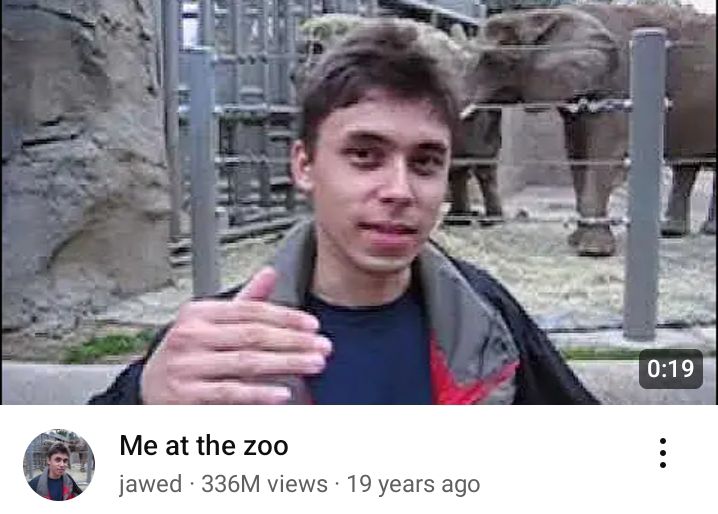
    2. First video: “Me at the zoo” (April 23, 2005).
    3. Seed funding: $3.5 million from Sequoia Capital.
    4. User growth: 50,000 users (October 2005) to 1 million users (December 2005).

    Acquisition and Expansion (2006-2010)

    1. Acquired by Google (November 2006) for $1.65 billion.
    2. Introduced video ads (2007).
    3. Launched YouTube Partner Program (2007).
    4. Introduced HD video playback (2008).
    5. Launched live streaming (2010).

    Innovations and Milestones (2011-2015)

    1. Introduced YouTube Premium (2011).
    2. Launched YouTube EDU (2011).
    3. Introduced video editing software (2012).
    4. Reached 1 billion monthly active users (2013).
    5. Introduced YouTube Music Key (2014).

    Recent Developments (2016-Present)

    1. Introduced YouTube Red (2016) (now YouTube Premium).
    2. Launched YouTube TV (2017).
    3. Introduced YouTube Reels (2018).
    4. Reached 2 billion monthly active users (2019).
    5. Introduced YouTube Shorts (2020).

    **Key Statistics:”

    1. 2 billion+ monthly active users.
    2. 5 billion+ videos viewed daily.
    3. 31 million+ channels.
    4. 80+ languages available.
    5. 70% of YouTube views come from outside the US.

    **Founders:”

    1. Jawed Karim (Co-Founder & former CEO).
    2. Steve Chen (Co-Founder & former CTO).
    3. Chad Hurley (Co-Founder & former CEO).

    **Acquisitions:”

    1. Google (2006).
    2. Next New Networks (2011).
    3. Songza (2014).

  • The first YouTube video was uploaded on April 23, 2005, by YouTube co-founder Jawed Karim. The video is titled “Me at the zoo,” and it features Jawed standing in front of the elephant enclosure at the San Diego Zoo.

    Video Details:

    1. Title: “Me at the zoo”
    2. Uploaded: April 23, 2005
    3. Duration: 18 seconds
    4. Views: Over 70 million
    5. Likes: Over 2 million
    6. Comments: Over 5 million
    https://youtu.be/jNQXAC9IVRw?si=xJvN-HL0qLSUlNm1

    Interesting Facts:

    1. The video was shot by Jawed’s friend, Yakov Lapitsky.
    2. The video was uploaded to test YouTube’s functionality.
    3. The video’s original file name was “elephant.avi”.
    4. The video’s resolution is 320×240 pixels.
    5. The video’s audio is in mono.

    YouTube’s Early Days:

    1. YouTube was founded by Jawed Karim, Steve Chen, and Chad Hurley.
    2. The idea for YouTube came from a difficulty in finding and sharing videos online.
    3. YouTube’s initial headquarters was in a garage in San Mateo, California.
    4. YouTube was acquired by Google in November 2006 for $1.65 billion.

    Evolution of YouTube:

    1. 2005: YouTube launched as a video-sharing platform.
    2. 2006: YouTube introduced user channels and video ratings.
    3. 2007: YouTube introduced video ads.
    4. 2010: YouTube introduced live streaming.
    5. 2015: YouTube introduced YouTube Red (now YouTube Premium).

    Today:

    1. YouTube has over 2 billion monthly active users.
    2. YouTube has over 5 billion videos viewed daily.
    3. YouTube has over 31 million channels.
    4. YouTube is available in over 80 languages.

  • Here’s a concise history of railways:

    Early Beginnings (1550s-1800s)

    1. Wagonways (1550s): Wooden tracks for horse-drawn carts in German mines.
    2. Plateways (1720s): Iron plates replaced wood, increasing efficiency.
    3. Steam locomotives (1804): Richard Trevithick’s steam-powered engine.

    First Railways (1820s-1840s)

    1. Stockton and Darlington Railway (1825): First public steam railway.
    2. Liverpool and Manchester Railway (1830): First intercity railway.
    3. Railways expanded across UK, Europe, and North America.

    Golden Age (1850s-1900s)

    1. Transcontinental railroads (1869): Connected East and West coasts in the United States.
    2. Railway mania (1840s-1850s): Speculative bubble in railway investment.
    3. Standardization (1880s): Rail gauge standardized.

    Electrification and High-Speed (1900s-1960s)

    1. Electric locomotives (1880s): Introduced in Germany and the United States.
    2. High-speed trains (1950s-1960s): Japan’s Bullet Train (1964) and France’s TGV (1967).

    Modernization and Privatization (1970s-2000s)

    1. Containerization (1970s): Increased efficiency in freight transport.
    2. Deregulation (1980s): US and EU rail industries privatized.
    3. High-speed rail revival (1990s-2000s): New lines and technologies.

    Present Day (2010s-present)

    1. Digitalization: Automated signaling, ticketing, and passenger information.
    2. Sustainability: Focus on energy efficiency, reduced emissions.
    3. High-speed rail expansion: China, India, and other countries invest.

    **Key Figures:”

    1. Richard Trevithick (1771-1833)
    2. George Stephenson (1781-1848)
    3. Isambard Kingdom Brunel (1806-1859)
    4. Leland Stanford (1824-1893)

    **Museums:”

    1. National Railway Museum (York, UK)
    2. Railway Museum (Munich, Germany)
    3. Railroad Museum of Pennsylvania (Strasburg, USA)

  • The world’s first train service was inaugurated on February 21, 1804, in Merthyr Tydfil, Wales, UK.

    First Steam-Powered Locomotive:

    • Inventor: Richard Trevithick
    • Steam-powered locomotive: “Penydarren”
    • Hauled 10 tons of iron ore along the Merthyr Tramroad

    First Public Steam Railway:

    • Opened: September 27, 1825
    • Location: Stockton and Darlington Railway, England
    • Length: 26 miles (42 km)
    • Hauled passengers and freight

    First InterCity Railway:

    • Opened: September 15, 1830
    • Location: Liverpool and Manchester Railway, England
    • Length: 31 miles (50 km)
    • Reduced travel time from 4 hours to 2.5 hours

    Key Milestones:

    1. 1830s: Railways expanded across the UK and Europe.
    2. 1840s: Railways introduced in North America.
    3. 1850s: Transcontinental railroads in the United States.
    4. 1860s: Railways expanded globally.

    Evolution of Train Technology:

    1. Steam locomotives (1804-1950s)
    2. Diesel locomotives (1920s-1980s)
    3. Electric locomotives (1880s-present)
    4. High-speed trains (1960s-present)
    5. Maglev trains (1990s-present)

    Impact of Railways:

    1. Revolutionized transportation
    2. Facilitated economic growth
    3. Connected cities and regions
    4. Transformed urban planning

    Interesting Facts:

    1. The first train had no brakes.
    2. Early trains traveled at 5-10 mph (8-16 km/h).
    3. Railways helped standardize time zones.

    Railway Museums:

    1. National Railway Museum (York, UK)
    2. Railway Museum (Munich, Germany)
    3. Railroad Museum of Pennsylvania (Strasburg, USA)