• Russia, a land of breathtaking beauty and unparalleled grandeur, spans across 17.1 million square kilometers, making it the largest country in the world. From the snow-capped mountains of the Caucasus to the sun-kissed beaches of the Black Sea, Russia’s diverse landscapes are a treasure trove of natural wonders.

    A Brief History of Russia

    Russia’s rich history dates back to the 9th century, with the establishment of the state of Kievan Rus’. Over the centuries, Russia has been shaped by various empires, including the Mongols, the Grand Duchy of Moscow, and the Soviet Union. Today, Russia is a federal semi-presidential republic, with a unique blend of traditional and modern culture.

    Must-Visit Places in Russia

    1. The Kremlin: The iconic fortress in Moscow, housing the President’s residence, museums, and stunning cathedrals.
    2. Lake Baikal: The world’s largest and deepest freshwater lake, nestled in the southern Siberian mountains.
    3. The Hermitage Museum: One of the world’s largest and most famous museums, showcasing an impressive collection of art and cultural artifacts.
    4. The Trans-Siberian Railway: The longest railway line in the world, connecting Moscow to Vladivostok and offering breathtaking views of the Russian countryside.

    Russian Culture and Cuisine

    Russian culture is renowned for its rich literary heritage, stunning ballet performances, and vibrant folk music. The country’s cuisine is equally impressive, with popular dishes like:

    1. Borscht: A hearty beet-based soup, served with a dollop of sour cream.
    2. Pirozhki: Flaky pastry pockets filled with meat, vegetables, or cheese.
    3. Blini: Thin pancakes served with sweet or savory toppings, such as jam, sour cream, or caviar.
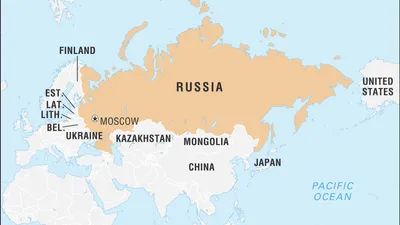
    Russia, a land of incredible beauty and diversity, is a destination that will leave you in awe. From its stunning landscapes and rich history to its vibrant culture and delicious cuisine, Russia has something to offer every kind of traveler. So come and discover the majesty of Russia, the world’s largest country.

    Fun Facts

    • Russia spans across 11 time zones.
    • The country has the world’s longest railway line, the Trans-Siberian Railway.
    • Russia is home to the world’s largest freshwater lake, Lake Baikal.
    • The country has a rich literary heritage, with famous authors like Leo Tolstoy and Fyodor Dostoevsky.
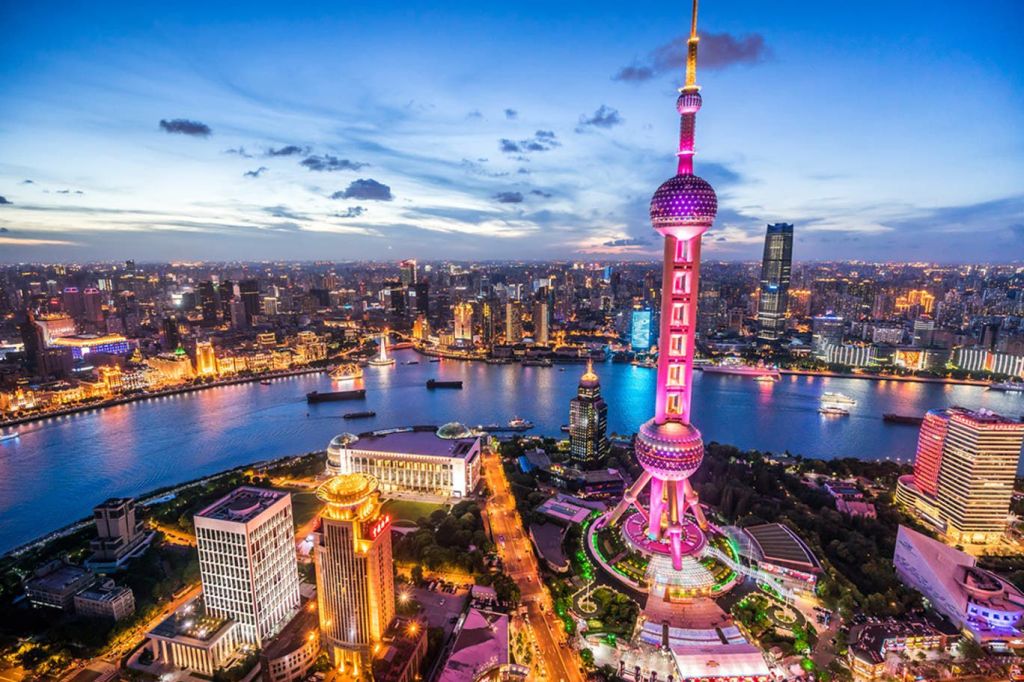
  • Shanghai, China’s largest city, is a mesmerizing metropolis that seamlessly blends traditional and modern charm. This vibrant city is a melting pot of cultures, cuisines, and architectural styles, making it a fascinating destination for travelers and a hub for business and innovation.

    A Brief History of Shanghai

    Shanghai’s rich history dates back to the 13th century when it was a small fishing village. The city’s strategic location on the Yangtze River Delta made it an important trading center, and by the 19th century, Shanghai had become a major commercial hub. The city’s colonial past is still evident in its architecture, cuisine, and cultural heritage.

    Must-Visit Attractions in Shanghai

    1. The Bund: This iconic waterfront area is a must-visit, with its stunning colonial-era architecture, trendy bars, and breathtaking views of the Huangpu River.
    2. Oriental Pearl Tower: This 468-meter-tall tower offers panoramic views of the city and is a symbol of Shanghai’s modernity.
    3. Yu Garden: This beautiful classical Chinese garden is a peaceful oasis in the heart of the city, featuring intricate stone carvings, pavilions, and serene water features.
    4. Shanghai Museum: With a collection of over 120,000 artifacts, this world-class museum is a treasure trove of Chinese art, history, and culture.

    Shanghai’s Culinary Delights

    Shanghai is a food lover’s paradise, with a diverse range of culinary options to suit every taste and budget. Be sure to try some of the city’s signature dishes, such as:

    1. Xiaolongbao: These delicate soup dumplings are a Shanghai specialty, filled with pork and broth.
    2. Jiaozi: These pan-fried dumplings are a staple of Shanghai cuisine, filled with pork, vegetables, and spices.
    3. Cong You Bing: This crispy, savory pancake is a popular street food, topped with scallions, sesame seeds, and soy sauce.

    Shopping in Shanghai

    Shanghai is a shopper’s dream, with everything from high-end luxury malls to bustling street markets. Some popular shopping destinations include:

    1. Nanjing Road: This iconic shopping street is lined with department stores, boutiques, and souvenir shops.
    2. Xintiandi: This trendy shopping district is known for its upscale boutiques, art galleries, and restaurants.
    3. AP Plaza: This massive market is a treasure trove of fake designer goods, souvenirs, and local handicrafts.

    Shanghai is a city that seamlessly blends tradition and modernity, offering something for everyone. From its stunning architecture and world-class museums to its delicious cuisine and vibrant nightlife, Shanghai is a destination that will leave you in awe. Whether you’re a history buff, a foodie, or a shopaholic, Shanghai is a city that will captivate and inspire you.

    Practical Information

    • Best time to visit: Spring (March to May) and autumn (September to November)
    • Language: Mandarin Chinese, but many locals speak some English
    • Currency: Chinese yuan (RMB)
    • Getting around: Metro, taxi, bus, or ride-hailing apps
    • Accommodation: From budget-friendly hostels to luxury hotels, Shanghai has a wide range of options to suit every budget.
  • The Guantanamo Bay Detention Camp, often referred to as Gitmo, is a United States military prison located within the Naval Station Guantanamo Bay on the coast of Guantánamo Bay, Cuba. Established in January 2002 by President George W. Bush, the camp was created to detain and interrogate terrorism suspects and “illegal enemy combatants” following the September 11, 2001, attacks.

    Origins and Purpose

    In the wake of the 9/11 attacks, the U.S. launched the Global War on Terrorism, targeting Al-Qaeda and Taliban forces in Afghanistan. President Bush issued a military order allowing for the indefinite detention of foreign nationals without charge, leading to the establishment of the Guantanamo Bay detention facility. The camp was initially intended to house suspected Al-Qaeda members and Taliban fighters captured during the invasion of Afghanistan.

    Controversies and Legal Challenges

    From its inception, Guantanamo Bay has been mired in controversy. The Bush administration maintained that detainees were not entitled to basic protections under the U.S. Constitution or the Geneva Conventions, as they were classified as “unlawful enemy combatants”. This stance led to widespread criticism from humanitarian and legal advocacy groups, who argued that the policies violated international human rights law.

    Several landmark U.S. Supreme Court decisions found that detainees had rights to due process and habeas corpus, but they were still subject to military tribunals. These tribunals have been criticized for lacking impartiality and judicial efficiency. Reports of detainee abuse and the use of “enhanced interrogation techniques” have further fueled the controversy surrounding the camp.

    Conditions and Human Rights Concerns

    Detainees at Guantanamo Bay have been reported to endure harsh conditions, including solitary confinement, inadequate medical care, and physical and psychological abuse. The International Committee of the Red Cross warned as early as 2003 about the deteriorating psychological health of many detainees. These conditions have drawn condemnation from human rights organizations and the international community.

    Current Status and Future Prospects

    As of January 2025, at least 780 individuals from 48 countries have been detained at Guantanamo Bay since its creation. Of these, 756 have been transferred elsewhere, nine have died in custody, and 15 remain detained. The camp’s future remains uncertain, with ongoing debates about its closure and the fate of the remaining detainees.

    The Guantanamo Bay Detention Camp stands as a symbol of the complexities and challenges of the Global War on Terrorism. Its legacy is marked by legal battles, human rights concerns, and ongoing debates about its role and necessity. As the world continues to grapple with issues of security and justice, the story of Guantanamo Bay serves as a reminder of the delicate balance between protecting national security and upholding human rights.

    #GuantanamoBay #HumanRights #GlobalWarOnTerrorism #LegalChallenges

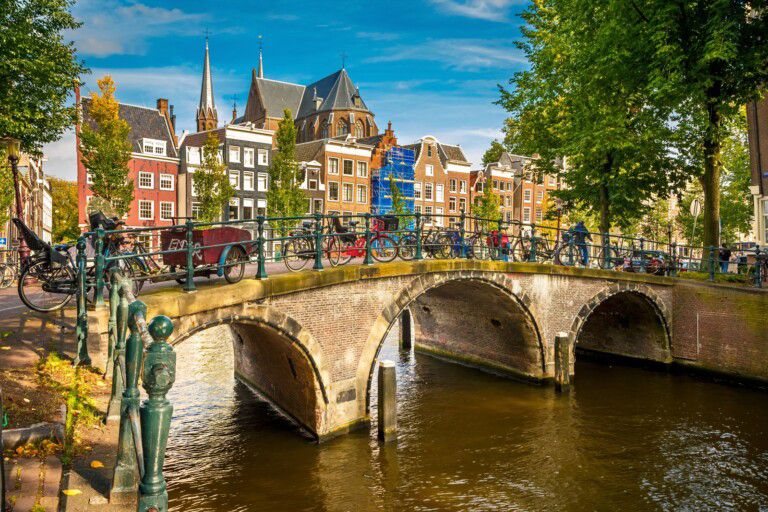
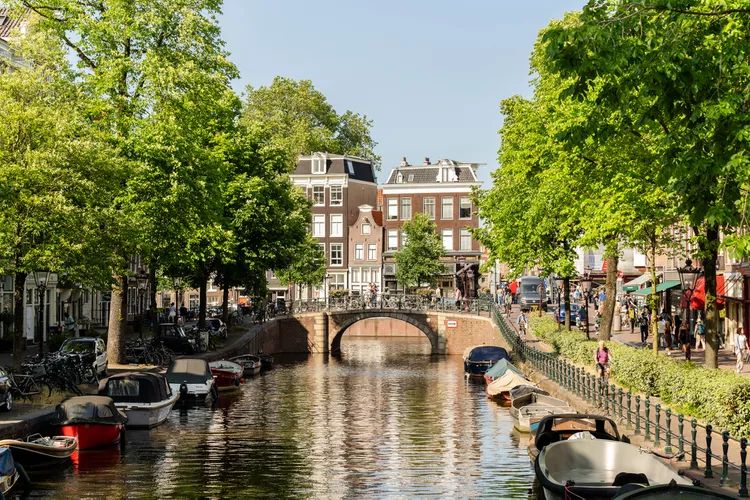
  • Amsterdam, the capital city of The Netherlands, is a place where history and modernity blend seamlessly. Known for its picturesque canals, vibrant culture, and rich history, Amsterdam offers something for every traveler. Whether you’re a history buff, an art lover, or just someone looking to explore a beautiful city, Amsterdam has it all.

    A City of Canals

    Amsterdam’s unique charm lies in its network of canals, which are often referred to as the “Venice of the North.” The city boasts over 100 kilometers of canals, about 90 islands, and 1,500 bridges. The canals were originally built in the 17th century during the Dutch Golden Age and are now a UNESCO World Heritage Site. Taking a boat tour through these waterways is one of the best ways to see the city.

    Rich History and Culture

    Amsterdam has a rich history that dates back to the 12th century. The city’s historical significance is reflected in its many museums and historical buildings. The Anne Frank House, where Anne Frank wrote her famous diary, is a poignant reminder of the city’s past during World War II. The Rijksmuseum, with its extensive collection of Dutch art and history, and the Van Gogh Museum, dedicated to the works of Vincent van Gogh, are must-visit cultural spots.

    A Hub for Art and Innovation

    The city is a hub for art and innovation. The Stedelijk Museum showcases contemporary art, while the EYE Filmmuseum celebrates the history of film. Amsterdam is also home to numerous art galleries and studios that contribute to its vibrant creative scene.

    Biking Capital

    Amsterdam is known as the biking capital of the world. With over 800,000 bicycles, the city has more bikes than residents! Cycling is a way of life here, and the city’s flat terrain and extensive bike paths make it easy to explore on two wheels. Renting a bike is a fantastic way to see the sights and experience the city like a local.

    Food and Drink

    Amsterdam’s culinary scene is diverse and delicious. From traditional Dutch dishes like stroopwafels and herring to international cuisine, there’s something to satisfy every palate. The city’s numerous cafes, known as “brown cafes” due to their cozy, wooden interiors, offer a perfect spot to enjoy a cup of coffee or a pint of beer.

    Unique Neighborhoods

    Each neighborhood in Amsterdam has its own unique character. The Jordaan is known for its narrow streets, independent shops, and trendy eateries. The De Pijp district is famous for the Albert Cuyp Market, one of the largest street markets in Europe. The Red Light District, while controversial, is a part of the city’s history and offers a glimpse into Amsterdam’s liberal attitude.

    Green Spaces

    Despite being a bustling city, Amsterdam has plenty of green spaces. Vondelpark is the largest and most famous park, offering a peaceful retreat with its lawns, ponds, and outdoor theatre. The city also has numerous smaller parks and gardens where you can relax and unwind.

    Amsterdam is a city that captivates visitors with its charm, history, and vibrant culture. Whether you’re cruising along the canals, exploring world-class museums, or simply enjoying the local cuisine, Amsterdam promises an unforgettable experience. So pack your bags, hop on a bike, and get ready to explore this beautiful city!

    #Amsterdam #Travel #Culture #History #Adventure

  • Rolex, a name synonymous with luxury and precision, has been at the forefront of the watchmaking industry for over a century. Founded in 1905 by Hans Wilsdorf and Alfred Davis in London, Rolex has evolved into a global icon, renowned for its commitment to excellence and innovation.

    Rolex Logo

    The Early Years: Vision and Precision

    Hans Wilsdorf’s vision was to create a wristwatch that combined elegance with reliability. In 1908, he coined the name “Rolex,” a name that would become a hallmark of quality and prestige. The company’s early years were marked by a relentless pursuit of precision, culminating in the first wristwatch to receive the Swiss Certificate of Chronometric Precision in 1910.

    Rolex Watch

    Innovations That Redefined Watchmaking

    Rolex’s journey is dotted with groundbreaking innovations. In 1926, the introduction of the Oyster case, the world’s first waterproof wristwatch, revolutionized the industry. This was followed by the Perpetual rotor in 1931, the first self-winding mechanism, and the Datejust in 1945, the first wristwatch to display the date.

    Iconic Models and Their Impact

    Rolex has produced numerous iconic models that have left an indelible mark on the world of horology. The Submariner, introduced in 1953, became a favorite among divers for its robustness and water resistance. The GMT-Master, launched in 1955, allowed wearers to track multiple time zones, making it a favorite among travelers and pilots.

    Cultural Significance and Legacy

    Beyond its technical achievements, Rolex has become a cultural icon, symbolizing success, achievement, and timeless elegance . Its watches have adorned the wrists of world leaders, explorers, and celebrities, cementing its status as a symbol of excellence.

    The Future of Rolex

    As Rolex continues to innovate and push the boundaries of watchmaking, its legacy of excellence remains unwavering. With a commitment to quality and a relentless pursuit of perfection, Rolex is poised to remain a leader in the luxury watch industry for generations to come.

  • Located on the southwestern coast of India, Thiruvananthapuram, also known as Trivandrum, is the capital city of Kerala, God’s Own Country. This vibrant city is a perfect blend of traditional and modern charm, making it a popular destination for tourists and travelers alike.

    A City Steeped in History and Culture

    Thiruvananthapuram has a rich history dating back to the 18th century when it was the capital of the princely state of Travancore. The city is home to many historical landmarks, including the iconic Padmanabhaswamy Temple, which is one of the 108 Divya Desams (holy abodes) of Lord Vishnu. The temple is famous for its intricate carvings, stunning architecture, and the mysterious vaults that are said to contain treasures beyond imagination.

    Natural Beauty and Scenic Landscapes

    Thiruvananthapuram is surrounded by lush green forests, rolling hills, and pristine beaches, making it a nature lover’s paradise. The city is home to several popular beaches, including Kovalam Beach, Shankumugham Beach, and Veli Beach, which offer stunning views of the Arabian Sea and a range of water sports and activities.

    A Hub for Education and Research

    Thiruvananthapuram is a major hub for education and research in Kerala, with several prestigious institutions, including the University of Kerala, the Indian Institute of Space Science and Technology (IIST), and the Sree Chitra Tirunal Institute for Medical Sciences and Technology (SCTIMST).

    A City that Blends Tradition and Modernity

    Thiruvananthapuram is a city that seamlessly blends tradition and modernity. From the ancient temples and traditional markets to the modern shopping malls and tech parks, the city offers a unique experience that is both nostalgic and futuristic.

    Tourist Attractions

    Some of the popular tourist attractions in Thiruvananthapuram include:

    • Padmanabhaswamy Temple
    • Kovalam Beach
    • Shankumugham Beach
    • Veli Beach
    • Napier Museum and Art Gallery
    • Thiruvananthapuram Zoo
    • Akulam Lake

    Getting There and Getting Around

    Thiruvananthapuram is well-connected to major cities in India and abroad by air, rail, and road. The city has a well-developed public transportation system, including buses and autorickshaws, making it easy to get around.

    Thiruvananthapuram is a city that has something for everyone – from history and culture to natural beauty and modern amenities. Whether you’re a history buff, a nature lover, or a tech enthusiast, this vibrant city is sure to leave you enchanted and inspired. So come and experience the magic of Thiruvananthapuram – the evergreen city of Kerala.

  • King Marthanda Varma, born Anizham Thirunal Marthanda Varma in 1706, was the founding monarch of the southern Indian Kingdom of Travancore, previously known as Venad. His reign from 1729 to 1758 marked a transformative era in the history of Kerala.

    Early Life and Ascension to the Throne

    Marthanda Varma was born to Queen Karthika Thirunal Umadevi of Attingal and Raghava Varma of Kilimanoor. After the death of his father, he was raised by his mother, who played a significant role in his upbringin. Marthanda Varma ascended to the throne in 1729, determined to strengthen and expand his kingdom.

    Military Achievements and Expansion

    One of Marthanda Varma’s most notable achievements was his victory over the Dutch East India Company at the Battle of Colachel in 1741. This victory not only secured Travancore’s independence but also marked the decline of Dutch colonial influence in India. Marthanda Varma’s military prowess and strategic acumen were further demonstrated by his successful campaigns against neighboring states, significantly expanding the territory of Travancore.

    Administrative Reforms and Economic Development

    Marthanda Varma implemented several administrative reforms to strengthen the governance of Travancore. He reorganized the military, creating a well-structured and disciplined army. He also focused on economic development, promoting trade and agriculture. His policies encouraged foreign trade, particularly with European nations, and he took measures to protect and promote local industries.

    Cultural Contributions and Legacy

    Marthanda Varma was a patron of arts and culture, contributing to the cultural heritage of Travancore. He supported the construction of temples and other architectural marvels, leaving a lasting legacy in the region. His reign is remembered for its emphasis on education, infrastructure development, and the promotion of local culture.

    The Legacy of Marthanda Varma

    Marthanda Varma’s reign laid the foundation for the modern state of Kerala. His vision and leadership transformed Travancore into a prosperous and powerful kingdom, setting the stage for future generation. His legacy continues to be celebrated in Kerala, where he is remembered as a visionary monarch who played a crucial role in shaping the region’s history.

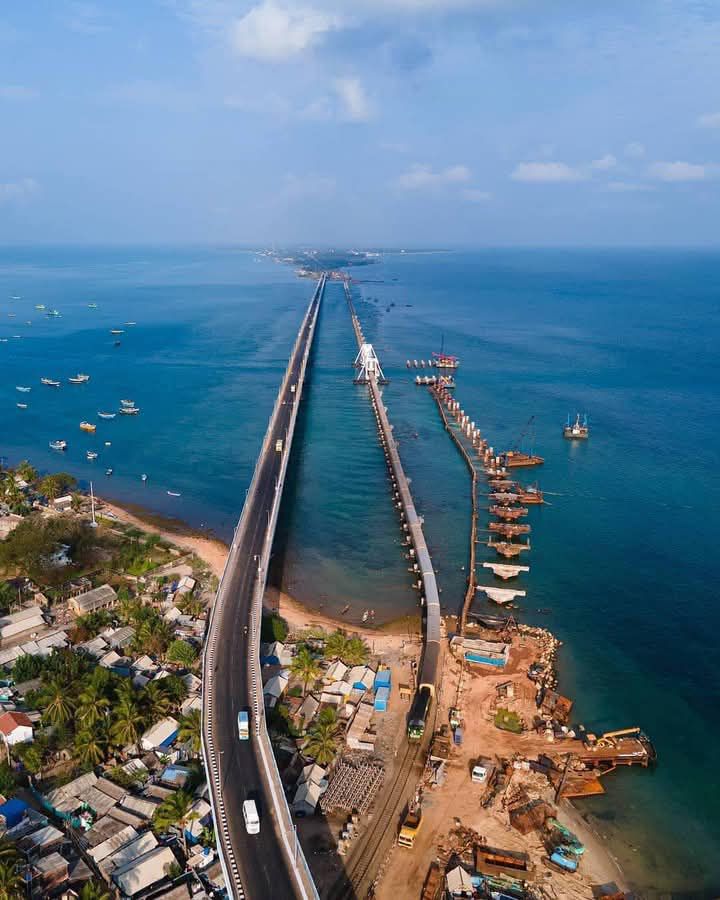
  • The Pamban Bridge, also known as the Rameswaram Bridge, is a remarkable feat of engineering that connects the town of Rameswaram on Pamban Island to the mainland of India. Opened on February 24, 1914, it was India’s first sea bridge and held the title of the longest sea bridge in India until the Bandra-Worli Sea Link was inaugurated in 2010.

    Pampan Bridge

    Historical Significance

    The idea for the bridge was first proposed by the British Administration in 1870 to enhance trade with Ceylon (now Sri Lanka). Construction began in August 1911 and was completed in February 1914. The bridge played a crucial role in connecting Rameswaram to the mainland, serving as the only surface transport link until 1988 when a road bridge was constructed parallel to it.

    Engineering Marvel

    The Pamban Bridge spans 2,065 meters (6,775 feet) and consists of 144 spans. The central section of the bridge features a double-leaf bascule section, which can be raised to allow ships and barges to pass through. This section was designed by German engineer Scherzer and is known as the Scherzer span. The bridge has withstood numerous challenges, including damage from the 1964 Rameswaram cyclone, which required extensive repairs.

    Tourist Attraction

    The Pamban Bridge is not just a vital transportation link but also a popular tourist attract. Travelers are often awestruck by the scenic beauty of the bridge, surrounded by pristine blue waters and offering spectacular views of the sea, nearby islands, and the Kunthukal Vivekananda Memorial. The narrowness of the bridge and the adventure of crossing it make the train journey over the bridge a memorable experience.

    Modern Developments

    In recent years, the Indian government announced the construction of a new Pamban Bridge to replace the old one. The new bridge, which began construction in February 2020, is designed as a vertical lift sea bridge and is expected to be opened for traffic in 2025. This modern marvel will feature a 72-meter vertical lifting section and will be capable of handling double-track railway traffic.

    Conclusion

    The Pamban Bridge stands as a testament to India’s engineering prowess and its commitment to enhancing connectivity and trade. As the new bridge nears completion, it promises to continue the legacy of its predecessor while providing improved infrastructure for future generations.

  • Nestled at the crossroads of Europe and Asia, Istanbul is a city that seamlessly blends its rich history with the vibrancy of modern life. As Turkey’s cultural and economic hub, Istanbul offers a unique experience that captivates visitors with its stunning architecture, bustling markets, and diverse culinary delights. Let’s take a journey through this enchanting city and discover what makes Istanbul truly special.

    A Glimpse into History

    Istanbul’s history dates back thousands of years, with influences from the Roman, Byzantine, and Ottoman Empires. The city’s strategic location along the Bosphorus Strait has made it a significant cultural and commercial center throughout history. One of Istanbul’s most iconic landmarks is the Hagia Sophia, originally built as a cathedral in the 6th century and later transformed into a mosque and now a museum. Its magnificent dome and intricate mosaics are a testament to the city’s architectural brilliance.

    Another historical gem is the Topkapi Palace, the former residence of Ottoman sultans. Visitors can explore its opulent rooms, lush gardens, and the famous Harem section. The palace offers a glimpse into the grandeur of the Ottoman era and the daily life of the royal family.

    Architectural Marvels

    Istanbul is a city of stunning contrasts, where ancient structures stand alongside modern skyscrapers. The Blue Mosque, also known as the Sultan Ahmed Mosque, is renowned for its breathtaking blue-tiled interior and majestic minarets. The Basilica Cistern, an underground reservoir from the Byzantine period, showcases impressive columns and atmospheric lighting.

    Modern architecture enthusiasts will appreciate the Istanbul Modern Museum, which features contemporary Turkish art, and the Sapphire Tower, offering panoramic views of the city from its observation deck.

    Vibrant Markets and Bazaars

    Istanbul’s markets and bazaars are a sensory delight, filled with colors, scents, and sounds. The Grand Bazaar is one of the world’s oldest and largest covered markets, with over 4,000 shops selling everything from jewelry and textiles to spices and antiques. The Spice Bazaar is another must-visit, where you can find a variety of exotic spices, dried fruits, and traditional Turkish delights.

    Culinary Delights

    Istanbul’s culinary scene is as diverse as its history. From street food to fine dining, the city offers a myriad of flavors to tantalize your taste buds. Sample simit, a sesame-crusted bread, from street vendors, or indulge in a traditional Turkish breakfast featuring menemen (scrambled eggs with tomatoes and peppers), sucuk (spicy sausage), and börek (savory pastries).

    For a more formal dining experience, try meze (small dishes) at a meyhane (tavern) or savor kebabs and baklava at renowned restaurants. Don’t forget to enjoy a cup of Turkish tea or coffee while taking in the city’s vibrant atmosphere.

    Cultural and Artistic Hub

    Istanbul is a melting pot of cultures, and its arts scene reflects this diversity. The city hosts numerous festivals, including the Istanbul Film Festival, Istanbul Biennial, and the Istanbul Music Festival. The Pera Museum and Sakip Sabanci Museum showcase a wide range of art collections, from Ottoman artifacts to contemporary works.

    A Journey to Remember

    Istanbul is a city that leaves a lasting impression on all who visit. Its rich history, stunning architecture, vibrant markets, and diverse culinary offerings make it a destination like no other. Whether you’re exploring ancient landmarks, savoring delicious food, or simply wandering through its bustling streets, Istanbul promises an unforgettable experience


  • John Davison Rockefeller was an American business magnate, investor, and philanthropist who revolutionized the oil industry and became one of the wealthiest individuals in modern history. Born on July 8, 1839, in Richford, New York, Rockefeller’s life was marked by hard work, strategic business decisions, and a commitment to philanthropy.

    John D. Rockfeller

    Early Life and Career
    Rockefeller grew up in a modest household with his parents, William and Eliza Rockefeller. He was the second of six children, and his family moved to Cleveland, Ohio, when he was a teenager. Rockefeller’s early career began as an accountant, but he soon became interested in the oil industry, which was still in its infancy.

    The Founding of Standard Oil
    In 1870, Rockefeller co-founded Standard Oil, which quickly became the dominant player in the oil industry. Through strategic partnerships, innovative refining techniques, and aggressive business tactics, Standard Oil controlled nearly 90% of the US oil market by the late 1800s.

    Business Strategies and Innovations
    Rockefeller’s success can be attributed to his innovative business strategies and commitment to efficiency. Some notable achievements include:

    • Vertical integration: Rockefeller integrated all aspects of the oil industry, from drilling and refining to transportation and marketing.
    • Efficient refining techniques: Standard Oil developed new refining techniques that increased efficiency and reduced waste.
    • Strategic partnerships: Rockefeller formed partnerships with railroads and other companies to reduce costs and increase market share.

    Philanthropy and Legacy
    Rockefeller was also a dedicated philanthropist, donating over $550 million (approximately $8.5 billion today) to various causes during his lifetime. Some notable philanthropic efforts include:

    • The Rockefeller Foundation: Established in 1913, the foundation focused on global health, education, and economic development.
    • The University of Chicago: Rockefeller donated $80 million (approximately $2.5 billion today) to the university, which became a leading institution in the US.
    • Medical research: Rockefeller supported medical research, leading to significant advancements in the field.


    John D. Rockefeller’s life and legacy serve as a testament to the power of hard work, strategic thinking, and philanthropy. As a pioneer in the oil industry, Rockefeller’s innovative business strategies and commitment to efficiency transformed the global energy landscape. His philanthropic efforts continue to inspire and improve lives around the world.