• In the sweltering heat of São Paulo’s streets, a young boy named Marcos Evangelista de Morais, affectionately known as Cafu, would spend hours kicking a makeshift ball made of socks and paper. Little did he know that his passion for football would one day propel him to become one of Brazil’s most beloved and decorated footballers.

    The Humble Beginnings

    Born on June 7, 1970, in the impoverished district of Itaquera, São Paulo, Cafu grew up in a family of modest means. His father, a bricklayer, and his mother, a housewife, instilled in him a strong work ethic and a love for football. Cafu’s talent and dedication quickly caught the attention of local coaches, and he soon joined the youth ranks of São Paulo FC.

    The Rise to Prominence

    Cafu’s professional debut in 1988 marked the beginning of an illustrious career that would span over two decades. His lightning-fast speed, pinpoint crossing, and tireless work rate made him a fan favorite and a coveted asset for top clubs. In 1995, Cafu joined Real Zaragoza in Spain, where he won the Copa del Rey and earned a reputation as one of the world’s top right-backs.

    The International Stage

    Cafu’s Brazil debut in 1990 was the start of an extraordinary international career. He went on to represent the Seleção in four World Cups, winning two titles (1994 and 2002). His leadership, experience, and unwavering commitment earned him the captain’s armband, and he became the first player to appear in three consecutive World Cup finals.

    Cafu

    The Legacy

    Cafu’s playing career was marked by numerous accolades, including two World Cup titles, two Copa Libertadores titles, and multiple individual awards. His dedication, passion, and humility inspired a generation of footballers, and his legacy continues to be celebrated by fans around the world.

    Practical Information:

    • Full Name: Marcos Evangelista de Morais
    • Birthdate: June 7, 1970
    • Birthplace: Itaquera, São Paulo, Brazil
    • Position: Right-back
    • Notable Clubs: São Paulo FC, Real Zaragoza, AC Milan
    • International Career: Brazil (1990-2006), 142 caps, 5 goals

    Experience the Unstoppable Rise of Cafu

    Cafu’s story is a testament to the power of hard work, determination, and passion. From the streets of São Paulo to the pinnacle of international football, Cafu’s journey is an inspiration to anyone who has ever dreamed of achieving greatness.

  • In the sweltering heat of the Indian subcontinent, a young prince named Aurangzeb was born in 1618, destined to ascend to the throne of the mighty Mughal Empire. His life’s journey would be a tumultuous tale of ambition, power struggles, and bloodshed, forever etching his name in the annals of Indian history.

    The Early Years

    Aurangzeb was the third son of Emperor Shah Jahan and his beloved wife, Mumtaz Mahal. Growing up in the opulent courts of the Red Fort, Aurangzeb was instilled with a strong sense of duty, discipline, and Islamic values. However, his early life was also marked by tragedy, as he witnessed the untimely death of his mother and the subsequent descent into madness of his father.

    The Struggle for Power

    As Aurangzeb grew older, he became increasingly disillusioned with his father’s rule and the perceived decadence of the Mughal court. In 1657, he seized the opportunity to strike, rebelling against Shah Jahan and eventually imprisoning him in the Red Fort. After a brutal struggle, Aurangzeb emerged victorious, claiming the throne and marking the beginning of his 49-year reign.

    The Reign of Aurangzeb

    Aurangzeb’s rule was marked by a series of conquests, expanding the Mughal Empire to its greatest extent. He annexed the Sultanate of Golconda, conquered the Deccan region, and extended Mughal control into present-day Afghanistan and Bangladesh. However, his reign was also marred by brutal suppression of opposition, massacres of Sikh and Hindu populations, and the destruction of temples and sacred sites.

    The Legacy of Aurangzeb

    Aurangzeb’s legacy is a complex and contested one. While he was a skilled military leader and administrator, his reign was also marked by intolerance, violence, and repression. His policies and actions have been the subject of fierce debate among historians, with some viewing him as a hero of Islam and others as a ruthless tyrant.

    Practical Information:

    • Birth and Death: 1618-1707
    • Reign: 1658-1707
    • Notable Conquests: Golconda, Deccan, Afghanistan, Bangladesh
    • Controversies: Suppression of opposition, massacres, destruction of temples

    Uncover the Turbulent Life and Reign of Aurangzeb

    Aurangzeb’s story is a gripping tale of power, ambition, and the complexities of human nature. As we delve into the life and reign of this enigmatic figure, we are reminded that even the most flawed and controversial individuals can leave an indelible mark on history.

  • In the scorching deserts of Bihar, India, lies the remnants of a forgotten era – the ancient Nalanda University. Once a beacon of knowledge and wisdom, Nalanda was a melting pot of scholars, philosophers, and seekers of truth from far and wide.

    The Birth of a Legend

    In the 5th century CE, the Gupta Empire, under the patronage of Emperor Kumaragupta, laid the foundation of Nalanda University. The name “Nalanda” is derived from the Sanskrit word “Nalanda,” meaning “giver of knowledge.” And give knowledge it did – in abundance.

    A Hub of Learning

    Nalanda University flourished under the guidance of some of the most brilliant minds of the time. The university attracted scholars from as far as China, Korea, and Tibet, who came to study the sacred scriptures of Buddhism, Hinduism, and Jainism. The university’s vast library, known as the “Dharmaganja,” housed a staggering collection of manuscripts, many of which were painstakingly copied by hand.

    A Center of Innovation

    Nalanda University was not just a center of learning; it was also a hub of innovation. Scholars and researchers made groundbreaking discoveries in mathematics, astronomy, medicine, and philosophy. The university’s emphasis on experimentation, debate, and critical thinking fostered a spirit of inquiry that was unparalleled in ancient India.

    The Decline of a Legacy

    In the 12th century CE, Nalanda University suffered a devastating blow when it was ravaged by the invading armies of Bakhtiyar Khalji. The university’s libraries were burned, and its scholars were forced to flee. The once-thriving institution slowly faded into obscurity, leaving behind only ruins and memories.

    A Legacy Reborn

    In 2014, the Indian government established a new Nalanda University, with the aim of reviving the ancient institution’s spirit of learning and inquiry. The new university offers courses in subjects such as Buddhist studies, philosophy, and comparative literature, and has attracted scholars and students from around the world.

    Practical Information:

    • Location: Nalanda, Bihar, India
    • Founded: 5th century CE
    • Notable Alumni: Nagarjuna, Vasubandhu, and Dharmapala
    • Revival: 2014

    Uncover the Forgotten Story of Nalanda University

    Nalanda University’s story is a testament to the power of human curiosity and the pursuit of knowledge. From its ancient roots to its modern revival, Nalanda’s legacy continues to inspire scholars, philosophers, and seekers of truth around the world.

  • In the early 20th century, a young Ettore Bugatti had a vision to create cars that would combine beauty, elegance, and speed. Little did he know that his eponymous brand would one day become synonymous with hypercars that would push the boundaries of engineering and design.

    The Early Years

    Born in Milan, Italy in 1881, Ettore Bugatti was the son of a furniture maker and artist. His early fascination with machines and design led him to build his first car, the Bugatti Type 1, in 1898. The car’s innovative design and impressive performance caught the attention of the automotive world, and soon, Bugatti’s reputation as a master carmaker spread far and wide.

    The Golden Era

    The 1920s and 1930s are often referred to as the “Golden Era” of Bugatti. During this period, the company produced some of the most iconic and sought-after cars in history, including the Type 35, Type 41 Royale, and Type 57 Atlantic. These cars were renowned for their sleek designs, exceptional performance, and impeccable craftsmanship.

    The Dark Years

    The outbreak of World War II marked a significant turning point in Bugatti’s history. The company’s factory in Molsheim, France was seized by the Germans, and Ettore Bugatti was forced to flee to Italy. The war years were marked by hardship and struggle, and the company’s production came to a grinding halt.

    The Resurrection

    In the 1990s, the Volkswagen Group acquired the Bugatti brand and set about reviving its former glory. The company’s new era was marked by the launch of the EB 118 concept car, followed by the production of the EB 218 and EB 18/3 Chiron. However, it was the Veyron, launched in 2005, that truly put Bugatti back on the map as a hypercar manufacturer.

    The Modern Era

    Today, Bugatti is a brand that embodies the perfect blend of heritage, innovation, and exclusivity. The company’s current lineup includes the Chiron, La Voiture Noire, and the Divo, each a testament to the brand’s commitment to pushing the boundaries of engineering and design.

    Practical Information:

    • Founder: Ettore Bugatti
    • Founding Year: 1909
    • Headquarters: Molsheim, France
    • Current Models: Chiron, La Voiture Noire, Divo

    Experience the Evolution of Bugatti

    Bugatti’s story is a fascinating tale of innovation, perseverance, and passion. From its humble beginnings to its current status as a hypercar manufacturer, Bugatti’s evolution is a testament to the power of human creativity and ingenuity.

  • On February 27, 2002, the sleepy town of Godhra in Gujarat, India, was engulfed in a communal firestorm that would leave an indelible mark on the nation’s collective conscience. The Godhra communal riots, a devastating explosion of sectarian violence, would claim the lives of 59 innocent people, mostly Hindu pilgrims, and unleash a wave of bloodshed that would spread across the state.

    The Fateful Day

    It was a chilly winter morning when the Sabarmati Express, a train carrying Hindu pilgrims from Ayodhya, pulled into Godhra station. As the passengers disembarked, a group of Muslim vendors and locals allegedly began to harass and stone the pilgrims. The situation escalated rapidly, and soon, a coach of the train was set ablaze, trapping the passengers inside.

    The Aftermath

    The Godhra carnage sparked a wave of retaliatory violence across Gujarat, targeting Muslim communities and businesses. The state was plunged into chaos, with rioters rampaging through cities and towns, leaving death and destruction in their wake. The official death toll stood at 1,044, with thousands more injured and displaced.

    A Cycle of Violence

    The Godhra riots were not an isolated incident but rather a symptom of a deeper malaise. The violence was fueled by years of simmering tensions between Hindus and Muslims, exacerbated by political and economic factors. The riots exposed the fault lines of Indian society, revealing a disturbing willingness to exploit sectarian divisions for political gain.

    A Legacy of Pain

    Twenty years on, the wounds of Godhra still linger. The survivors and families of the victims continue to seek justice and closure. The incident serves as a stark reminder of the dangers of communalism and the importance of fostering a culture of tolerance and understanding.

    Practical Information:

    • Date of the Godhra Riots: February 27, 2002
    • Death Toll: 59 (in the initial incident), 1,044 (in the subsequent riots)
    • Displaced Persons: Thousands

    Remembering the Lessons of Godhra

    The Godhra communal riots were a dark chapter in India’s history, a stark reminder of the devastating consequences of sectarian violence. As we reflect on this tragic event, we must reaffirm our commitment to communal harmony, tolerance, and the rule of law.

  • In the early 20th century, a young Lebanese immigrant named Khalil Gibran arrived in Boston, Massachusetts, with a dream to share his art and literature with the world. Little did he know that his words would one day transcend borders, cultures, and time, inspiring generations to come.

    The Early Years

    Born in 1883 in Bsharri, Lebanon, Gibran was raised in a Maronite Catholic family. His mother, Kamila, was a devout woman who instilled in him a love for art, literature, and spirituality. Gibran’s early years were marked by poverty and hardship, but his mother’s encouragement and his own determination helped him to pursue his passion for art.

    The Artist’s Journey

    In 1895, Gibran’s family immigrated to the United States, settling in Boston’s South End. Gibran’s artistic talent was soon recognized, and he began studying art at the Boston Normal School. His artwork was exhibited in local galleries, and he became known for his symbolic and mystical paintings.

    The Writer’s Voice

    Gibran’s literary career began to take shape in the early 1900s. He wrote in both Arabic and English, drawing inspiration from his Lebanese heritage and his adopted American culture. His poetry and prose were infused with spiritual and philosophical themes, reflecting his deep interest in mysticism and the human condition.

    The Prophet’s Wisdom

    In 1923, Gibran published his masterpiece, “The Prophet,” a collection of poetic essays that explored the mysteries of life, love, and spirituality. The book’s wisdom and beauty resonated with readers around the world, establishing Gibran as a major literary figure of his time.

    A Legacy of Inspiration

    Khalil Gibran’s life was marked by both triumph and tragedy. He faced poverty, illness, and personal loss, but his spirit remained unbroken. Through his art and literature, he continues to inspire us to live with compassion, empathy, and wisdom.

    Practical Information:

    • Khalil Gibran’s Major Works: “The Prophet,” “Broken Wings,” “Jesus, the Son of Man”
    • Gibran’s Artistic Style: Symbolic, mystical, and romantic
    • Gibran’s Literary Influences: Arabic literature, William Blake, Walt Whitman

    Experience the Timeless Wisdom of Khalil Gibran

    Gibran’s story is a testament to the power of art and literature to transcend time and culture. His words continue to inspire us to live with purpose, compassion, and wisdom. As we reflect on his life and legacy, we are reminded of the enduring power of the human spirit.

  • In the 1980s, the world was gripped by the rise of a notorious figure, Pablo Escobar, the biggest drug cartel leader in history. His empire was built on blood, greed, and corruption, but his story is also one of fascination, intrigue, and tragedy.

    The Early Years

    Pablo Escobar was born in 1949 in Medellín, Colombia. He grew up in a poor neighborhood, where he quickly learned to rely on his wits and cunning to survive. Escobar’s early involvement in crime was relatively small-time, but he soon set his sights on the lucrative cocaine trade.

    The Rise to Power

    Escobar’s big break came in the late 1970s, when he began smuggling cocaine into the United States. His organization, the Medellín Cartel, quickly grew into a vast empire, with tentacles reaching into every level of Colombian society. Escobar’s success was fueled by his ruthless efficiency, his ability to bribe and intimidate officials, and his willingness to use violence to eliminate his enemies.

    The Height of Power

    By the mid-1980s, Escobar was one of the richest and most powerful men in the world. He lived in a lavish mansion, surrounded by beautiful women, expensive cars, and exotic animals. He was known for his generosity, often giving away money and gifts to the poor and needy. But beneath the surface, Escobar’s empire was built on a foundation of blood and corruption.

    The Fall of the King

    In the early 1990s, the Colombian government, with the help of the United States, launched a crackdown on the Medellín Cartel. Escobar’s organization was weakened by infighting and betrayals, and he was eventually forced to go into hiding. In 1993, Escobar was killed in a shootout with Colombian police, marking the end of an era.

    Legacy of Violence

    Pablo Escobar’s legacy is one of violence, corruption, and tragedy. His empire was responsible for the deaths of thousands of people, including police officers, judges, and innocent civilians. But his story is also a reminder of the dangers of unchecked power and the corrupting influence of greed.

    Practical Information:

    • Pablo Escobar’s Net Worth: Estimated to be over $30 billion
    • The Medellín Cartel: Responsible for the production and distribution of over 80% of the world’s cocaine
    • Escobar’s Death: Killed in a shootout with Colombian police on December 1, 1993

    Witness the Rise and Fall of a Narcotics Kingpin

    Pablo Escobar’s story is a fascinating and terrifying tale of ambition, greed, and violence. From his humble beginnings to his rise as the world’s most powerful drug lord, Escobar’s life was a rollercoaster of drama and intrigue.

  • In the late 19th century, a young pharmacist named Caleb Bradham had a vision to create a drink that would aid digestion and boost energy. Little did he know that his brainchild, Pepsi-Cola, would one day become a global beverage giant, rivaling the likes of Coca-Cola.

    The Birth of Pepsi-Cola

    In 1893, Caleb Bradham created a unique blend of carbonated water, sugar, vanilla, and “rare oils” that he called “Brad’s Drink.” Initially, the drink was sold at his pharmacy in New Bern, North Carolina, but its popularity soon led to its expansion to other pharmacies and general stores.

    The Name Change

    In 1898, Bradham renamed his drink “Pepsi-Cola,” a combination of the word “dyspepsia,” which the drink was initially marketed to alleviate, and “cola,” a nod to the cola nut extract used in the recipe.

    The Rise to Prominence

    Pepsi-Cola’s popularity grew steadily throughout the early 20th century, but it wasn’t until the 1940s that the company began to expand nationally. Under the leadership of Alfred Steele, Pepsi-Cola’s new CEO, the company launched a series of innovative marketing campaigns that helped to establish Pepsi as a major player in the beverage industry.

    The Cola Wars

    The 1970s and 1980s saw the rise of the “Cola Wars,” a series of intense marketing battles between PepsiCo and Coca-Cola. PepsiCo’s iconic “Pepsi Challenge” campaign, which asked people to blind-taste test Pepsi against Coca-Cola, helped to establish Pepsi as a credible alternative to the market leader.

    Diversification and Expansion

    In the 1990s and 2000s, PepsiCo began to diversify its portfolio through a series of strategic acquisitions, including Gatorade, Tropicana, and Quaker Oats. Today, PepsiCo is a global food and beverage giant, with a portfolio of 22 brands that generate over $1 billion in annual revenue.

    A Legacy of Innovation

    PepsiCo’s rise to global dominance is a testament to the power of innovation, adaptability, and strategic risk-taking. From its humble beginnings as a small-town pharmacy drink to its current status as a multinational giant, PepsiCo’s story is an inspiration to entrepreneurs and business leaders around the world.

    Practical Information:

    • PepsiCo’s Founders: Caleb Bradham
    • The Birthplace of Pepsi-Cola: New Bern, North Carolina
    • PepsiCo’s Portfolio: 22 brands, including Pepsi, Gatorade, Tropicana, and Quaker Oats

    Experience the Rise of a Global Giant

    PepsiCo’s story is a fascinating tale of innovation, perseverance, and strategic risk-taking. From its humble beginnings to its current status as a global food and beverage giant, PepsiCo’s rise is an inspiration to anyone who has ever dared to dream big.

  • In the bustling streets of Manhattan, a young girl named Stefani Joanne Angelina Germanotta was born to shine. Little did the world know that this petite, fiery redhead would one day become the one and only Lady Gaga, a pop sensation who would captivate the hearts of millions.

    The Early Years

    Growing up in a traditional Italian-American family, Stefani was classically trained in piano and vocals. She was a misfit among her peers, often finding solace in the works of David Bowie, Queen, and Madonna. These iconic artists would later inspire her bold style and unapologetic stage presence.

    The Struggle is Real

    After being dropped by her first record label, Stefani faced rejection and disappointment. But she refused to give up on her dreams. She honed her craft, performing in small clubs and bars, and eventually caught the attention of Rob Fusari, a music producer who would help her secure a record deal.

    The Birth of Lady Gaga

    In 2008, Lady Gaga burst onto the scene with her debut album, “The Fame.” The album’s lead single, “Just Dance,” became a global phenomenon, topping the charts in over 20 countries. Lady Gaga’s unique blend of pop, dance, and electronic music, combined with her outrageous fashion sense and captivating live performances, made her an instant sensation.

    A Legacy of Self-Acceptance and Empowerment

    Throughout her career, Lady Gaga has used her platform to promote self-acceptance, LGBTQ+ rights, and mental health awareness. Her music and message have inspired a generation of young people to be brave, take risks, and unapologetically be themselves.

    A True Icon

    Today, Lady Gaga is a multi-platinum, award-winning artist, with a legacy that extends far beyond her music. She is a fashion icon, a talented actress, and a devoted philanthropist. Her story serves as a testament to the power of passion, perseverance, and self-discovery.

    Practical Information:

    • Lady Gaga’s Discography: “The Fame” (2008), “Born This Way” (2011), “Artpop” (2013), “Joanne” (2016), “Chromatica” (2020)
    • Awards and Accolades: 9 Grammy Awards, 2 Golden Globe Awards, 18 MTV Video Music Awards
    • The Born This Way Foundation: A non-profit organization founded by Lady Gaga and her mother, Cynthia Germanotta, to support the mental health and wellness of young people.

    Experience the Magic of Lady Gaga

    Lady Gaga’s story is a reminder that with hard work, determination, and a willingness to take risks, anything is possible. Her music, message, and legacy continue to inspire and empower millions around the world.

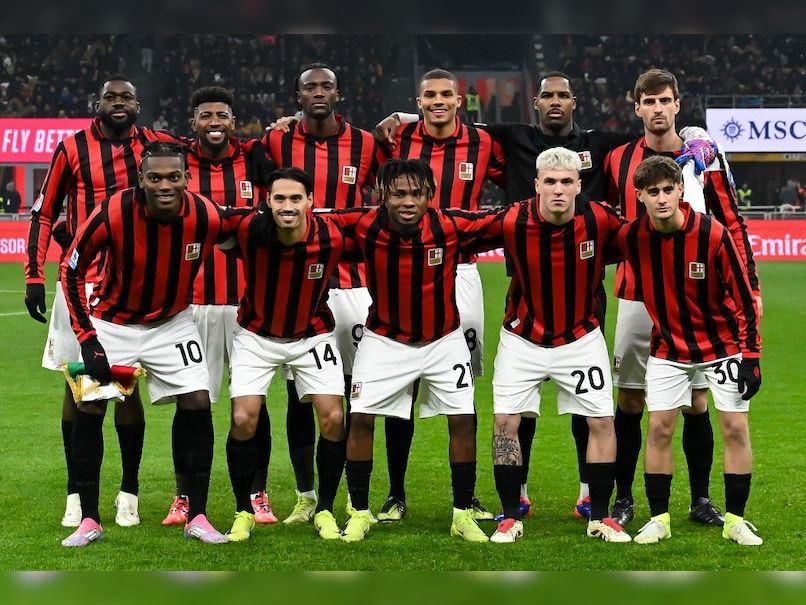
  • In the world of football, few clubs have experienced the highs and lows of AC Milan. From their dominance of European football in the 1980s and 1990s to their recent struggles, the Rossoneri’s story is one of glory, pride, and redemption.

    The Golden Years

    It was the 1980s, and AC Milan was on the rise. With the likes of Paolo Maldini, Franco Baresi, and Marco van Basten, the team was unstoppable. They won five European Cups, three Intercontinental Cups, and dominated Italian football.

    The Fall from Grace

    But as the years went by, AC Milan’s fortunes began to decline. The team struggled to find consistency, and the once-mighty squad was plagued by injuries and internal conflicts. The club’s finances suffered, and the team was forced to sell its star players.

    The Dark Ages

    The 2010s were a dark period for AC Milan. The team finished outside the top four in Serie A, and the club’s debt continued to grow. The fans were frustrated, and the team’s reputation was in tatters.

    The Road to Redemption

    But in 2019, something changed. AC Milan appointed Stefano Pioli as their new manager, and the team began to show signs of life. They finished sixth in Serie A and qualified for the Europa League.

    The Future is Bright

    Today, AC Milan is on the rise once again. The team has a new owner, a new manager, and a new sense of purpose. The fans are optimistic, and the team is hungry for success.

    Lessons Learned

    The story of AC Milan is a reminder that even the greatest clubs can fall. But it’s also a testament to the power of resilience, determination, and redemption. With hard work, dedication, and a bit of luck, even the darkest of times can be overcome.

    Practical Information:

    • AC Milan’s Honors: 7 European Cups, 18 Italian league titles, 5 Coppa Italia titles
    • San Siro Stadium: AC Milan’s home stadium, shared with Inter Milan
    • The Derby della Madonnina: The intense rivalry between AC Milan and Inter Milan

    Experience the Pride and Passion of AC Milan

    The story of AC Milan is a rollercoaster ride of emotions, filled with moments of triumph and tragedy. But through it all, the Rossoneri have remained true to their values of pride, passion, and redemption.