• In the dense forests of southern India, a notorious bandit roamed, evading capture for decades. Koose Munisamy Veerappan, known for his cunning and ruthlessness, left a trail of death and destruction in his wake. His life was a complex web of crime, politics, and survival.
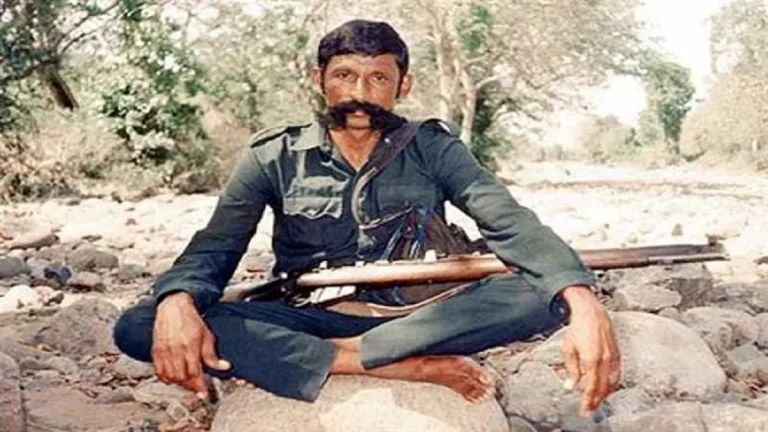

    Born on January 18, 1952, in Gopinatham, Karnataka, Veerappan grew up in a poor family of cattle grazers. His early life was marked by poverty and a sense of injustice, which would later shape his actions. Veerappan’s introduction to crime came through his uncle, Saalvai Gounder, a notorious poacher and sandalwood smuggler. Under Gounder’s mentorship, Veerappan learned the ways of the forest and the art of evasion.


    Veerappan’s criminal career spanned over three decades, during which he committed numerous crimes, including murder, kidnapping, and poaching. He was responsible for the deaths of 184 people, including 97 police officials and forest officers, and the poaching of approximately 900 elephants. Veerappan’s gang was known for its ruthlessness, and he became infamous for his ability to evade capture.


    The Indian government launched several operations to capture Veerappan, but he consistently managed to evade capture. The Tamil Nadu Special Task Force (STF) was formed specifically to apprehend him. Veerappan’s ability to blend into the local population and his network of informants made it difficult for the STF to track him down. Despite the challenges, the STF persisted, and their efforts eventually led to Veerappan’s demise.


    On October 18, 2004, Veerappan’s life came to an end in a shootout with the STF. The operation, code-named “Operation Cocoon,” was a culmination of years of planning and surveillance. Veerappan’s death marked the end of an era of terror and brought closure to the people affected by his crimes.


    Veerappan’s legacy is complex and multifaceted. To some, he was a Robin Hood figure, who distributed wealth and resources to the poor. To others, he was a ruthless bandit who terrorized the region. His life and actions continue to fascinate people, and his story has been the subject of numerous books, films, and documentaries.


    Veerappan’s life was a testament to the complexities of human nature and the blurred lines between good and evil. His story serves as a reminder of the challenges faced by law enforcement agencies in tackling organized crime and the impact of crime on society. As we reflect on Veerappan’s life, we are reminded of the importance of justice, compassion, and humanity in shaping our world.
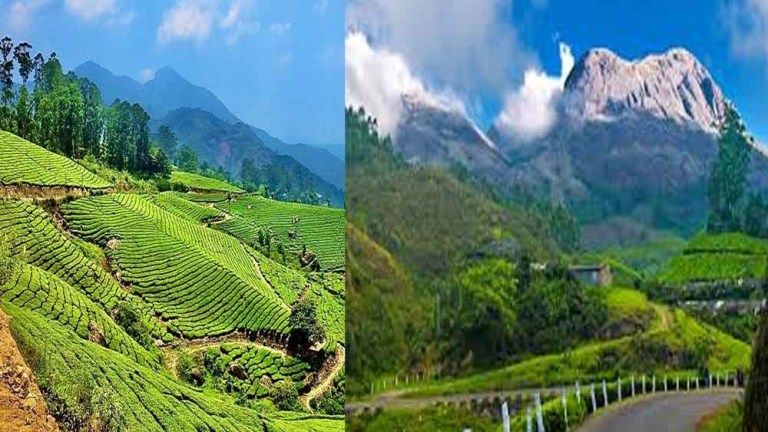

  • Munnar, a picturesque hill station in Kerala, is a haven for nature lovers and those seeking tranquility. Nestled in the Western Ghats, Munnar’s breathtaking landscapes, lush tea plantations, and serene atmosphere make it an ideal destination for relaxation and adventure. Let’s embark on a journey to explore the beauty of Munnar.


    As we drive through the winding roads, the scenery transforms into a lush green paradise. The air is crisp, and the aroma of tea wafts through the air, signaling our arrival in Munnar. The rolling hills, dotted with tea plantations, stretch as far as the eye can see, creating a breathtaking panorama.


    Munnar is famous for its tea plantations, which produce some of the finest tea in the world. The tea estates, with their neatly manicured rows of tea bushes, are a sight to behold. Visitors can take a tour of the tea factories, learn about the tea-making process, and sample some of the local brews.


    Munnar is home to the Eravikulam National Park, a haven for wildlife enthusiasts. The park is home to the endangered Nilgiri Tahr, as well as other species like the Malabar giant squirrel and the lion-tailed macaque. Visitors can take a guided trek through the park, immersing themselves in the beauty of nature.


    Munnar is dotted with scenic lakes and waterfalls, each with its unique charm. The Mattupetty Dam, with its picturesque surroundings, is a popular spot for boating and relaxation. The Cheeyappara Waterfalls, cascading down the hills, create a breathtaking spectacle.


    Munnar is an ideal destination for those seeking relaxation and rejuvenation. The serene atmosphere, coupled with the stunning natural beauty, makes it the perfect spot to unwind and connect with nature. Visitors can indulge in activities like trekking, camping, or simply sit back and enjoy the tranquility of the hills.


    Munnar is a destination that will leave you enchanted with its natural beauty, serene atmosphere, and warm hospitality. Whether you’re looking for adventure, relaxation, or simply a chance to connect with nature, Munnar has something to offer everyone. So, come and experience the magic of Munnar, a place that will stay with you forever.

  • Thanjavur, a city in the heart of Tamil Nadu, is a treasure trove of history, art, and culture. From the majestic Brihadeeswara Temple to the vibrant streets of the old town, Thanjavur is a city that will leave you spellbound. Let’s embark on a journey to explore the timeless charm of Thanjavur.

    A Glimpse into the Past
    Thanjavur’s history dates back to the 10th century when it was the capital of the Chola Empire. The city’s rich cultural heritage is reflected in its stunning architecture, art, and literature. The Brihadeeswara Temple, a UNESCO World Heritage Site, is a testament to the city’s glorious past.


    The Brihadeeswara Temple is a masterpiece of Chola architecture, built by Emperor Rajaraja Chola I in the 11th century. The temple’s towering vimana, intricate carvings, and exquisite sculptures make it a must-visit destination for anyone interested in history, art, and architecture.


    Thanjavur is renowned for its traditional art forms, including Bharatanatyam, a classical dance style that originated in the city. The city’s artisans are skilled in creating beautiful handicrafts, such as Thanjavur paintings, metalwork, and textiles.


    Thanjavur’s old town is a maze of narrow streets, bustling markets, and historic landmarks. Visitors can explore the city’s vibrant markets, try local cuisine, and interact with the friendly locals.


    Thanjavur is a city of contrasts, where ancient traditions coexist with modernity. From the ancient temples to the modern infrastructure, the city is a blend of old and new.


    Thanjavur is a city that will leave you enchanted with its timeless charm, rich history, and vibrant culture. Whether you’re interested in history, art, or architecture, Thanjavur has something to offer everyone. So, come and experience the magic of Thanjavur, a city that will stay with you forever.

  • The Dalai Lama, a symbol of peace and compassion, has been a guiding light for millions around the world. His Holiness’s life story is a testament to the power of kindness, forgiveness, and spiritual growth. Let’s embark on a journey to explore the remarkable life and teachings of the Dalai Lama.


    Born on July 6, 1935, in Taktser, Tibet, the Dalai Lama was recognized as the reincarnation of the 13th Dalai Lama at a young age. His early life was marked by rigorous spiritual training, which shaped his understanding of the world and his role in it.


    In 1959, the Dalai Lama was forced to flee Tibet due to the Chinese invasion. This marked the beginning of a new chapter in his life, as he worked tirelessly to preserve Tibetan culture and promote peace and understanding globally.


    The Dalai Lama’s teachings emphasize the importance of compassion, forgiveness, and inner peace. He has written numerous books and given countless lectures, inspiring people to cultivate a sense of kindness and empathy towards all living beings.


    The Dalai Lama’s life has been dedicated to serving humanity. He has worked to promote interfaith understanding, advocate for human rights, and support sustainable development. His commitment to peace and non-violence has earned him numerous accolades, including the Nobel Peace Prize.


    The Dalai Lama’s legacy extends far beyond his spiritual leadership. He has inspired a generation of leaders, activists, and ordinary people to work towards creating a more compassionate and peaceful world.


    The Dalai Lama’s story is a testament to the power of kindness, forgiveness, and spiritual growth. His teachings continue to inspire people around the world, reminding us of the importance of living with compassion and empathy. As we reflect on his remarkable life, we are reminded of the potential for positive change that lies within each of us.

  • Tibet, a land of breathtaking landscapes, rich cultural heritage, and profound spirituality, has long been a source of fascination for travelers and adventurers alike. Let’s embark on a journey to explore the mystique of Tibet, a place where the boundaries between reality and myth blur.


    Tibet’s rugged terrain, dominated by the majestic Himalayan mountain range, is a sight to behold. The snow-capped peaks, glaciers, and valleys create a dramatic landscape that is both beautiful and unforgiving. The region’s unique geography has shaped the lives of its inhabitants, influencing their culture, traditions, and way of life.


    Tibet is often referred to as the spiritual heartland of Buddhism. The region is home to numerous monasteries, temples, and sacred sites that attract pilgrims and tourists from around the world. The Dalai Lama, the spiritual leader of Tibetan Buddhism, has been a symbol of peace and compassion, inspiring millions with his teachings.


    Tibetan culture is a rich tapestry of traditions, customs, and rituals. The region’s vibrant art, music, and dance reflect its unique cultural identity. Tibetan cuisine, with its emphasis on local ingredients and simple preparation methods, is a testament to the region’s resourcefulness and adaptability.


    Tibet’s history has been marked by periods of turmoil and conflict. The region’s complex relationship with China has led to ongoing tensions and disputes. The Tibetan diaspora community, scattered across the globe, continues to advocate for the preservation of Tibetan culture and autonomy.


    Visiting Tibet is a journey of discovery, a chance to experience the region’s breathtaking landscapes, rich culture, and profound spirituality. From the bustling streets of Lhasa to the serene beauty of the Tibetan Plateau, every moment in Tibet is an opportunity to explore, learn, and grow.


    Tibet, the Roof of the World, is a place of mystery, beauty, and spirituality. Its unique landscapes, rich culture, and complex history make it a fascinating destination for travelers and a source of inspiration for people around the world. Whether you’re drawn to its majestic mountains, vibrant culture, or profound spirituality, Tibet is a place that will leave you with unforgettable memories and a deeper understanding of this incredible region.

  • In the annals of Indian military history, few names shine as brightly as that of Captain Vikram Batra, PVC. His bravery, selflessness, and unwavering commitment to his country continue to inspire generations of Indians. Let’s dive into the remarkable story of this legendary soldier.

    Captain Vikram Batra


    Born on September 9, 1974, in Palampur, Himachal Pradesh, Vikram Batra grew up in a family that valued patriotism and service to the nation. His father, G.L. Batra, was a government employee, and his mother, Kamal Batra, was a homemaker. Vikram’s early life was marked by a strong sense of duty and a desire to serve his country.


    After completing his schooling, Vikram joined the Indian Military Academy (IMA) in Dehradun, where he was commissioned as a lieutenant in the 13th Battalion, Jammu and Kashmir Rifles. His military training and discipline honed his leadership skills, preparing him for the challenges that lay ahead.


    In 1999, Vikram’s unit was deployed to the Kargil sector, where Pakistani troops had intruded into Indian territory. The mission was to capture key positions and push back the enemy. Vikram’s bravery and tactical acumen played a crucial role in the success of the mission.


    One of the most notable battles fought by Vikram was the capture of Point 4875, a strategic peak occupied by Pakistani troops. Vikram’s unit launched a daring assault on the peak, and despite being injured, he continued to lead his team, ultimately capturing the peak.


    On July 7, 1999, Vikram’s unit was tasked with capturing Point 5060, another strategic peak. During the battle, Vikram was hit by enemy fire, but he refused to retreat. With his last breath, he shouted “Yeh Dil Maange More!” (This heart wants more!), a phrase that would become a battle cry for the Indian Army.


    Captain Vikram Batra’s heroism and sacrifice earned him the Param Vir Chakra, India’s highest military honor. His legacy continues to inspire Indians, reminding them of the importance of courage, duty, and sacrifice.


    The story of Captain Vikram Batra is a testament to the bravery and selflessness of the Indian soldiers who fight to protect their country. His legacy serves as a reminder of the importance of national security and the need for countries to work towards peace and stability in the region. Vikram’s story will continue to inspire generations of Indians, motivating them to serve their country with honor and distinction.

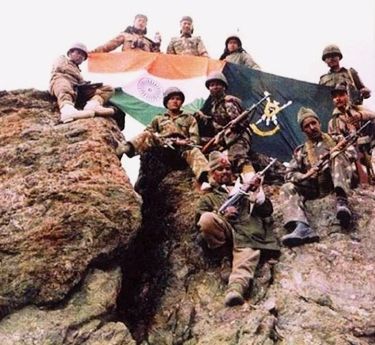
  • The Kargil War, fought between India and Pakistan in 1999, was a defining moment in the history of both countries. The war was sparked by Pakistan’s intrusion into the Kargil district of Jammu and Kashmir, which led to a fierce response from the Indian military. Let’s dive into the story of the Kargil War and the bravery of the soldiers who fought for their country.


    In May 1999, Pakistani troops and militants infiltrated the Kargil district, occupying key positions and threatening the strategic Srinagar-Leh highway. The Indian military quickly responded, launching a massive operation to evict the intruders and restore control over the region.


    One of the most significant battles fought during the Kargil War was the Battle for Tololing. The peak, which offered a strategic vantage point, was occupied by Pakistani troops. The Indian Army’s 18 Grenadiers, led by Lt. Col. Yogesh Kumar Joshi, launched a daring assault on the peak, capturing it after a fierce battle.


    The Indian Air Force played a crucial role in the Kargil War, providing air support to the ground troops. The IAF’s Mirage 2000 and MiG-21 aircraft bombed Pakistani positions, weakening their defenses and paving the way for the Indian Army’s advance.


    Another significant battle was the capture of Point 4875, a strategic peak occupied by Pakistani troops. The Indian Army’s 8 Sikh Regiment, led by Lt. Col. Gurmeet Singh, launched a bold assault on the peak, capturing it after a fierce battle.


    The Kargil War ended on July 26, 1999, with the Indian military successfully evicting the Pakistani intruders from the Kargil district. The war was a testament to the bravery and sacrifice of the Indian soldiers, who fought against heavy odds to protect their country.


    The Kargil War was a defining moment in the history of India and Pakistan, showcasing the bravery and sacrifice of the soldiers who fought for their country. The war serves as a reminder of the importance of national security and the need for countries to work towards peace and stability in the region.

  • In the early days of Malayalam cinema, a revolution was brewing. The silent film era was coming to an end, and the introduction of sound was about to change the game forever. Balan, Malayalam’s first talkie film, marked the beginning of a new era in Kerala’s cinematic landscape. Let’s dive into the fascinating story behind this groundbreaking film.


    Released on January 19, 1938, Balan was directed by S. Nottani and produced by General Pictures. The film was a romantic drama that told the story of a young couple’s love and the challenges they faced. With its innovative use of sound, Balan brought Malayalam cinema into the sound era, paving the way for future generations of filmmakers.


    Balan’s impact on Malayalam cinema was immense. The film’s use of sound allowed for more complex storytelling, and its musical numbers set the stage for the iconic Malayalam songs that would follow. The film’s success proved that Malayalam audiences were ready for talkies, and it paved the way for a new era of filmmaking in Kerala.


    Today, Balan is remembered as a pioneering film that changed the course of Malayalam cinema. Its influence can be seen in the many iconic films that followed, and its legacy continues to inspire filmmakers to this day. As we look back on the history of Malayalam cinema, Balan stands out as a landmark film that marked the beginning of a new era in storytelling.


    The story of Balan is a testament to the power of innovation and the impact it can have on an industry. As Malayalam’s first talkie film, Balan paved the way for a new era of storytelling and left a lasting legacy that continues to inspire filmmakers today. Whether you’re a film buff or just someone who appreciates the art of storytelling, Balan’s story is one that is sure to captivate and inspire.

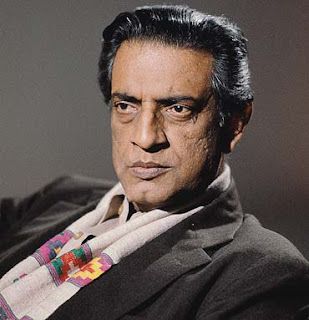
  • Sathyajit Ray, a name synonymous with Indian cinema, left an indelible mark on the world of filmmaking. With a career spanning over four decades, Ray’s films continue to captivate audiences with their timeless themes, nuanced characters, and masterful storytelling. Let’s embark on a journey to explore the life and legacy of this cinematic legend.

    Satyajit Ray


    Born on May 2, 1921, in Calcutta, Sathyajit Ray grew up in a family that valued art, literature, and music. His early life was marked by a deep love for storytelling, which would later become the hallmark of his films. Ray’s influences ranged from Indian literature to Western cinema, and he drew inspiration from the works of filmmakers like Vittorio De Sica and Jean Renoir.


    Ray’s breakthrough film, “Pather Panchali” (1955), marked the beginning of the Apu trilogy, a series of three films that follow the life of a young boy named Apu. The trilogy, comprising “Aparajito” (1956) and “The World of Apu” (1959), is widely regarded as one of the greatest achievements in Indian cinema. The films’ poignant portrayal of Apu’s journey from childhood to adulthood continues to resonate with audiences today.


    Throughout his career, Ray directed over 30 films, each one showcasing his unique storytelling style and attention to detail. From the whimsical “Goopy Gyne Bagha Byne” (1969) to the poignant “Charulata” (1964), Ray’s films explored a wide range of themes, including family, social change, and the human condition.


    Sathyajit Ray’s impact on Indian cinema is immeasurable. He paved the way for a new generation of filmmakers, inspiring them to experiment with innovative storytelling and cinematic techniques. Ray’s films also introduced Indian cinema to the world, showcasing the country’s rich cultural heritage and diverse storytelling traditions.


    Sathyajit Ray’s legacy is a testament to the power of storytelling and the impact of cinema on our lives. His films continue to captivate audiences, offering a glimpse into the human experience and the complexities of life. As we reflect on Ray’s remarkable career, we are reminded of the enduring power of storytelling and the importance of preserving our cultural heritage.

  • In the early days of Indian cinema, a revolution was brewing. The silent film era was coming to an end, and the introduction of sound was about to change the game forever. Alam Ara, India’s first talkie film, marked the beginning of a new era in Indian cinema. Let’s dive into the fascinating story behind this groundbreaking film.


    Released on March 14, 1931, Alam Ara was directed by Ardeshir Irani and produced by Imperial Movietone. The film was a romantic fantasy musical that told the story of a king, his two wives, and a gypsy girl. With its innovative use of sound, Alam Ara brought Indian cinema into the sound era, paving the way for future generations of filmmakers.


    Alam Ara’s impact on Indian cinema was immense. The film’s use of sound allowed for more complex storytelling, and its musical numbers set the stage for the iconic Bollywood musicals that would follow. The film’s success proved that Indian audiences were ready for talkies, and it paved the way for a new era of filmmaking in India.


    Today, Alam Ara is remembered as a pioneering film that changed the course of Indian cinema. Its influence can be seen in the many iconic films that followed, and its legacy continues to inspire filmmakers to this day. As we look back on the history of Indian cinema, Alam Ara stands out as a landmark film that marked the beginning of a new era in storytelling.


    The story of Alam Ara is a testament to the power of innovation and the impact it can have on an industry. As India’s first talkie film, Alam Ara paved the way for a new era of storytelling and left a lasting legacy that continues to inspire filmmakers today. Whether you’re a film buff or just someone who appreciates the art of storytelling, Alam Ara’s story is one that is sure to captivate and inspire.