• In the early 20th century, a revolutionary idea took to the skies, changing the face of transportation forever. The world’s first airline, DELAG Luftverkehr, was born in Germany on November 16, 1909. This pioneering venture marked the beginning of commercial air travel, paving the way for the modern airlines we know today.


    DELAG Luftverkehr was founded by Count Ferdinand von Zeppelin, a German nobleman and aviation enthusiast. Zeppelin’s vision was to create a network of airships that would transport passengers and cargo across Europe. The airline’s first airship, the LZ-7, was a marvel of engineering, with a luxurious interior and a range of over 1,000 miles.


    DELAG Luftverkehr’s maiden flight took off from Frankfurt, Germany, carrying passengers to Baden-Baden and Berlin. The airline’s early success was marked by a series of record-breaking flights, including the first commercial airship flight over the Alps.


    Despite facing numerous challenges, including technical issues and inclement weather, DELAG Luftverkehr persevered, expanding its fleet and routes. The airline’s commitment to safety and customer service earned it a reputation as a pioneer in the industry.


    DELAG Luftverkehr’s legacy extends far beyond its own operations. The airline paved the way for modern commercial air travel, influencing the development of airlines worldwide. Today, the world’s airlines owe a debt of gratitude to the visionaries who dared to take to the skies over a century ago .
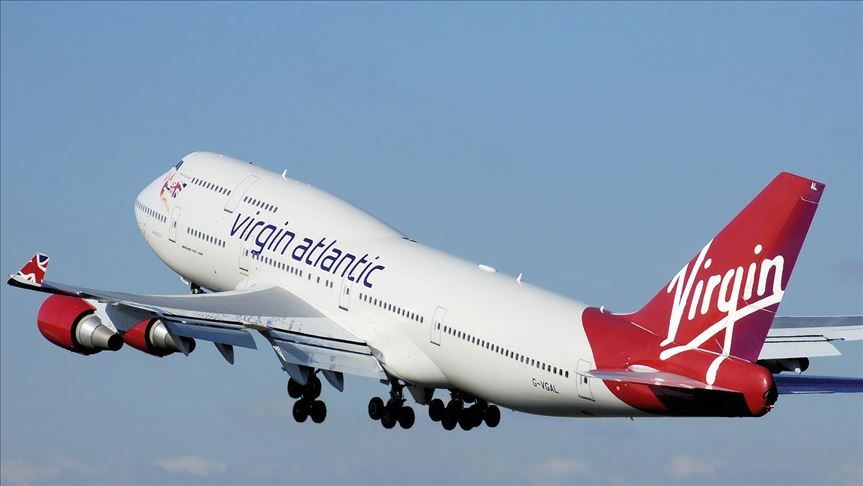

  • In the early 1980s, Richard Branson, the eccentric and charismatic founder of Virgin Group, set his sights on the airline industry. With a bold vision to shake up the status quo, Branson launched Virgin Atlantic Airways, challenging the dominance of established carriers.


    Virgin Airlines’ maiden flight took off on June 22, 1984, from London’s Gatwick Airport to Newark, New Jersey. The airline’s inaugural aircraft, a Boeing 747-200, was christened “Maiden Voyager.” Branson’s unconventional approach to air travel, emphasizing style, comfort, and customer service, quickly gained attention.


    The early years were marked by intense competition and regulatory hurdles. Virgin Airlines faced opposition from established carriers, including British Airways, which would later lead to a high-profile “dirty tricks” scandal. Despite these obstacles, Branson’s determination and innovative spirit propelled the airline forward.


    Virgin Airlines expanded rapidly, introducing new routes and services. The airline’s commitment to customer experience led to pioneering features like:

    • Upper Class: A revolutionary business-class product with seat-back screens and gourmet meals.
    • In-flight Entertainment: Innovative entertainment systems and live TV broadcasts.
    • Lounge Experience: Luxurious airport lounges with showers, spas, and fine dining.


    Key milestones contributed to Virgin Airlines’ success:

    • 1991: Introduction of the Upper Class product.
    • 1999: Launch of Virgin Atlantic’s low-cost carrier, Virgin Express.
    • 2004: Expansion into the US market with Virgin America.

    Legacy and Impact
    Today, Virgin Airlines is a respected global carrier, known for its:

    • Customer-centric Approach: Prioritizing passenger experience and comfort.
    • Innovative Spirit: Continuously pushing boundaries in air travel.
    • Brand Iconicity: A recognizable brand synonymous with style and rebellion .

  • In the world of big data analytics, one company stands out for its innovative approach to helping organizations make sense of vast amounts of information. Palantir Technologies, founded in 2003 by Peter Thiel, Stephen Cohen, Joe Lonsdale, Alex Karp, and Nathan Gettings, has become a leader in the industry.


    Palantir’s journey began with a focus on government contracts, providing data analytics solutions to agencies like the US Intelligence Community and the Department of Defense. The company’s first product, Palantir Gotham, was designed to integrate and analyze large datasets, helping analysts identify patterns and connections.


    Over the years, Palantir has expanded its offerings to include Palantir Foundry, a platform for commercial clients, and Palantir Apollo, a continuous integration and delivery platform. The company’s client base has grown to include major corporations like Merck, Airbus, and the Scuderia Ferrari.

    Key Products and Services

    • Palantir Gotham: An intelligence tool used by police and militaries worldwide for predictive policing and counter-terrorism analysis.
    • Palantir Foundry: A data integration and analytics platform for commercial clients.
    • Palantir Apollo: A platform for continuous integration and delivery.
    • Palantir AIP: An artificial intelligence platform integrating large language models.


    Palantir’s work has not been without controversy. The company has faced criticism for its involvement in surveillance and human rights issues, particularly regarding its contracts with government agencies.


    In 2024, Palantir was added to the S&P 500 index, reflecting its growing influence in the tech industry. The company has also expanded its partnerships, including a collaboration with Microsoft Azure Government clouds.


    As Palantir continues to innovate and expand its offerings, it remains a key player in the world of big data analytics. With its focus on AI-driven solutions and commercial growth, the company is poised to shape the future of data analysis.

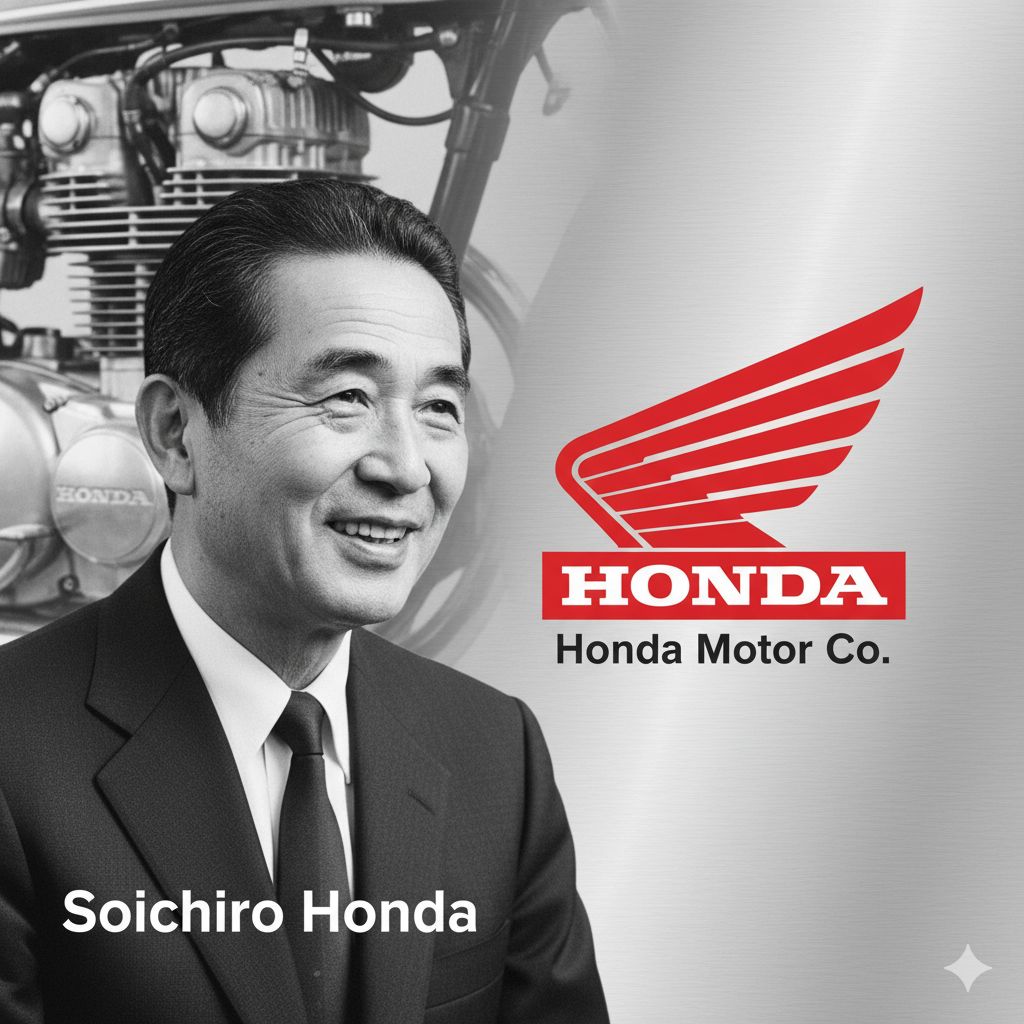
  • Once upon a time in Japan, there was a young, passionate mechanic named Soichiro Honda. He wasn’t born rich. He didn’t have a college degree. What he did have was a wild curiosity about machines — and a burning desire to make them better.

    In the early 1930s, Soichiro worked as a humble mechanic, fixing cars and dreaming big. He spent countless nights tinkering in his small workshop, trying to build a new kind of piston ring — something lighter, stronger, and more efficient.

    After years of trial and error, he finally succeeded. With a heart full of hope, he took his design to Toyota, Japan’s rising automobile giant.

    But when the engineers at Toyota examined his work, they rejected it.
    They said his design didn’t meet their standards.

    Imagine the heartbreak — years of sweat, sleepless nights, and dreams shattered in a few sentences.

    But Soichiro Honda didn’t quit.
    He went back to his small workshop, learned from his mistakes, refined his design, and started again.

    Soon, his piston rings caught Toyota’s attention once more — this time, they accepted them. But the story doesn’t end there.

    During World War II, his factory was bombed twice. Then, an earthquake destroyed what was left. Most people would have given up.

    But not Soichiro.

    He sold the remnants of his factory, bought a few engines, and started building motorized bicycles. People loved them. That tiny idea grew into the foundation of a new company — Honda Motor Co.

    Within a few years, Honda was producing motorcycles faster than anyone else in Japan.
    And soon, the world knew the name Honda — not as a mechanic, but as a visionary.

    Today, Toyota and Honda both stand as global automotive titans — but one was born from rejection.


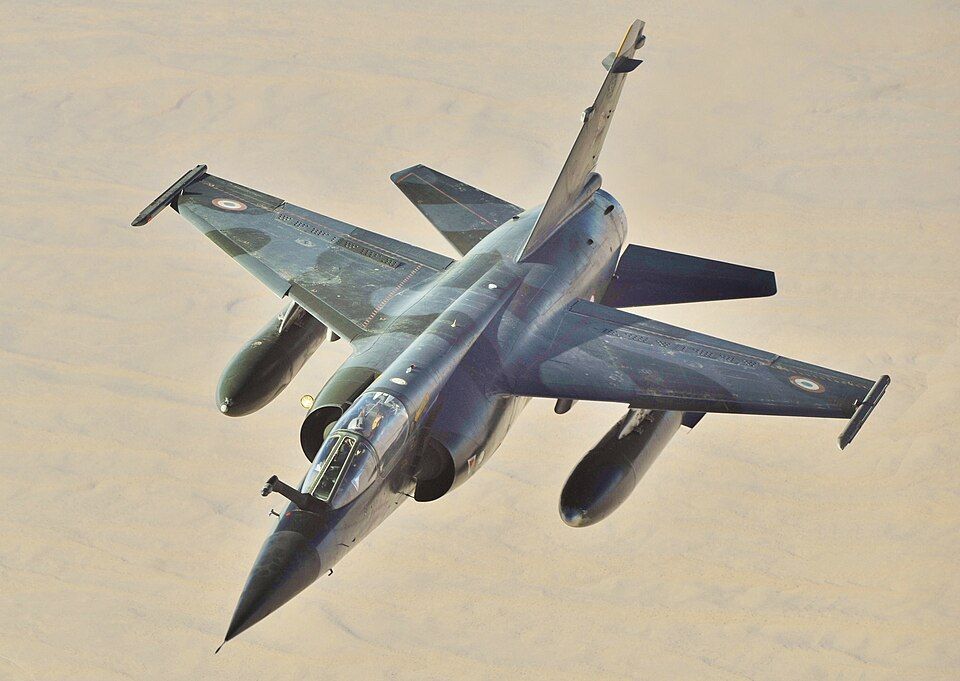
  • In the world of military aviation, few aircraft have left a lasting impact like the Mirage fighter jets. Developed by France’s Dassault Aviation, the Mirage series has been a symbol of speed, agility, and innovation for over six decades.


    The Mirage story began in the 1950s, when France sought to develop a high-performance interceptor capable of defending its skies. Marcel Dassault, the visionary founder of Dassault Aviation, led the charge, and the Mirage III was born.

    Design and Capabilities
    The Mirage III was a game-changer, featuring:

    • Delta Wing Design: A distinctive delta wing configuration, providing exceptional maneuverability and speed.
    • Powerful Engine: A SNECMA Atar turbojet engine, delivering 9,700 pounds of thrust.
    • Avionics and Armament: Advanced radar systems and a range of air-to-air missiles.

    Variants and Upgrades
    Over the years, the Mirage series has evolved, with notable variants including:

    • Mirage 2000: A multirole fighter, introduced in the 1980s, with advanced avionics and weaponry.
    • Mirage 2000N/2000D: Nuclear-capable and ground attack variants, respectively.

    Operational History
    The Mirage has seen action in various conflicts, including:

    • Six-Day War: Israeli Mirage IIIs played a key role in the conflict.
    • Gulf War: French Mirage F1s and 2000s participated in coalition operations.
    • Kargil War: Indian Mirage 2000s conducted precision strikes.


    The Mirage series has left an indelible mark on military aviation, influencing the design of subsequent fighter jets. Its speed, agility, and versatility have made it a favorite among air forces worldwide.


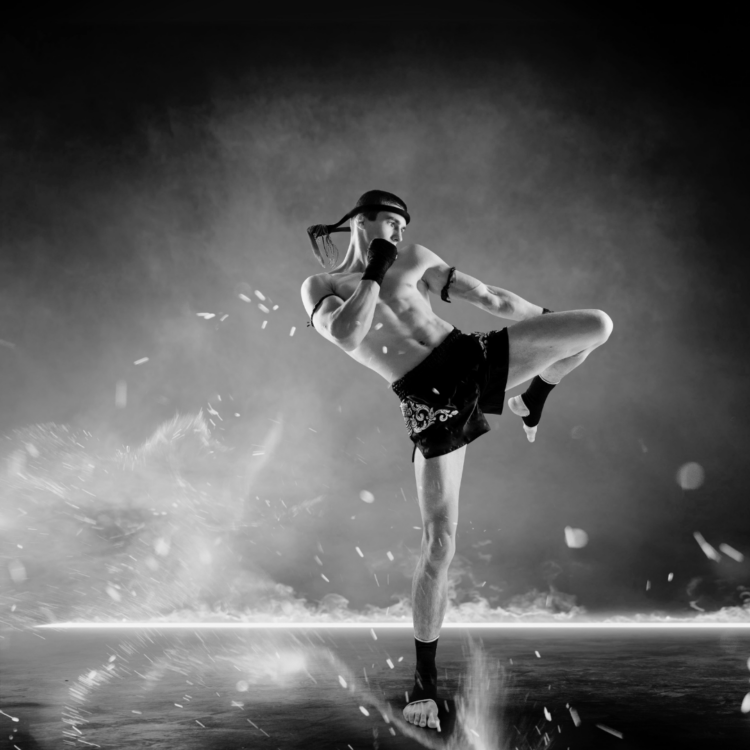
  • In the heart of Thailand, a martial art has been forged in the fire of battle and refined through generations of warriors. Muay Thai, also known as the “Art of Eight Limbs,” is a striking art that utilizes punches, kicks, knee strikes, and elbow strikes to devastating effect.


    Muay Thai has its roots in ancient Thailand, where it was developed as a form of hand-to-hand combat for soldiers on the battlefield. Over time, it evolved into a popular sport, with fighters competing in temple fairs and festivals.


    Muay Thai is known for its intense physical conditioning and rigorous training methods. Fighters train in a variety of techniques, including:

    • Punches: Jab, cross, hook, and uppercut punches are used to attack the opponent’s head and body.
    • Kicks: Powerful kicks are used to attack the opponent’s legs, body, and head.
    • Knee Strikes: Knee strikes are used to attack the opponent’s body and head.
    • Elbow Strikes: Elbow strikes are used to attack the opponent’s head and body.

    The Eight Limbs
    Muay Thai is called the “Art of Eight Limbs” because it utilizes eight points of contact:

    1. Fists (2 points)
    2. Feet (2 points)
    3. Knees (2 points)
    4. Elbows (2 points)

    Benefits and Philosophy
    Muay Thai is not just a physical art, but also a mental and spiritual discipline. It teaches:

    • Discipline and Respect: Muay Thai emphasizes discipline, respect, and self-control.
    • Physical Conditioning: Muay Thai training improves cardiovascular fitness, strength, and agility.
    • Mental Toughness: Muay Thai helps develop mental toughness, focus, and resilience .

  • In the world of martial arts cinema, few names shine as brightly as Tony Jaa. Born Tatchakorn Yeerum on February 5, 1976, in Surin, Thailand, Jaa’s journey is a testament to passion, perseverance, and explosive action.


    Growing up in rural Thailand, Jaa was captivated by martial arts films featuring Bruce Lee, Jackie Chan, and Jet Li. He began training in Muay Thai at age 10 and later studied various disciplines, including Muay Boran, Wushu, Judo, and Tae-Kwan-Do.


    Jaa’s big break came with “Ong-Bak: The Thai Warrior” (2003), showcasing his breathtaking stunts and martial arts prowess. The film’s success spawned sequels and established Jaa as a global action icon.


    Jaa’s Hollywood debut in “Furious 7” (2015) and subsequent roles in “xXx: Return of Xander Cage” (2017) and “Expend4bles” (2023) solidified his status as a sought-after action star.


    Jaa’s unique blend of Muay Thai, acrobatics, and innovative choreography sets him apart. His films often showcase Thai culture and history, promoting the country’s rich martial arts heritage.


    With films grossing over $2.7 billion worldwide, Tony Jaa is widely regarded as one of the greatest martial arts stars in cinema history. His influence extends beyond entertainment, inspiring a new generation of martial artists and action enthusiasts.


  • In the western part of the North Atlantic Ocean, there’s a region that’s been shrouded in mystery for decades – the Bermuda Triangle. Also known as the Devil’s Triangle, this area has been the subject of countless stories, theories, and legends about unexplained disappearances of ships, planes, and people.


    The Bermuda Triangle’s mystique started gaining traction in the mid-20th century. One of the most famous incidents was the disappearance of Flight 19, a group of five U.S. Navy TBM Avenger torpedo bombers on a training mission in 1945. The planes vanished without a trace, and the subsequent search efforts yielded nothing.

    Theories and Speculations
    Over the years, numerous theories have emerged to explain the Bermuda Triangle’s supposed supernatural powers:

    • Magnetic Anomalies: Some believe the area has unusual magnetic properties that interfere with compass readings and navigation equipment.
    • Methane Gas: Scientists have suggested that methane gas bubbles rising from the seafloor could reduce water density, causing ships to sink.
    • Rogue Waves: Giant waves, possibly triggered by storms or underwater earthquakes, might be responsible for some disappearances.
    • Human Error: Many incidents can be attributed to navigational mistakes, equipment failure, or severe weather conditions.


    Despite the allure of these theories, many experts argue that the Bermuda Triangle is simply a myth. The U.S. Navy and the U.S. The Coast Guard has stated that there’s no evidence to support the existence of supernatural phenomena in the area. Most incidents can be explained by natural causes or human factors.


    The Bermuda Triangle remains a captivating enigma, inspiring imagination and curiosity. While there’s no conclusive evidence to prove its supernatural nature, the legend continues to fascinate us, reminding us of the ocean’s power and mystery .


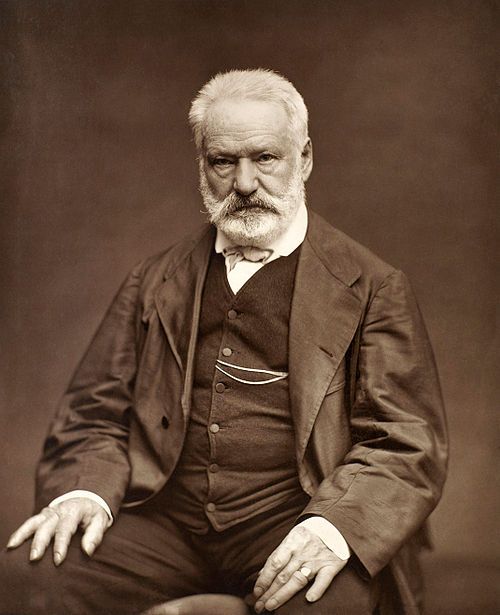
  • In the heart of 19th-century France, a literary giant emerged, leaving an indelible mark on the world of literature and beyond. Victor Hugo, a poet, novelist, and playwright, was born on February 26, 1802, in Besançon, France. His life was a testament to the power of creativity, passion, and perseverance.


    Hugo’s early life was marked by turmoil and tragedy. His parents’ troubled relationship and his father’s frequent absences shaped his worldview. However, his mother, Sophie, instilled in him a love for literature and the arts. Hugo’s fascination with Romanticism, sparked by François-René de Chateaubriand, would define his literary career.


    Hugo’s breakthrough came with the publication of “Odes et poésies diverses” in 1822, earning him a royal pension from Louis XVIII. His subsequent works, including “Hernani” and “The Hunchback of Notre-Dame,” solidified his position as a leading figure in French Romanticism.


    Hugo’s magnum opus, “Les Misérables,” published in 1862, is a sweeping epic that explores themes of redemption, justice, and the human condition. This masterpiece cemented his status as a champion of social justice and a voice for the marginalized.


    Hugo’s opposition to Napoleon III led to his exile in Guernsey, where he continued to write prolifically. His political pamphlets, including “Napoléon le Petit,” critiqued the regime and advocated for republicanism.


    Victor Hugo’s legacy extends far beyond literature. His advocacy for social justice, abolition of the death penalty, and human rights has inspired generations. His works have been translated, adapted, and reimagined countless times, ensuring his timeless relevance.


    Victor Hugo’s life was a testament to the transformative power of art and activism. His enduring legacy serves as a reminder that literature can inspire, educate, and ignite change. As we reflect on his remarkable journey, we’re reminded that the impact of one person’s passion and perseverance can resonate across centuries.


  • In the world of cricket, few teams have experienced the highs and lows quite like the West Indies. From dominating the sport in the 1970s and 80s to struggling to qualify for major ICC events, the West Indies cricket team’s journey is a testament to the unpredictable nature of sports.


    The West Indies’ story begins with a bang, winning the inaugural Cricket World Cup in 1975 under Clive Lloyd’s leadership. Their fast bowling quartet – Holding, Marshall, Garner, and Roberts – was unmatched, and batsmen like Viv Richards and Gordon Greenidge played with flair and intimidation. This era saw the West Indies remain at the top of the ICC Test rankings for nearly 15 years, a feat still unmatched.


    However, the 1990s saw the retirement of key players, and the team struggled to find replacements. Poor administration, internal conflicts, and a lack of grassroots development contributed to their downfall. The West Indies failed to qualify for the 2019 ODI World Cup, a shocking result that highlighted their struggles.


    Today, the West Indies continues to face challenges, including player-board disputes and a decline in domestic cricket. Despite occasional glimpses of brilliance, consistency has vanished. The team’s ranking has slipped, and they’re struggling to regain their past glory.

    Key Factors Contributing to the Decline

    • Poor Administration: Cricket West Indies (CWI) failed to implement long-term talent development programs.
    • Internal Conflicts: Frequent disputes between players and the board disrupted stability.
    • Lack of Grassroots Development: Domestic competitions lacked proper funding, leading to fewer quality players.
    • T20 Exodus: Players prioritized lucrative T20 leagues over national duty.

    The West Indies cricket team’s story is one of resilience and determination. While their current struggles are concerning, there’s hope for revival with the right investments in grassroots cricket, stronger player-board relations, and a renewed passion for representing the Caribbean.