In the dense forests stretching across central and eastern India, a parallel narrative of the nation continues to unfold—one that rarely makes it to the everyday conversations of city life. The story of Naxalites is not merely about insurgency or violence; it is a complex tale of ideology, inequality, resistance, and the consequences of a system that, for many, failed long before the first bullet was fired.
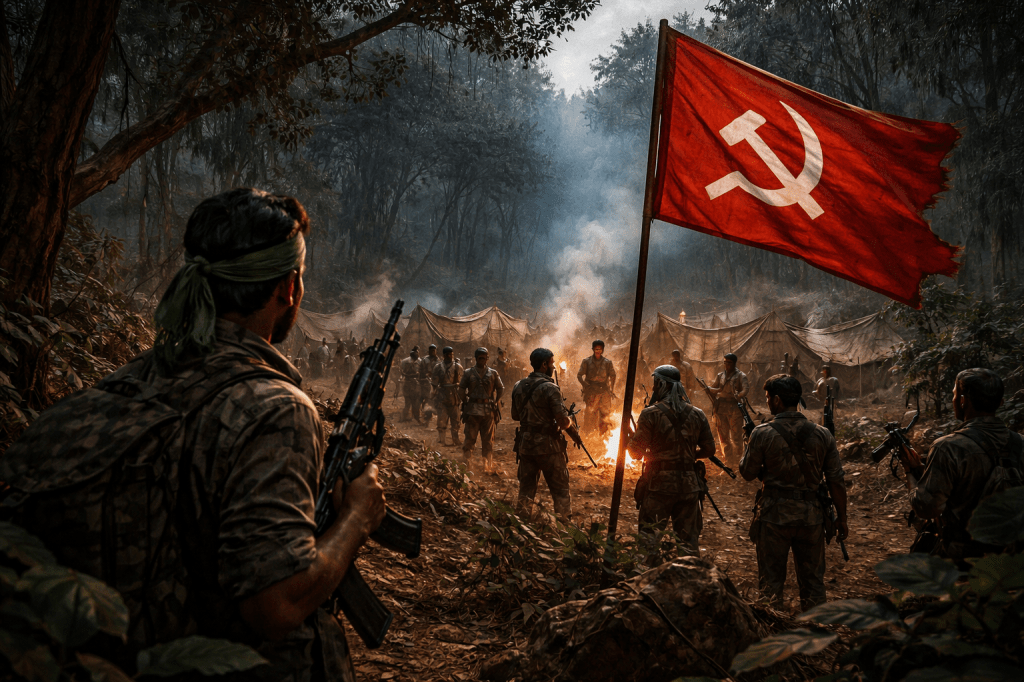
The term “Naxalite” traces its roots back to the small village of Naxalbari, where in 1967 a peasant uprising marked the beginning of what would become one of India’s longest-running internal conflicts. Inspired by the revolutionary ideas of Mao Zedong, the movement was grounded in the belief that true change could only come through armed struggle, particularly in regions where marginalized communities were denied land rights, dignity, and access to basic resources.
Over the decades, the movement evolved, spreading through what is often referred to as the “Red Corridor”—a vast stretch of land covering parts of states like Chhattisgarh, Jharkhand, Odisha, and Maharashtra. In these regions, the Naxalites positioned themselves as defenders of tribal rights, often stepping into governance vacuums left by state institutions. For many villagers, they were not just insurgents, but also enforcers of a parallel justice system, providers of a voice in an otherwise unheard landscape.
Yet, this narrative is deeply conflicted. The same movement that began with the promise of equality has been marked by cycles of violence, ambushes, and loss—affecting civilians, security forces, and the very communities it claims to protect. Incidents like the Dantewada attack stand as grim reminders of the human cost embedded in this struggle. Each act of violence deepens mistrust, widens divides, and complicates the path to peace.
At its core, the Naxalite issue forces a difficult question: is it merely a law-and-order problem, or is it a symptom of deeper structural failures? Land disputes, displacement due to mining and industrial projects, lack of education, and limited economic opportunities have all contributed to a fertile ground where discontent transforms into rebellion. While governments have responded with both military operations and development initiatives, the balance between force and empathy remains delicate and often contested.
In recent years, there have been signs of decline in Naxalite influence, with increased security presence and infrastructural development reaching previously inaccessible regions. However, the underlying tensions have not entirely disappeared. The forests still whisper stories of neglect, and until those stories are heard and addressed, the embers of unrest may never fully fade.
The story of the Naxalites is not black and white. It is a reflection of India’s ongoing struggle to bridge the gap between progress and inclusion, power and justice, silence and voice. It reminds us that beneath every conflict lies a deeper human story—one that demands not just solutions, but understanding.
 Histopedia
Leave a comment