In the rapidly evolving race for artificial intelligence dominance, infrastructure is becoming just as critical as algorithms. While most conversations revolve around models, chips, and data, a quieter revolution is unfolding behind the scenes—how to keep these powerful systems cool. And now, in a move that has caught global attention, Google appears to be turning toward China once again, not for search or services, but for something far more foundational: advanced liquid cooling technology.
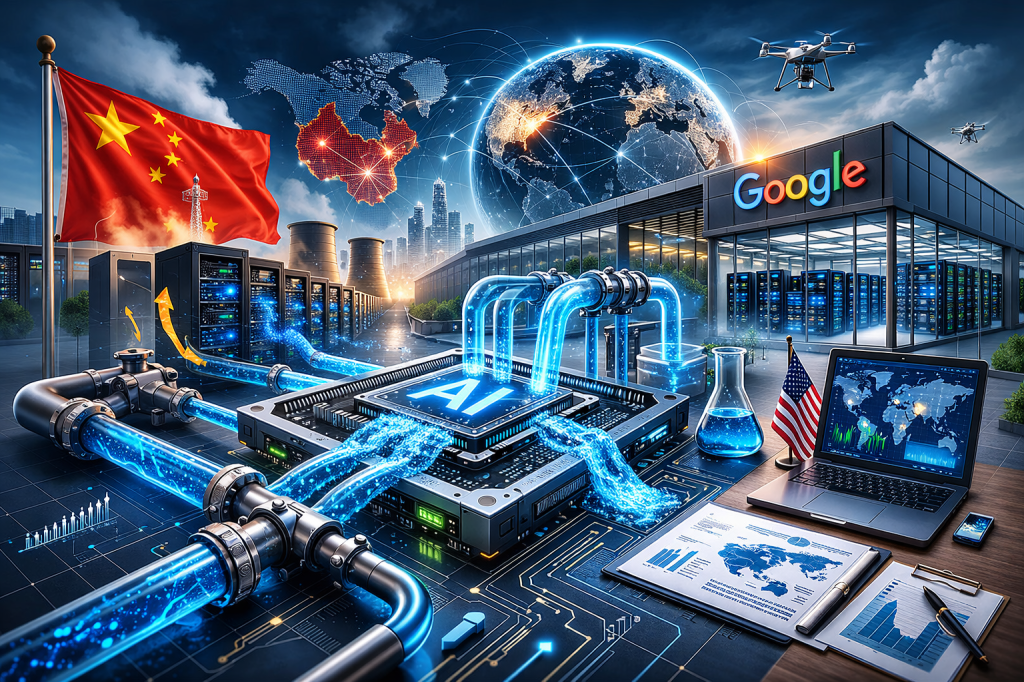
AI data centers are no longer ordinary facilities. They are energy-hungry ecosystems running high-performance processors that generate immense heat. Traditional air cooling methods are increasingly insufficient for managing the thermal demands of modern AI workloads. This is where liquid cooling steps in—not just as an alternative, but as a necessity. It offers higher efficiency, reduced energy consumption, and the ability to sustain denser computing environments.
China, over the past few years, has quietly emerged as a leader in this niche yet critical domain. With its aggressive push in hardware innovation and large-scale manufacturing capabilities, Chinese firms have developed advanced liquid cooling systems that are both scalable and cost-effective. These systems are already being deployed in some of the most demanding computing environments, giving them a practical edge over many global competitors.
Google’s interest in sourcing or collaborating around this technology suggests a strategic shift. Despite ongoing geopolitical tensions and regulatory complexities, the urgency to scale AI infrastructure seems to be outweighing traditional barriers. This isn’t about re-entering the Chinese market in the conventional sense—it’s about tapping into specialized expertise that can accelerate the next phase of AI expansion.
The implications are significant. As AI models grow larger and more complex, the bottleneck is no longer just computational power but the physical limitations of infrastructure. Efficient cooling directly impacts performance, operational cost, and environmental sustainability. In fact, the future of AI may depend as much on thermal engineering as it does on machine learning breakthroughs.
There’s also a deeper narrative at play. Technology ecosystems are becoming increasingly interdependent, even among global rivals. While countries may compete in AI development, the supply chains and innovations that support this progress remain globally intertwined. Google’s move reflects a pragmatic approach—leveraging the best available technology, regardless of origin, to stay competitive in an unforgiving landscape.
For businesses and entrepreneurs, especially those watching from emerging markets like India, this development carries an important lesson. The next wave of opportunity in AI won’t be limited to software alone. Infrastructure, energy efficiency, cooling systems, and hardware optimization are all becoming high-value sectors. Those who recognize this early can position themselves ahead of the curve.
In the end, Google’s quiet step toward China for liquid cooling technology is more than a technical decision—it’s a signal. A signal that the AI race is entering a new phase, where unseen innovations will define visible success. And in this phase, the winners won’t just be those who build smarter machines, but those who build the systems that sustain them.
 Histopedia
Leave a comment