In a world where trade routes define power, influence, and opportunity, Chabahar Port stands as more than just a harbor on the southeastern coast of Iran. It is a statement. A corridor of ambition. A silent reshaping of regional economics.
Positioned along the Gulf of Oman, Chabahar opens a direct maritime gateway that bypasses traditional chokepoints and political complexities. For decades, geography restricted access between South Asia, Central Asia, and beyond. Today, Chabahar rewrites that script. It connects India to Afghanistan and Central Asia without routing through Pakistan, creating a strategic alternative that changes the balance of regional trade.
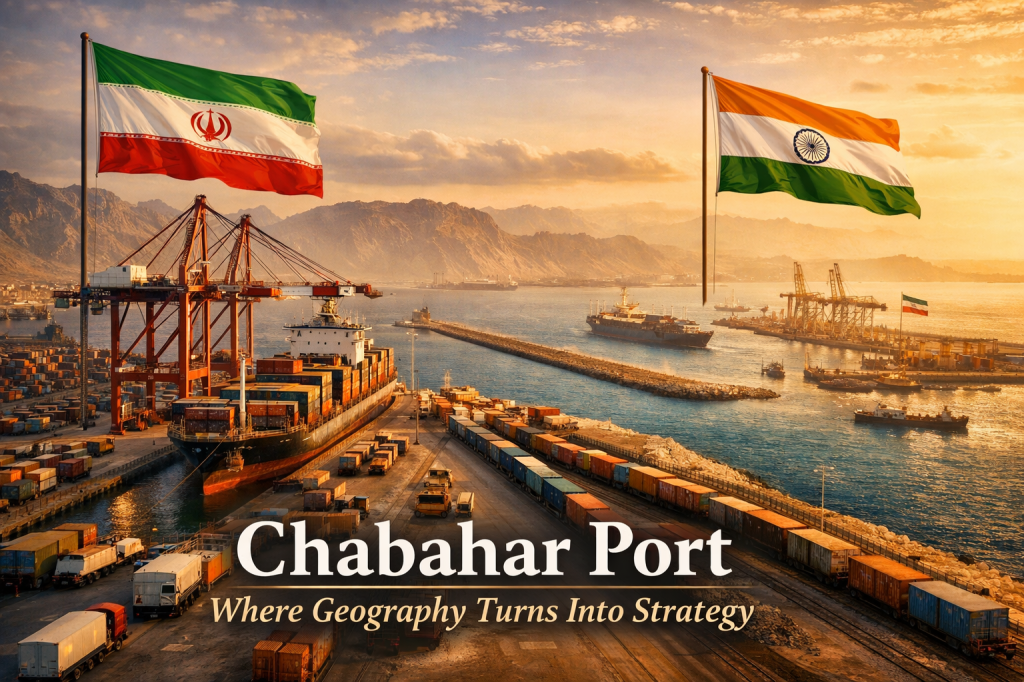
For India, Chabahar is not merely infrastructure; it is vision translated into concrete and steel. Developed with Indian investment and operational support, the port strengthens trade access to landlocked Afghanistan and markets deep inside Central Asia. It aligns with the broader International North–South Transport Corridor vision, linking the Indian Ocean to Europe through multimodal routes.
For Afghanistan, it offers economic oxygen — an independent access point to global markets. For Central Asian nations, it represents diversification. For Iran, it symbolizes resilience, economic diplomacy, and long-term geopolitical positioning.
Ports are rarely just about cargo. They are about corridors of influence. Chabahar competes quietly yet meaningfully with Pakistan’s Gwadar Port, altering regional dynamics in the Arabian Sea. It is where logistics meets diplomacy, and where maritime routes carry not just goods, but geopolitical intent.
In an era where supply chains define national strength, Chabahar Port represents foresight. It is a reminder that infrastructure is strategy in physical form. Trade is no longer only about ships and containers; it is about access, alliances, and advantage.
And somewhere along the coastline of Iran, cranes continue to move — not just steel and stone — but the future of regional connectivity itself.
 Histopedia
Leave a comment