There are rivers that simply flow, and then there are rivers that carry stories, civilizations, emotions, and power within their currents. The Chenab River is one such river — wild, majestic, and deeply woven into the cultural and geographical fabric of the Indian subcontinent.
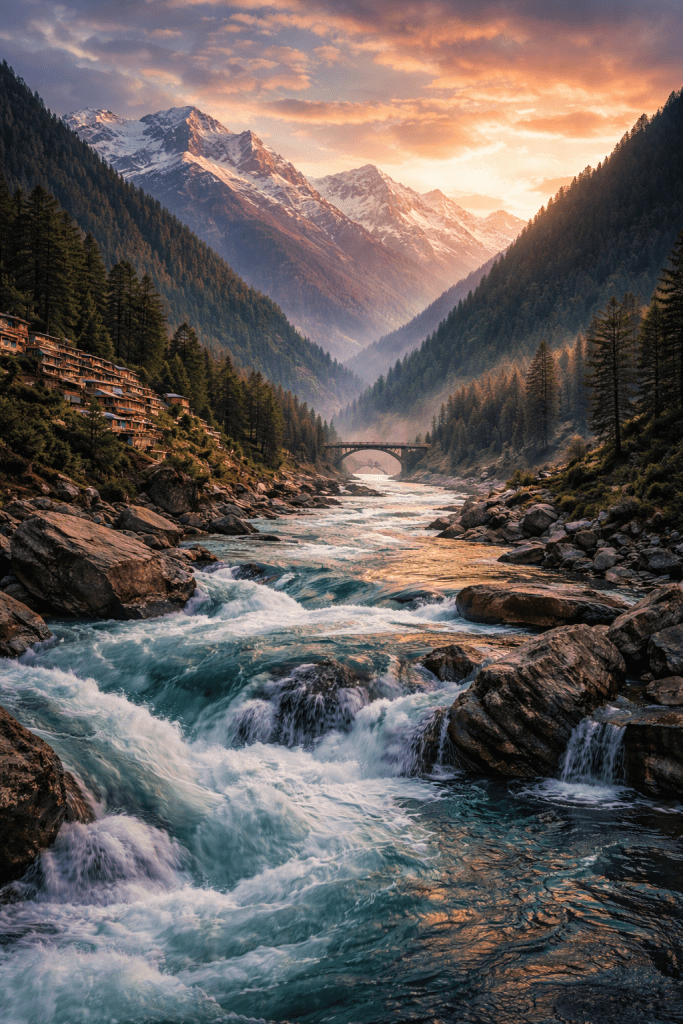
Born in the upper Himalayas in Himachal Pradesh, where the Chandra and Bhaga rivers meet at Tandi, the Chenab begins its journey with a force that mirrors the raw energy of the mountains themselves. From there, it carves its way through the dramatic valleys of Jammu and Kashmir, cutting through rocks that have stood for centuries, shaping landscapes that leave travelers speechless.
The Chenab is not just a river of water; it is a river of legends. Its ancient name, Asikni, finds mention in the sacred hymns of the Rigveda. Over centuries, it has witnessed empires rise and fall, borders shift, and cultures blend. Flowing onward into Pakistan, it eventually merges with the mighty Indus system, contributing to one of the world’s oldest and most significant river networks.
Strategically and economically, the Chenab plays a crucial role. Hydroelectric projects along its course harness its powerful currents, lighting homes and fueling development. Agriculture thrives along its banks, where fertile soil nurtures crops that sustain millions. Yet, beyond economics and infrastructure, the Chenab remains a symbol of endurance and continuity.
Stand beside the Chenab during monsoon, and you will witness its fierce personality — roaring, unapologetic, unstoppable. Visit in winter, and you may find a calmer presence, reflective and steady, as if the river itself is meditating under the Himalayan sky. In every season, it commands respect.
But like many great rivers, the Chenab faces modern challenges. Climate change, environmental pressures, and geopolitical tensions test its resilience. Still, it flows — adapting, enduring, reminding us that nature’s rhythm cannot be easily controlled.
The Chenab River teaches a powerful lesson: strength does not always shout; sometimes, it simply keeps moving forward. Through valleys and borders, through storms and sunshine, it continues its journey — ancient, relentless, and alive.
In its flow, we see more than water. We see history in motion.
 Histopedia
Leave a comment