When people talk about global healthcare excellence, the focus often goes to high-spending nations with advanced technology and massive hospital networks. Yet quietly, without loud branding or excessive expenditure, India—and particularly Kerala—has built a healthcare model that many countries study and admire. What makes Kerala exemplary is not wealth, but wisdom in how healthcare is designed, delivered, and sustained over decades.
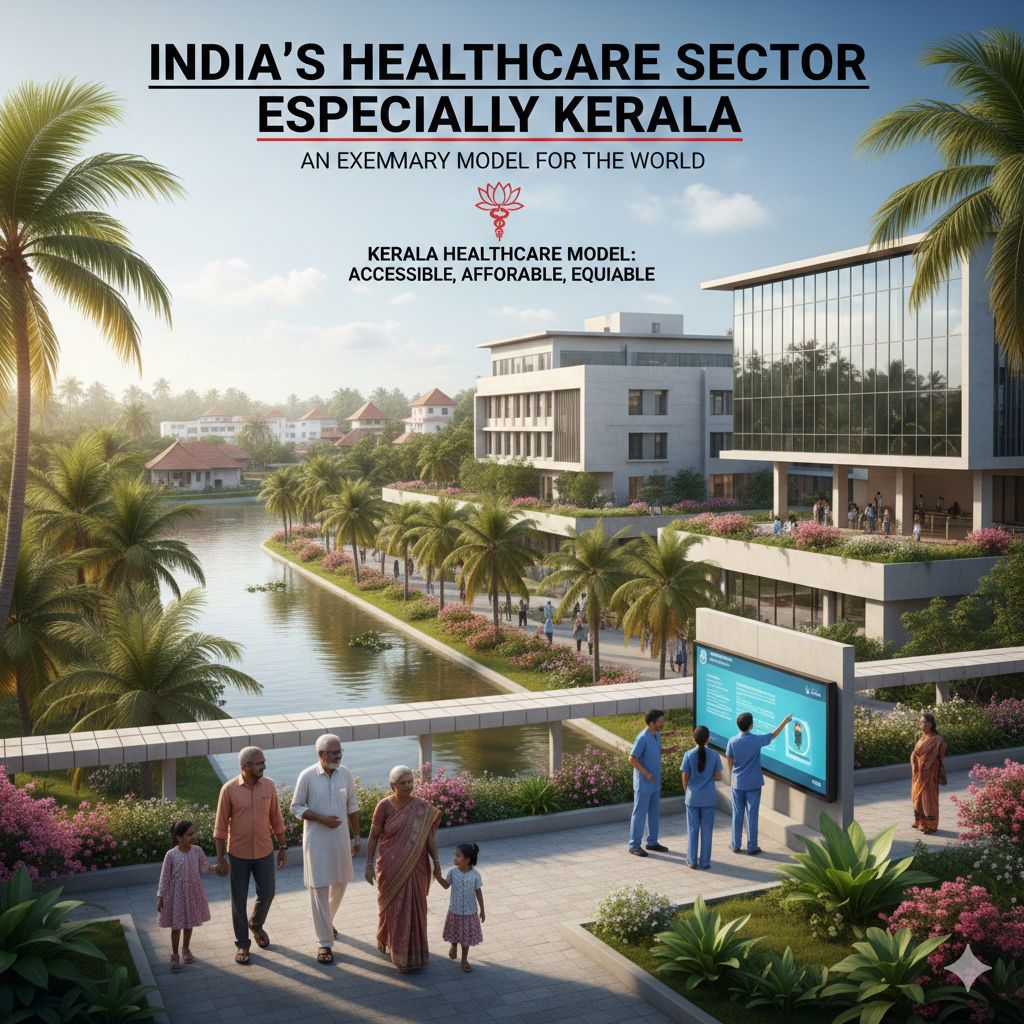
Kerala made a crucial choice early on: to strengthen public healthcare at the grassroots level. Instead of concentrating only on large hospitals, the state invested in primary health centers, community clinics, maternal care, vaccination programs, and preventive medicine. This ensured that healthcare reached people before illnesses became emergencies. As a result, hospitals were not overwhelmed, costs remained controlled, and health outcomes steadily improved.
Another invisible pillar of Kerala’s success is literacy and health awareness. An educated population understands symptoms, values early diagnosis, follows medical advice, and actively participates in preventive care. This drastically reduces late-stage disease treatment, which is often expensive and complex. In Kerala, healthcare is not something people approach only when critically ill—it is part of everyday life.
Despite modest healthcare spending compared to developed countries, Kerala consistently reports low infant mortality, high life expectancy, and strong maternal health outcomes. These indicators rival those of many high-income nations, proving that effective systems and preventive care can outperform high budgets alone. Efficiency, not excess, defines the model.
The balance between public and private healthcare further strengthens the ecosystem. Government hospitals provide accessible and affordable care, while private institutions offer advanced treatments and specialization. Strong regulation and accountability prevent extremes—healthcare remains neither entirely commercial nor underfunded. This balance builds public trust, an essential but often overlooked component of any successful health system.
Kerala’s approach to crisis management has also drawn global attention. Whether during Nipah outbreaks, floods, or the COVID-19 pandemic, the state demonstrated the power of preparedness, transparent communication, community-level monitoring, and coordinated governance. These responses showed that well-trained systems and clear leadership save more lives than emergency spending after a crisis erupts.
Human capital is another cornerstone. Kerala produces highly skilled doctors, nurses, and healthcare workers who are respected globally. Their training emphasizes not just technical skill but ethics, compassion, and patient-centric care. Even as many professionals work abroad, the culture of healthcare excellence continues to feed back into the local system.
At its core, Kerala’s healthcare success comes from one fundamental belief: healthcare is not merely a business or a service—it is social infrastructure. When health is treated as a long-term investment tied to education, governance, and community wellbeing, positive outcomes become inevitable.
In a world increasingly focused on expensive technology and profit-driven healthcare models, Kerala offers a quieter, more powerful lesson. Healthy societies are not built by hospitals alone. They are built by informed people, accessible systems, preventive care, and decades of consistent public commitment. That is why India’s healthcare sector—and Kerala in particular—stands as an exemplary model for the world.
 Histopedia
Leave a comment