In the late 18th century, the Kingdom of Mysore in South India was on the cusp of a revolution. Under the leadership of Hyder Ali and his son Tipu Sultan, Mysore was transforming into a formidable military power. At the heart of this transformation was an innovative technology that would change the face of warfare – the Mysorean rocket.
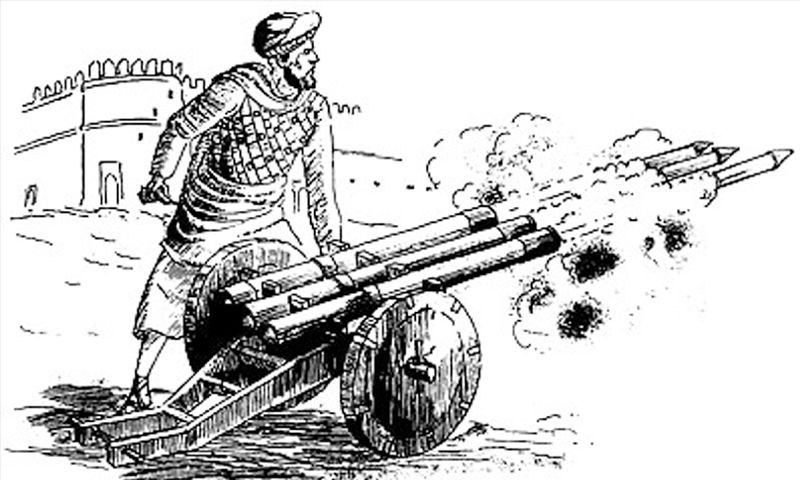
Imagine being on the battlefield, facing an enemy that unleashes a barrage of iron-cased rockets, each with a range of up to 2 kilometers, causing chaos and destruction. That’s exactly what the British East India Company faced when they clashed with Tipu Sultan’s forces. The Mysorean rockets were a game-changer, with their iron tubes allowing for higher pressure and greater range, making them more effective than traditional artillery .
Hyder Ali, a skilled military strategist, began experimenting with rockets in the 1750s. His son Tipu Sultan took this innovation to the next level, establishing a dedicated rocket corps comprising around 5,000 men. These rocket men were trained to launch rockets in volleys, creating a devastating impact on enemy formations.
The Mysorean rockets played a crucial role in several battles, including the Second Anglo-Mysore War (1780-1784) and the Battle of Pollilur (1780). The rockets were used to disrupt British infantry formations, causing psychological terror and significant damage. Tipu Sultan’s forces also developed innovative tactics, such as using wheeled rocket launchers to fire multiple rockets simultaneously .
The Mysorean rockets’ impact extended far beyond India’s borders. The British, impressed by the technology, began experimenting with rockets, leading to the development of the Congreve rocket. This, in turn, influenced European military strategy and paved the way for modern rocketry .
Today, Tipu Sultan is remembered as a visionary leader who harnessed the power of innovation to challenge colonial powers. His legacy serves as a reminder of India’s rich history of scientific and technological achievements.
 Histopedia
Leave a comment