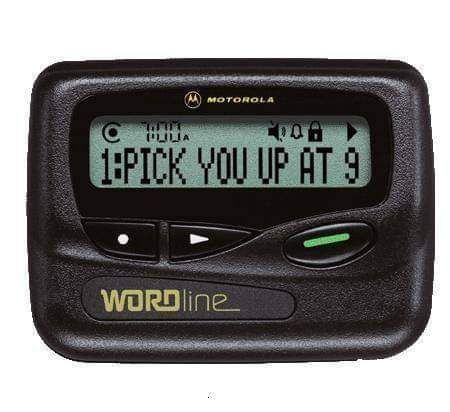
A pager, also known as a beeper, is a small communication device that receives short messages, typically numeric or alphanumeric, over a radio frequency signal.
History
- First introduced in 1950s for hospital communications
- Popularized in 1970s and 1980s for emergency services and business use
- Replaced by cell phones and mobile messaging apps in the 1990s and 2000s
Types of Pagers
- Numeric Pager: Displays only numbers
- Alphanumeric Pager: Displays text messages
- Tone-Only Pager: Receives audio tones to alert users
How Pagers Work
- Message transmission: Sender inputs message into a paging terminal or phone
- Signal transmission: Message is broadcast over radio frequency
- Reception: Pager receives signal and displays message
Uses
- Emergency services (e.g., doctors, firefighters)
- Business communications (e.g., delivery notifications)
- Medical alerts (e.g., hospital codes)
Advantages
- Simple, reliable technology
- Low cost
- Long battery life
Disadvantages
- Limited message length
- No confirmation of receipt
- No two-way communication
Modern Alternatives
- Cell phones and smartphones
- Messaging apps (e.g., SMS, WhatsApp)
- Two-way radios and walkie-talkies
Interesting Facts
- The first pager weighed 8.5 pounds!
- Pagers were initially called “radio paging systems”
- Some hospitals still use pagers due to reliability and simplicity
 Histopedia
Leave a comment