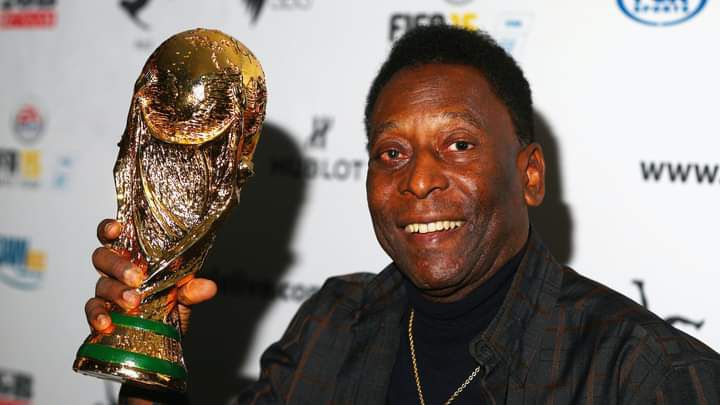
Pelé, born Edson Arantes do Nascimento on October 23, 1940, in Três Corações, Brazil, is widely regarded as one of the greatest soccer players of all time. His influence on the sport transcends his incredible athletic abilities, as he became a global ambassador for soccer and sportsmanship.
Early Life and Career
Pelé grew up in a modest family. His father, a former soccer player, nurtured his interest in the sport from a young age. He joined the Santos FC youth team at age 15 and made his first-team debut shortly after, quickly making a name for himself with his exceptional skills, speed, and scoring ability.
Rise to Fame
Pelé’s breakthrough came at the 1958 FIFA World Cup in Sweden. At just 17 years old, he became the tournament’s star, scoring six goals, including two in the final against Sweden, leading Brazil to its first World Cup championship. He continued to shine in subsequent World Cups, winning again in 1962 and 1970, the latter showcasing his unmatched talent as he led Brazil to a third title with a spectacular performance, scoring four goals and providing key assists.
Style of Play
Pelé was known for his versatility, being able to play as a forward, midfielder, or even a playmaker. His dribbling skills, powerful shots, and ability to read the game made him a formidable opponent. He scored over 1,280 goals in official matches, a record that solidified his legacy.
Legacy and Impact
Pelé’s impact extended beyond the soccer field. He broke racial barriers in Brazil, where soccer served as a unifying force, and became a symbol of national pride. His charisma and sportsmanship earned him respect worldwide. Pelé’s influence helped burgeon soccer’s global popularity during the 1960s and 1970s.
Later Career and Retirement
In the mid-1970s, Pelé signed with the New York Cosmos in the North American Soccer League (NASL), helping to popularize soccer in the United States. He played alongside other stars and helped elevate the profile of the sport in a country where it had previously enjoyed little following. He retired from professional soccer in 1977, leaving behind a legacy that spans generations.
Recognition
Pelé received numerous awards throughout his career, including three FIFA World Cup titles, an honorary knighthood from Queen Elizabeth II, and induction into the FIFA Hall of Fame. He was named FIFA Player of the Century in 1999, alongside Argentine legend Diego Maradona.
Later Years and Health
After retiring, Pelé remained active as a global ambassador for soccer, participating in charity work and promotion of the sport. In the 2000s, he faced health challenges, including knee surgeries and prostate cancer. Pelé continued to inspire people through his resilience and positive outlook.
Death and Lasting Legacy
Pelé passed away on December 29, 2022, at the age of 82, due to complications related to cancer. His death marked the end of an era, prompting tributes from around the world, underscoring his role as not only a soccer icon but also a cultural figure.
In summary, Pelé’s life and career serve as a reminder of the power of sports to inspire, unite, and transcend barriers. His legacy lives on in the hearts of soccer fans and among aspiring athletes worldwide.
 Histopedia
Leave a comment